
Learn
Free guides for first-time puppy owners, in the order they're worth reading — start with how the training works, then your first week, then the first five cues. Written from peer-reviewed research and force-free practice, with sources on every page.
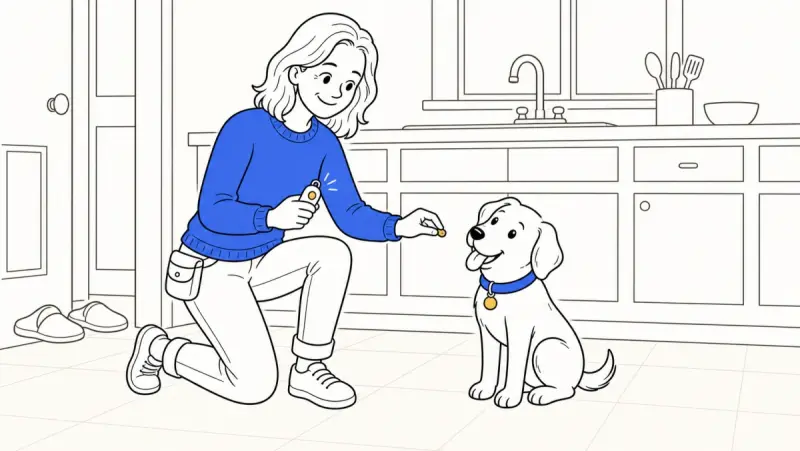
Start here
How to train a puppy: the complete guide
Train a puppy the reward-based way: mark the moment they get it right, pay the treat, keep sessions short, and socialize early. A complete clicker guide.
Read the complete guide →The clicker method
How the training actually works — any age
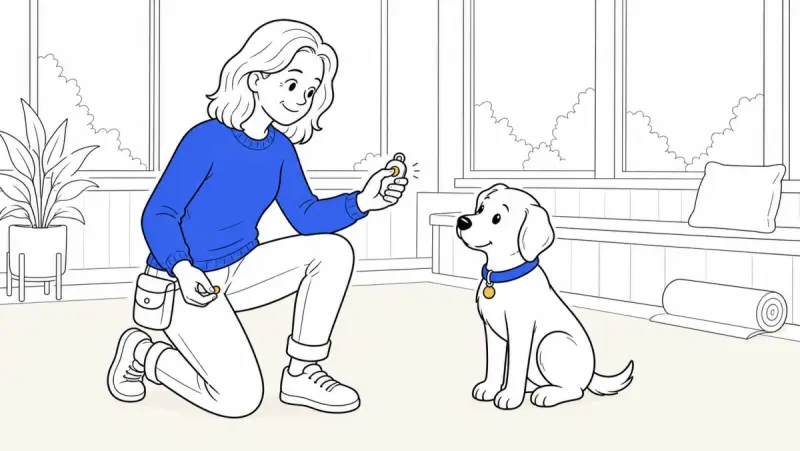 What is clicker training, and why does it work?Why clicker training works: a marker tells your puppy the exact moment they got it right. The honest science of markers, and where it helps most.Read the complete guide →
 How do you charge a clicker?Charge a clicker with a handful of click-then-treat pairs, then run a charge test — if your puppy perks up at the sound, you're ready to mark real behavior.
 How do I start clicker training my puppy on the first day?Day one is two short steps: charge the clicker (a few pairs, then a quick test), then teach a hand target. Most puppies get a first win in one session.
 What is force-free dog training (and does it actually work)?Force-free means teaching without pain, fear or force. What the term means, who defines it, what trainers do when a dog is wrong, and what evidence says.
 How long should puppy training sessions be?Keep puppy training sessions to about 2–5 minutes, a few times a day. Short, spaced sessions that end on a win beat one long drill.
 Training a dog with treats: do you have to use them forever?No — but you never stop rewarding. The food stops appearing before the behavior, and stops arriving every time only while you're raising the bar.
 High-value treats for dog training: what actually makes one high value?High value isn't a food category. It's where a treat ranks for your dog against whatever else is on offer right now — and you can test it in five minutes.
Your first week
Settling in — and the setbacks that follow
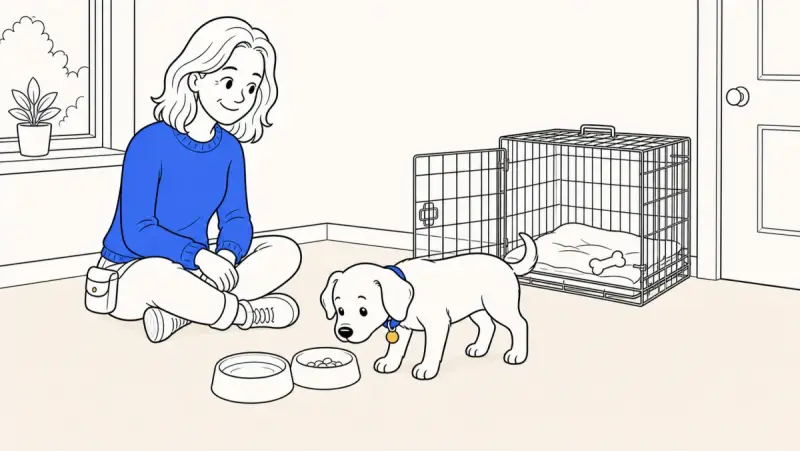 The new-puppy checklist: your first weekWhat actually matters in a puppy's first week: supplies, the first 24–48 hours, potty and crate basics, socialization, and your first clicker touch.Read the complete guide →
 How do you puppy-proof your home?Puppy-proof room by room: lock away medications and human food first, clear small objects and cords, then teach leave-it so safety actually sticks.
 Surviving the first night with your puppyThe first night with a puppy: where they sleep, the real overnight potty math, and what to do when the crying starts — plus where the sources disagree.
 Puppy training schedule: your first weekA puppy's first week isn't a training curriculum — it's a daily rhythm of sleep, potty, food, and play, with two-minute training moments folded in.
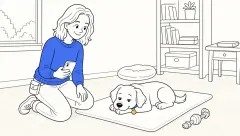 How do you get a puppy to settle and sleep through the night?Settle is a skill you teach; sleeping through the night is mostly management. Build the calm off-switch, keep bedtime boring, expect an early night trip.
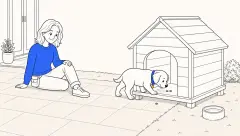 How do you kennel train a dog?Kennel training is crate training. The four stages, when to add the cue, and why published crate-hour limits run from two to six across the big guides.
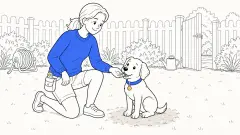 How do you potty train a puppy?Potty train a puppy with a tight schedule, close supervision, one spot, and a reward the second they finish — never punishment. Most take 4–6 months.
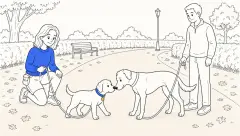 The puppy socialization window: what does the research actually say?The 3–12 week socialization window comes from one small old study and is fuzzier than pop advice claims. Early positive exposure matters; don't panic.
 When can a puppy go outside?There isn't one date, because outside isn't one place. What AVSAB, AAHA and the AVMA's welfare review publish — yard, sidewalk, dog park, class.
 The puppy socialization checklist (8–16 weeks)The puppy socialization checklist for weeks 8–16, category by category — plus how to read whether an exposure builds confidence or teaches fear.
Core commands
8 weeks onward
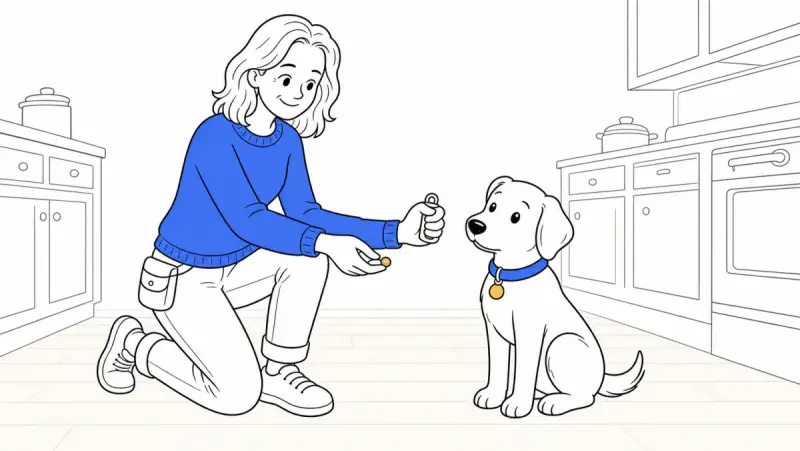 Basic puppy commands: the first 5 to teachSit, down, stay, come, and leave it — clicker steps and click-points for each, plus the two skills trainers actually teach before any of them.Read the complete guide →
 How do you teach a puppy its name?Say the name once, click the head-turn, treat. Never nag or scold with it — that is how a puppy learns their name means good things are coming.
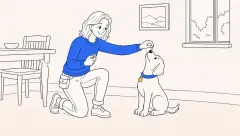 How do you teach a puppy to sit?Lure the nose up, click as the bottom hits the floor, treat in the sit, then fade the lure. Most puppies learn it in a few short sessions.
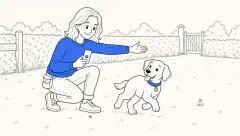 How do you teach a dog to come when called?Say the cue once, crouch, and finish the recall on a nose-touch to your low open palm — then release your dog back to what they were doing.
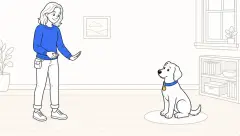 How do you teach a puppy to stay?Once sit or down is solid, hold a beat, click, treat away from the spot, then add a release word. Stay is duration — not a day-one skill.
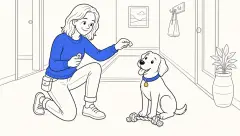 How do you teach a puppy to leave it?Hold a treat in a closed fist, click the moment your puppy backs off, and pay from the other hand. Leave it is a rewarded choice — not a scold.
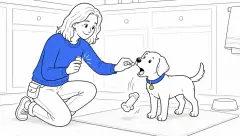 How do you teach a puppy to drop it?Trade for something better, click the release, pay — and often give the toy back. Drop it is a rewarded trade, never a chase or a pry.
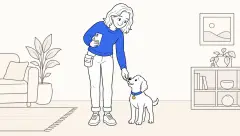 How do you teach a puppy to heel?Heel is a cued position — puppy at your side, eyes up, not all-day walking. Teach it force-free with a clicker: reward the spot, name it, build slowly.
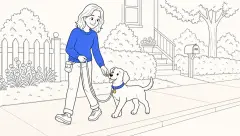 Leash training a puppy — and how to stop a dog pullingStop a dog pulling on the leash: stand still the moment it tightens, pay the spot at your side, and never let a tight leash move the walk forward.
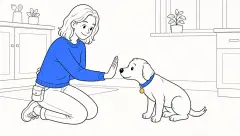 How do you teach a puppy a hand target ('touch')?Hide a treat, present your other open palm, click the instant it's touched, treat, move the palm, repeat. Steps, mistakes, and what it becomes later.
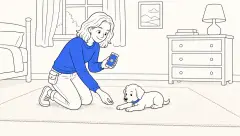 How do you teach a puppy to lie down?Lure the nose straight down between the paws, click as the elbows touch, treat in the down, then fade the lure. Never push — most puppies learn in days.
Biting & problem behavior
8 weeks to adolescence
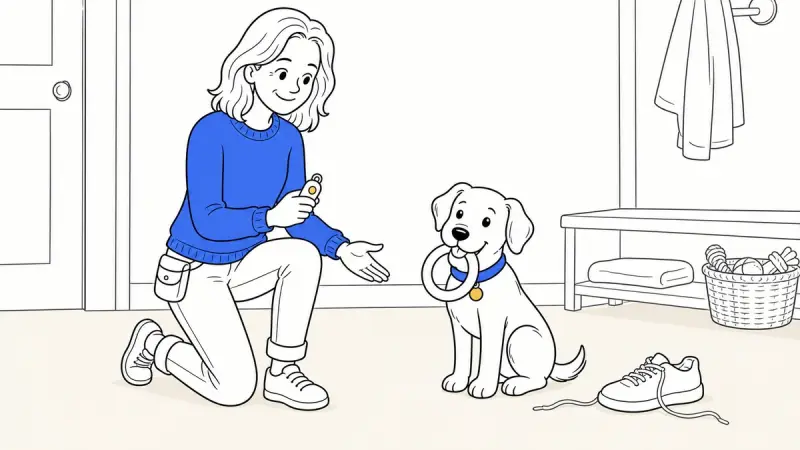 How do you stop a puppy from biting?Calmly disengage, redirect to a chew or a cue, and reward the switch — no punishment. Puppy biting is normal teething, not aggression, and it passes.Read the complete guide →
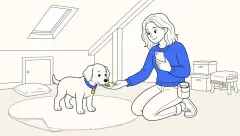 What is puppy bite inhibition, and can you really teach it?Bite inhibition is a calibrated jaw, not an absence of mouthing. What the evidence supports, what it doesn't, and what's worth doing with your puppy.
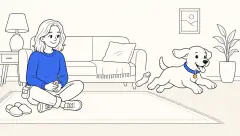 Why does my puppy go crazy at 6pm?Evening zoomies and frantic biting are the puppy 'witching hour' — an overtired, overstimulated puppy, not a bad one. Naps and a calm wind-down fix it.
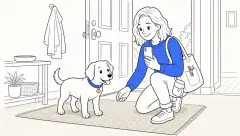 How do you stop a dog from jumping on people?Stop a dog jumping on people by rewarding four on the floor and a sit to greet. Never knee, push, or scold — all three still pay the jump.
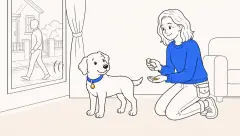 Why is my puppy barking — and how to stop itMatch the fix to the bark: ignore demand barking, block alert views, protect naps, and teach settle. No yelling — and know when barking means get help.
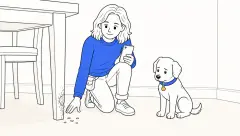 How do you stop a dog chewing furniture?Destructive chewing is four problems in one name. Find out which one you have — teething, boredom, an unmet need, or distress — then fix that one.
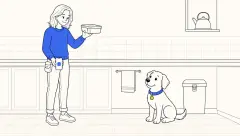 How do you stop a dog counter-surfing?Counter-surfing pays your dog with the food, not with you. Clear the counters first, then train leave-it and a paid station. Booby traps backfire.
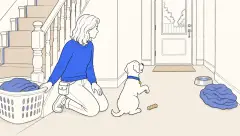 Why is my puppy whining — and what to doWhining can be a need, pain, frustration, a learned request, or real distress at being left. Ignoring is right for one. How to tell them apart.
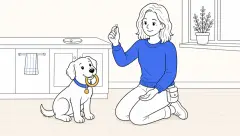 When do puppy teeth fall out, and when does the chewing stop?A vet-sourced puppy teething timeline: when baby teeth erupt, fall out, and why the chewing urge often outlasts the teeth — plus when to call the vet.
The teenage phase
4–6 months — when it looks like they forgot everything
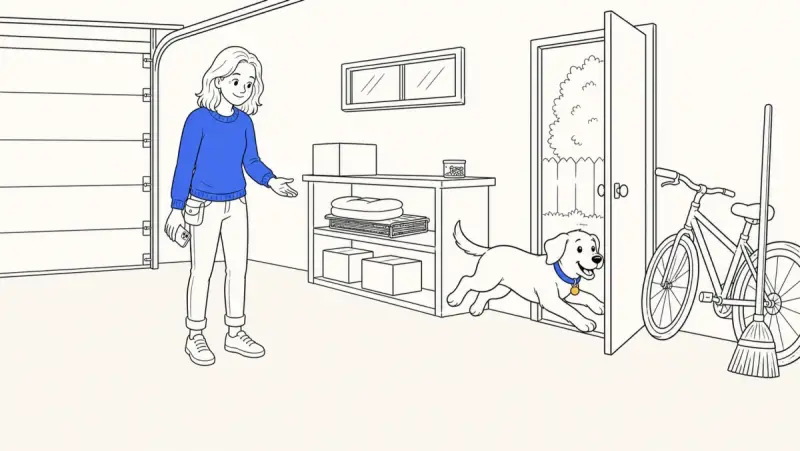 The teenage dog phase: why your puppy 'forgot' everythingAdolescence in dogs runs from about six months to two years. The obedience dip is real, temporary, and aimed at you — here's what the research shows.Read the complete guide →
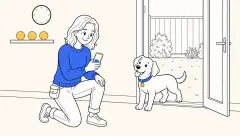 How long does it take to house train a dog?House training a dog: mostly reliable at four to six months; the strictest published standard says eight to twelve months of age plus six clean weeks.
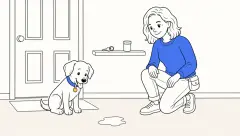 Why has my potty-trained puppy started having accidents again?Sudden loss of house training is a vet question first — UTIs are common. Then check supervision, scent and stress. Most regression is criteria, not memory.
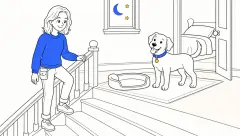 Puppy sleep regression: why has my puppy stopped sleeping through the night?Puppy sleep regression isn't a documented stage in dogs. Here's what the research does show about adolescent sleep — and the six causes worth checking.
Fun tricks
Once the basics are solid
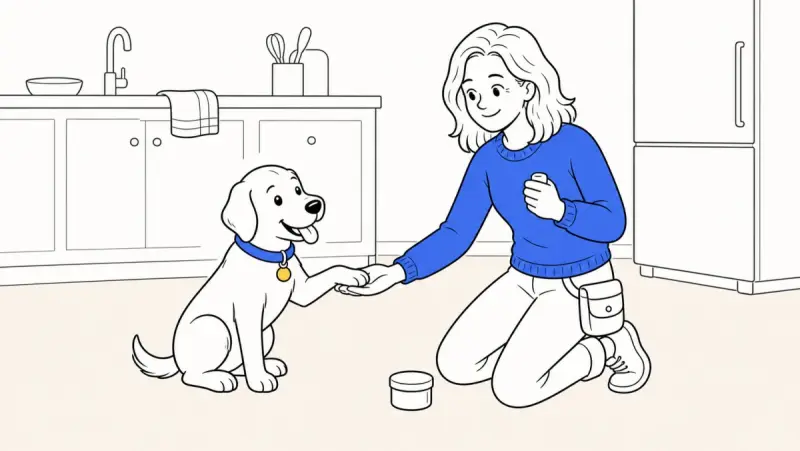 Fun tricks to teach your puppyShake, spin, roll over, and beg — four tricks any puppy can learn with the same clicker method as sit, no experience needed. Plus 2 bonus tricks.Read the complete guide →
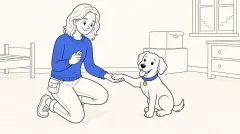 How to teach your puppy to shake (give paw)Teach shake by capturing a paw lift: hold a treat in a loose fist, click the first soft touch, swap to an open palm, add the cue. Never grab the paw.
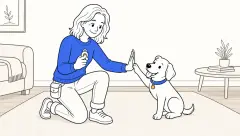 How to teach your puppy to high-fiveHigh-five is shake with a raised target. Click the paw touch, raise your hand an inch at a time, and never ask for an uncomfortable stretch.
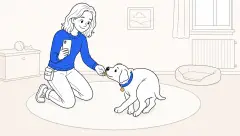 How to teach your puppy to spinTeach spin by luring your puppy's nose in a slow circle — click the half-turn first, then the full spin, add the cue, and keep it a silly game.
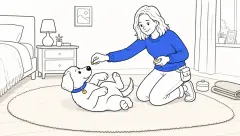 How to teach your puppy to roll overTeach roll over from a down on a soft rug: click the hip-roll first, then the full roll. Never push them over — and know when to skip the trick.
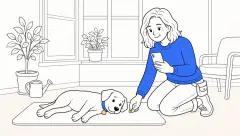 How to teach your puppy to play deadTeach play dead from a down: lure your puppy onto their side, click the stillness, build the hold, add the cue. Never force it, know when to skip.
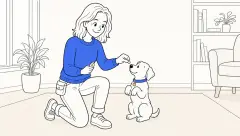 How to teach your puppy to sit pretty (beg)Teach sit pretty from a steady sit: lift a treat above the nose and click the first paw-lift. Build balance slowly, and go easy on a growing puppy.
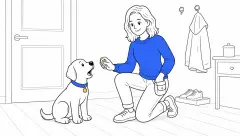 How to teach your puppy to speak (on cue)Capture one bark, click it, then add "speak" and fade the trigger. Pair with quiet so you don't train a barking frenzy — and know when to skip the trick.
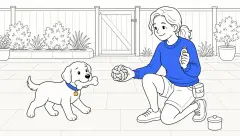 How to teach your puppy to fetchFetch is four skills, not one throw: interest, hold, bring back, and drop. Build hold first, never chase keep-away, and swap with a second toy.
More guides
Costs, tools, and when to get help
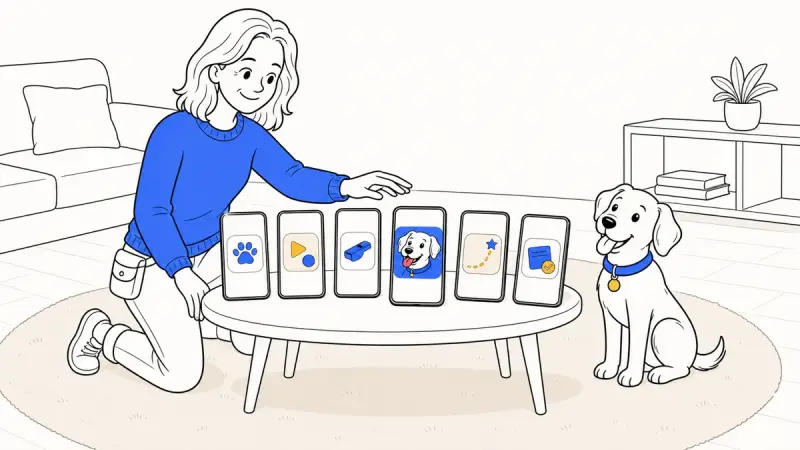 What's the best puppy training app in 2026?Pupford, Zigzag, Dogo, Woofz and PawChamp compared honestly — what each does well, real advertised prices, free tiers, and the billing traps to watch for.Read the complete guide →
 How much does puppy training actually cost?Real puppy training prices, checked July 2026: group classes from $149, private sessions from $45, board-and-train from $500 a week — and what each buys.
 Can you train a dog for free?Yes, mostly — the method itself is public and free. Six verified free resources, how to judge them, and where free stops being enough.
 Trained to Reliable: how ClickerPup trains your puppyMost apps count lessons you finish. ClickerPup measures your dog against a published definition of trained — and adapts every session until they get there.
 Is my puppy normal, or should I get help?Mouthing, zoomies and accidents are normal. Learn the real puppy behavior red flags and when to call a vet, a behaviorist, or refuse aversive tools.