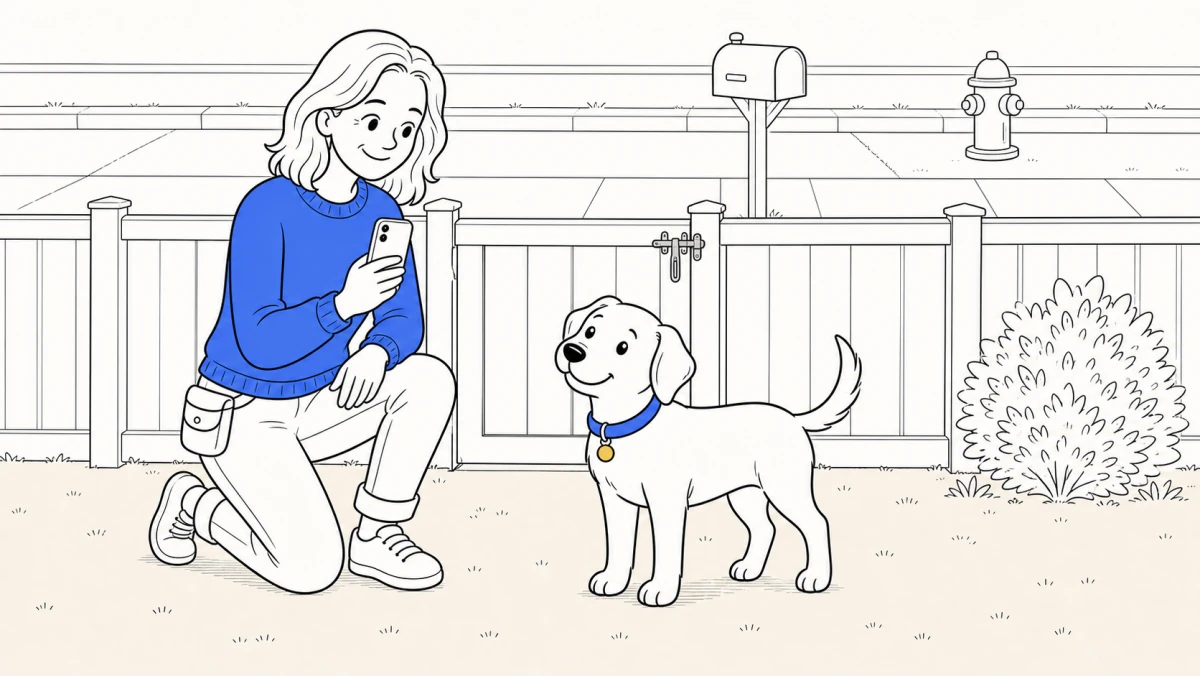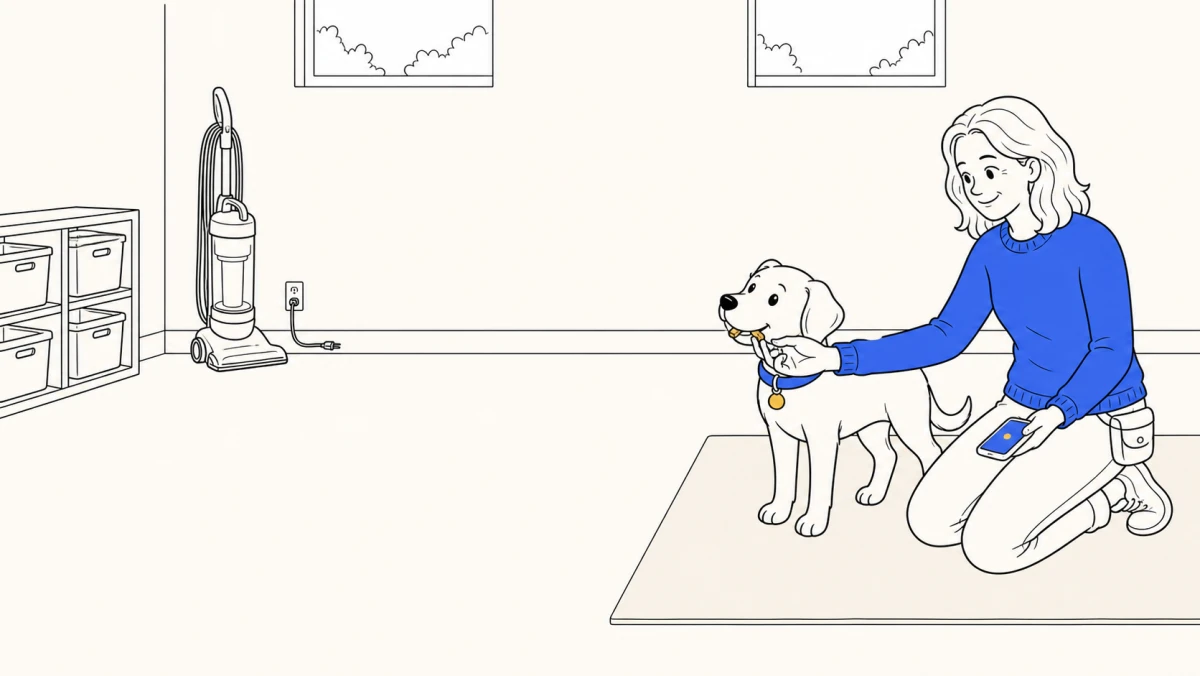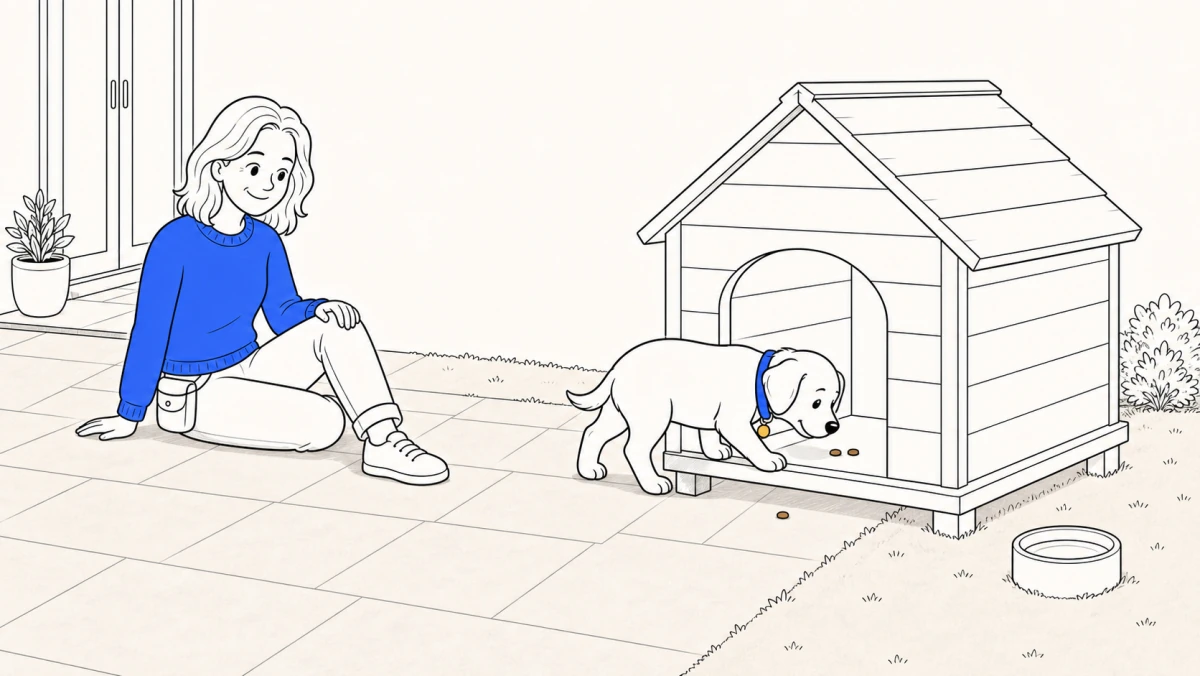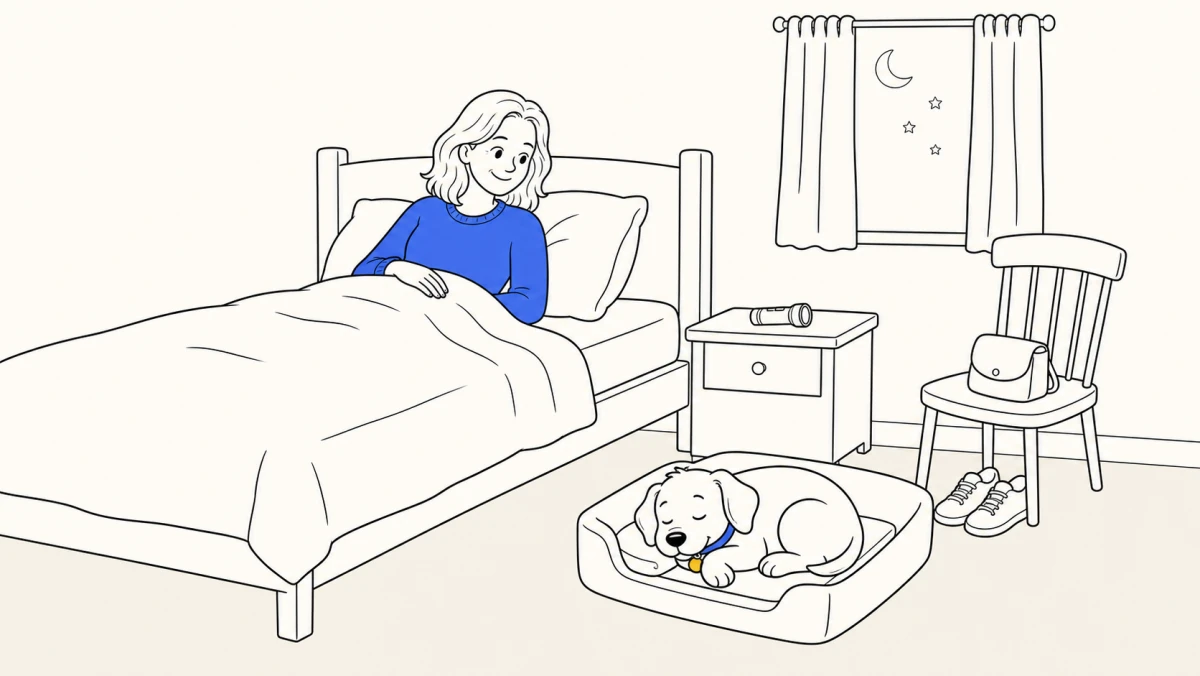
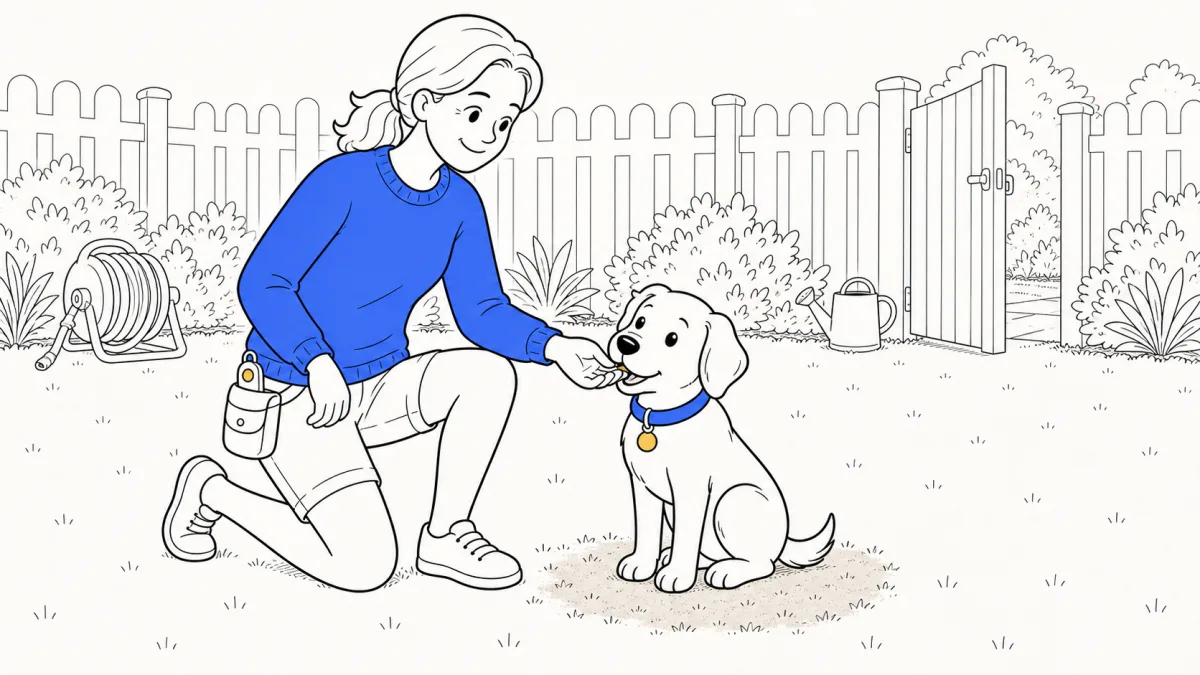
You potty train a puppy by controlling the schedule, not the puppy. Take them to the same outdoor spot after every sleep, meal, drink, and play session — and roughly every couple of hours in between — reward the instant they finish, and supervise or gently confine them so they can’t practice getting it wrong. Never punish an accident. Most puppies are reliable in four to six months, not days.
If you’re standing over the third puddle before lunch, quietly wondering whether your puppy is ever going to get it — or whether you’re doing something wrong — nothing here is broken. Accidents at eight, ten, twelve weeks aren’t a training failure; they’re a puppy whose bladder is smaller than their enthusiasm, learning a rule that isn’t obvious to them yet. Here’s the whole method, honestly: how long it really takes, the schedule that does the heavy lifting, and the one situation where an accident is a reason to call the vet, not adjust the routine.
How do you house train a puppy, step by step?
You teach one simple rule — outside is where it pays — by stacking the deck so the right thing happens far more often than the wrong thing, and gets rewarded every time. Four rails do almost all the work:
- A tight schedule. Take your puppy out on a predictable rhythm so their bladder rarely fills without a trip coming. More on the exact timing below.
- The same spot, on a leash. Walk them to one consistent patch and wait. Same place, same smell, same routine — it becomes the obvious answer.
- Reward the instant they finish. The Humane World for Animals housetraining guide is blunt about the timing: “Once your puppy has finished, reward them immediately with praise or a treat.” Not back at the door — right there, the moment the job’s done.
- Supervise or confine between trips. A puppy can’t have an accident you’re preventing. Watch them closely, or use a crate or a short tether, so there’s no unsupervised corner to fail in.
That’s the entire method. Everything else on this page is just those four rails applied to the awkward bits — nights, apartments, the week it seems to go backwards.
How long does it take to potty train a puppy?
Usually four to six months — and “reliable” is the far end of that, not the start. Humane World for Animals puts it plainly: “Housetraining a puppy typically takes 4–6 months, but it can vary depending on the puppy’s size, age and previous housetraining habits.” The American Kennel Club frames the spread the same way: “Some puppies have perfect manners after just a few days. Others can take months.”
So set the expectation honestly, because half of potty-training misery is a timeline that was never real. You’ll see genuine progress in the first couple of weeks — fewer accidents, more successful trips. But reliable — trusting your puppy loose in the house without one eye on them — is a months-long finish line, and small dogs with smaller bladders often take longer. Judge the trend across a week, not the one bad afternoon that makes you feel like you’re back at square one.
How often should you take your puppy out?
More often than feels reasonable — and always around the predictable triggers. The rule of thumb is one hour of bladder control per month of age: a 3-month-old puppy can hold it for roughly three hours, per both the AKC and Humane World for Animals. But that’s a ceiling, not a schedule. While you’re actively teaching, go out at least every two hours, and always at these moments:
| Take them out… | Why |
|---|---|
| First thing in the morning and last thing at night | The tank is full / needs emptying before a long stretch |
| After every nap or crate time | Sleep relaxes the bladder — they’ll need to go on waking |
| After eating or drinking | Food and water move through a puppy fast |
| After a play session | Activity and excitement trigger the urge |
| Roughly every two hours otherwise | More trips = more chances to reward the right spot |
The point of all these trips isn’t the walking — it’s opportunity. Every trip outside is a chance to catch your puppy doing it right and pay for it, and one fewer puddle to clean. Frequent, boring, on-schedule trips are how you win this quietly, without drama.
How do crate training and supervision help?
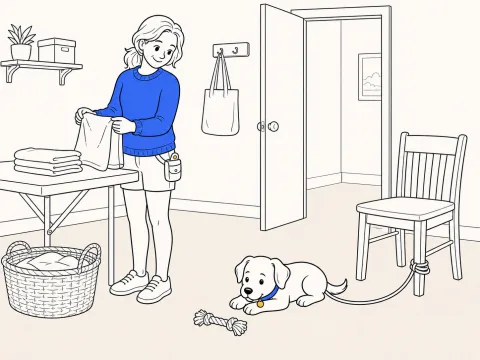
They remove the option to fail. Puppies have a natural instinct not to soil where they sleep, so a properly sized crate — big enough to stand, turn, and lie down, no bigger — becomes a place they’ll hold it until you let them out to the right spot. Humane World for Animals calls crate training “a reliable and humane method for confinement” for exactly this reason.
When they’re out of the crate but you can’t give them your full attention, tether them to you. The same guide recommends you “tether them to you or a nearby piece of furniture with a 6-foot leash when not actively playing or training.” A puppy three feet away can’t sneak off to a spare bedroom; you’ll spot the sniffing-and-circling and get them out in time. This isn’t about restriction for its own sake — it’s that supervision is what makes the reward system work. You can only reward the good choice if you’re there to see it. One honest caveat: a crate is a management tool, never a place to leave a young puppy for longer than their bladder can hold, or as somewhere to stash a problem. It’s a bridge, not a solution.
Should you use pee pads?
If you have easy access to outside, most trainers suggest skipping pads — they can quietly make the job longer. Here’s the honest trade-off, because this is the question the tidy guides gloss over.
The catch is a mixed message. As Preventive Vet puts it, pads can be a “set-up for outdoor potty training failure” — “by allowing your puppy to eliminate indoors while also trying to train them to go potty outside, you are sending mixed messages,” and that confusion “can delay the desired habit of holding it until they can go outside.” Worse, a pad mostly teaches “go on the soft rectangle,” and puppies generalize: bath mats, area rugs, and that hoodie you left on the floor start to qualify.
But pads aren’t wrong for everyone. The AKC notes they “can sometimes play a role,” and there are real situations where they’re the sensible call:
- A high-rise or no-yard apartment where a timely outdoor trip isn’t realistic.
- A puppy not yet fully vaccinated, where you’re limiting exposure to public ground.
- Shifts or circumstances that keep you away longer than a young bladder can last.
If that’s you, use pads as a temporary bridge to outside, not the destination: keep them in one fixed place, reward on the pad exactly as you would outdoors, and — when your puppy’s ready — move the pad a little closer to the door each day until it’s outside and then gone. If outside is genuinely easy for you, though, you’ll usually finish faster by teaching one rule instead of two.
What about nighttime accidents?
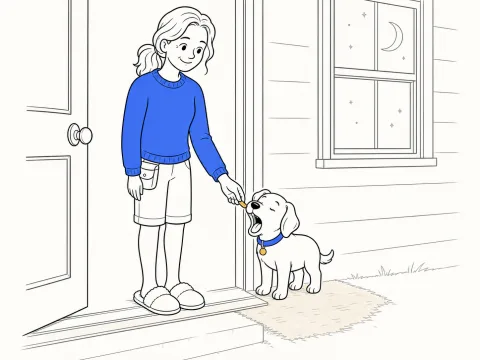
Expect at least one overnight trip at first — that’s plumbing, not a setback. The hour-per-month rule is a daytime guide; a two- or three-month-old puppy simply can’t hold it for a full night early on, and treating a 3 a.m. wake-up as a failure just adds stress to the one part of this you can’t shortcut. Set an alarm, take them out quietly to the same spot with the minimum of fuss and no playtime, reward, and back to bed. As their bladder grows over the coming weeks, that overnight trip fades on its own. (First few nights feeling rough all round? A calm, predictable wind-down helps everything — the same principle behind surviving the puppy witching-hour meltdown.)
Why does my puppy keep having accidents?
Nearly always one of three things — and none of them is your puppy being stubborn or spiteful. Run down the list before you change anything bigger:
- Too much freedom, too soon. The most common cause. If your puppy has the run of the house, they’ll find a quiet corner. Tighten supervision and confinement back up for a week and the “regression” usually vanishes.
- The schedule slipped. A missed post-nap trip, a longer gap than the bladder could handle. Accidents are feedback about your timing far more often than their learning.
- Old accidents you can still smell — because they can, far better. If a spot isn’t cleaned with an enzyme cleaner, the lingering scent says “bathroom” to a puppy’s nose and pulls them back. Ordinary household cleaner masks it for you but not for them.
And whatever the cause, the response is never punishment. Scolding a puppy — let alone the old nose-rubbing myth — teaches them that you are the danger when there’s a puddle around, so they learn to go where you can’t see. The AKC is dry about it: “Scolding a puppy for soiling your rug, especially after the fact, isn’t going to do much,” and “if your dog has an accident, don’t make a fuss, just clean up the mess.” The broader principle sits under all force-free training — the AVSAB’s 2021 position statement on humane dog training recommends reward-based methods only.
So do this instead. Catch them in the act? Interrupt gently — a quiet “oops” — and carry them to the right spot, then reward if they finish. Find it later? Clean it, and let it go. The reward for getting it right, delivered the instant it happens, is what does the teaching — not the telling-off.
When is a potty accident a reason to call the vet?
When a puppy who was doing well suddenly isn’t — that’s a medical red flag, not a training one. VCA Animal Hospitals put it directly: “A break in house training is a red flag that something is wrong in the bladder.” The most common culprit is a urinary tract infection — common, treatable, and in need of diagnosis rather than more schedule — but, as the AKC notes, frequent urination can also stem from conditions like diabetes or kidney disease, which is exactly why a vet, not a training tweak, is the right next step.
Call your vet promptly if you notice any of these:
- Straining, or crying/whining while trying to pee, or only passing small amounts.
- Blood in the urine, or a strong unusual odor.
- A sudden jump in frequency, or in how much your puppy is drinking.
- Lethargy, vomiting, or loss of appetite alongside the accidents.
Dr. Jerry Klein, the AKC’s Chief Veterinary Officer, sets a low bar for checking: “Any change in urinary patterns for your dog should be reported to a veterinarian as soon as possible, as it may indicate an underlying medical issue.” And one hard line, which the AKC lists as a medical emergency: a puppy straining but unable to pass any urine — go to a vet now, not in the morning. If you’re ever unsure whether something is normal puppy stuff or a real problem, here’s a fuller guide to what’s normal and when to get help.
The honest short version
Control the schedule, own one spot, reward the second they finish, and supervise so they can’t practice mistakes. Skip the pads if you can get outside easily. Expect a night trip early on, expect four to six months to fully reliable, and read accidents as feedback on your routine — never a reason to punish. Your puppy isn’t being difficult. Their bladder is just small and the rule is new.
Here’s the honest bit most puppy apps won’t tell you: ClickerPup doesn’t potty train your dog. Potty training is a schedule and a bit of laundry — management, not a skill a clicker shapes — so we’re not going to pretend an app does it for you.
What ClickerPup does do is coach the trainable stuff that makes the whole puppy easier to live with — the marker-and-reward foundation you just used to pay for a good potty trip is the exact same skill that teaches sit, settle, leave-it, and a calm off-switch, two honest minutes at a time. It checks whether your dog actually got a skill before moving on, and the clicker’s free forever, with a plain reminder before anything ever charges.
Claim your early spot and we’ll bring you in as we open up — with the force-free foundations ready from day one.