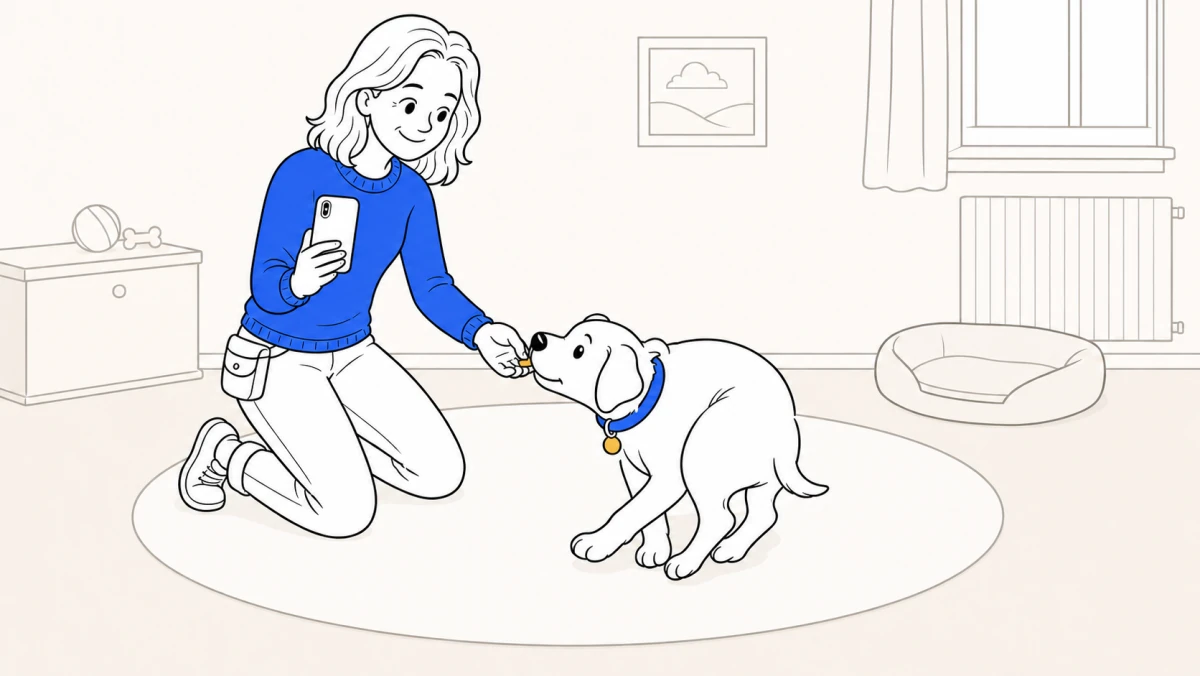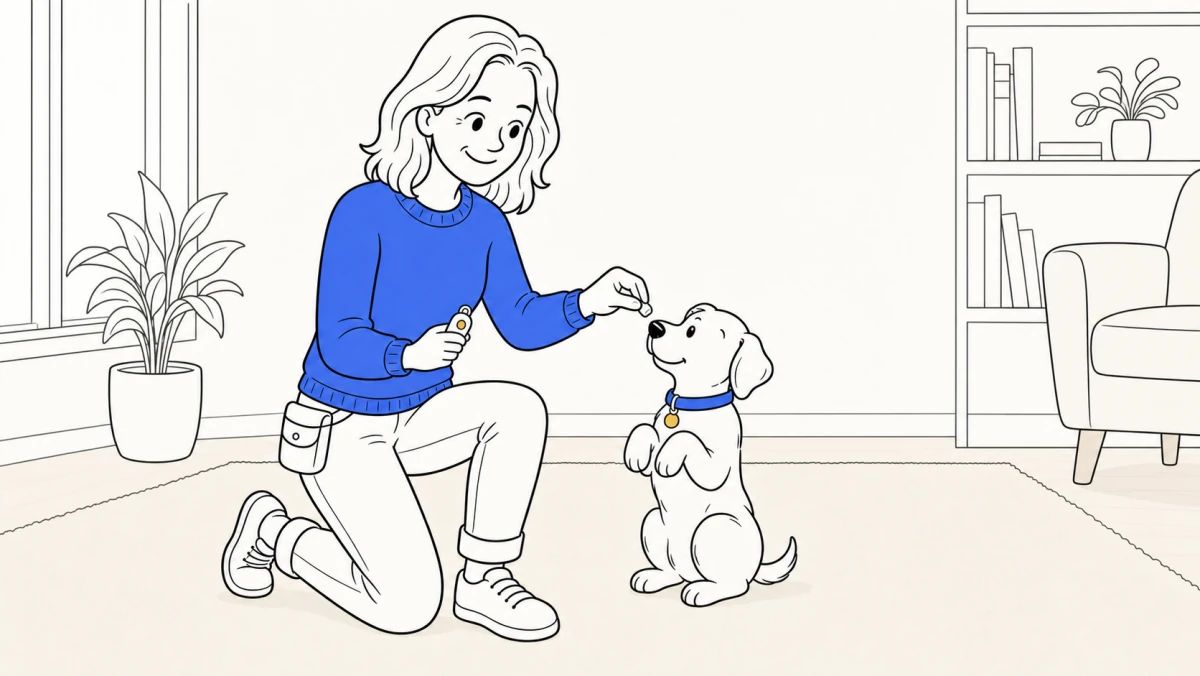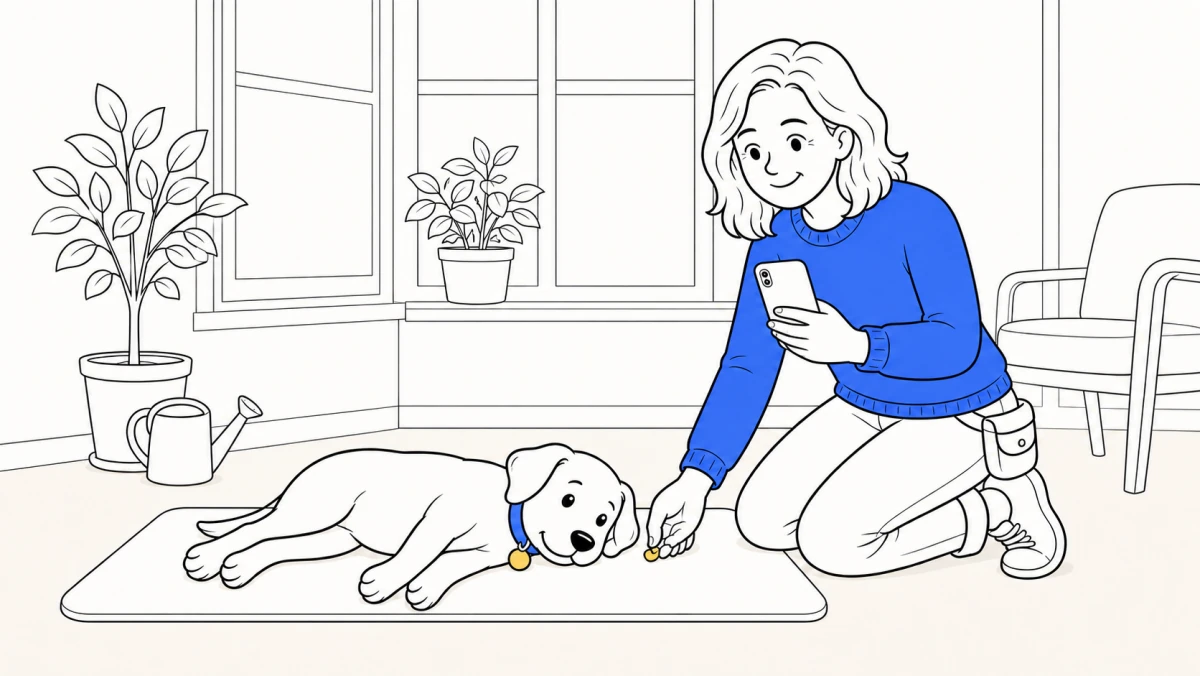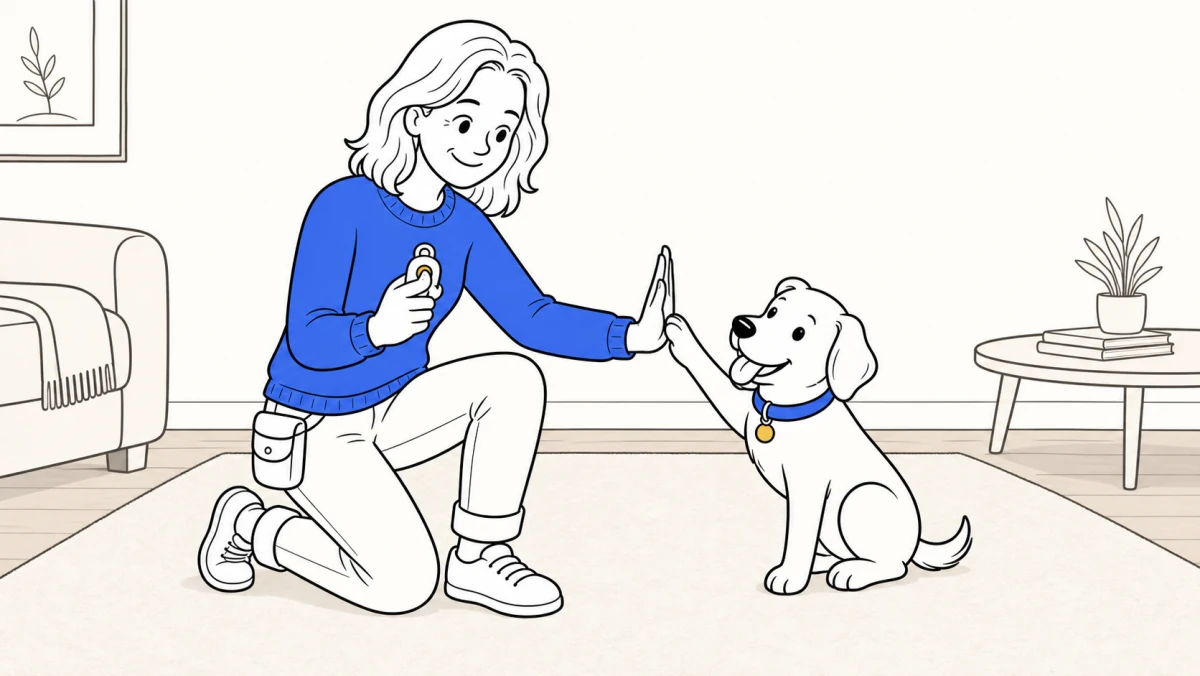
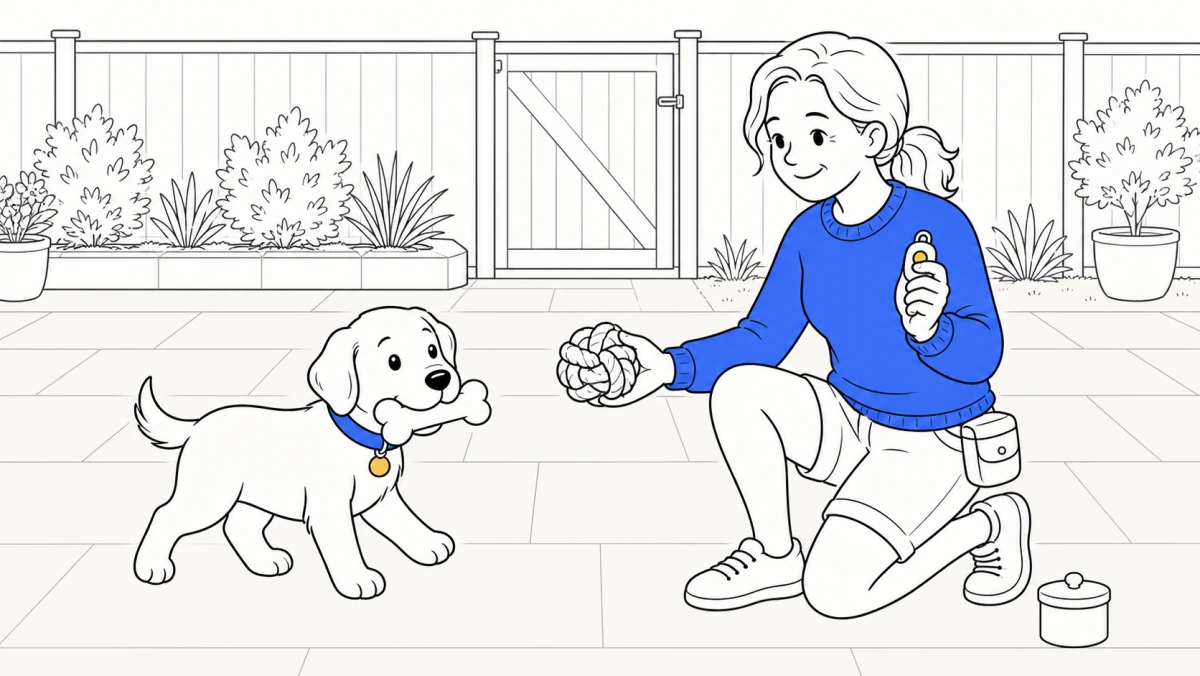
Fetch is four skills — interest, hold, bring-back, and drop — not one throw across the yard. Teach hold first indoors, keep sessions short, never chase keep-away, and mark with a clicker or “yes.” AVSAB’s 2021 position statement is direct: evidence supports reward-based methods for all canine training, and aversive methods should not be used.
You throw the ball. The puppy bolts — then ignores it, runs a victory lap, or invents keep-away while you scramble after them. Determined for a few minutes, then quietly guilty that every other dog “just knows fetch.” They don’t. The American Kennel Club is blunt: fetch doesn’t come naturally to every dog, and many just need the pieces taught. Here’s the sequence that sticks.
Why doesn’t my dog know how to play fetch?
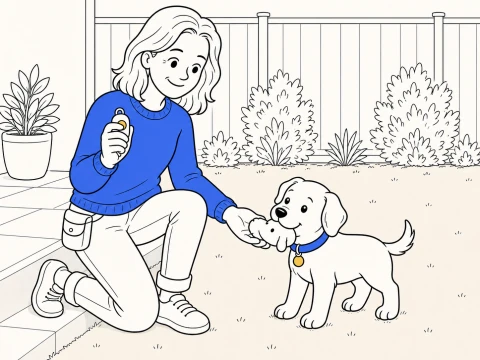
Usually because fetch was taught as one throw instead of four pieces — interest, hold, bring-back, and drop — or because someone chasing the puppy for the toy accidentally rewarded keep-away.
Pat Miller, CPDT, of Peaceable Paws, writing in Whole Dog Journal, names the trap most first-time owners fall into: when a puppy picks something up, people either yell (so mouthing gets suppressed) or chase (so keep-away becomes the best game in the house). Either way, you’ve taught “not-fetch” before you ever meant to start a formal retrieve. The fix isn’t a tougher throw. It’s rebuilding the pieces with a marker and a fair trade — matching AVSAB’s recommendation of reward-based methods over aversives.
What are the four parts of fetch?
Purina’s fetch guide splits the game into four parts: chase or locate the item, pick it up, bring it back, and let go. Herding breeds often love the chase; retrieving breeds often love the carry; terriers may grab hard and hate letting go. Treat whichever piece stalls as its own short lesson instead of repeating a long throw that fails the same way every time.
| Piece | What “good” looks like | Common stall |
|---|---|---|
| Interest | Looks at, sniffs, or mouths the toy | Ignores the toy completely |
| Hold / pick up | Mouth on toy for a beat | Drops instantly, or never lifts |
| Bring back | Turns toward you with the toy | Victory lap / keep-away |
| Drop / trade | Releases for a treat or second toy | Guards, freezes, or won’t open mouth |
How do you teach a puppy to fetch step by step?
Build hold first, then move the toy inches away — the AKC’s order — before you ever throw for distance. The American Kennel Club’s fetch guide treats hold as the first skill: reward any interest, then sniffing, then mouthing, then a short hold, and only later place the toy farther from you. That reverse order is the information most “just throw it” videos skip.
How do you teach hold for fetch?
- Sit on the floor with a soft, easy-to-carry toy. The instant your puppy looks at it, sniffs it, or mouths it, click (or say “yes”) and treat. Early reps reward any interest.
- Raise the bar slowly: click for mouthing, then for a half-second hold, then a full second. AKC’s hold section is explicit — many short successful holds beat one long ask that falls apart.
- Offer the toy from your open palm with a cue like “hold” or “get it.” Click when they take it; trade a treat and take the toy back gently.
How do you add distance and the throw?
- Place the toy on the floor right next to you. Click the pick-up. Slide it a few inches farther only after that is easy.
- Add a tiny toss — a couple of feet, indoors, quiet room. Cheer the moment they turn toward you with the toy. Trade for a treat or a second identical toy the second they arrive.
- Grow distance in small jumps across sessions, not inside one marathon. Stop while they still want another throw.
Karen Pryor’s shaping rules apply the whole way: raise criteria in increments small enough that your puppy still has a realistic shot at getting clicked, and train one piece at a time. If you’re still charging a brand-new clicker, start with what clicker training is and how to begin before you layer a four-part game on top.
Why won’t my dog bring the ball back?
Chase is often the prize, and coming back looks like the fun ending. Make the return pay: cheer the turn toward you, trade for a treat or a second identical toy, and never chase them to get the toy.
Purina’s guidance matches what most keep-away cases need: two identical soft toys, swap on arrival, and do not reach, tug, or run after the puppy. If they stall halfway, take a step backward and sound more interesting than the toy — many dogs close the gap to chase you. If they drop early, shrink the distance again; a clean short retrieve beats a broken long one. For the cue that brings them in without the toy, work basic puppy commands (come) in calm rooms first, then fold that recall into fetch.
What if keep-away is the only game that works?
If keep-away is the only game that ever “works,” pause fetch for a few days and teach the trade below cold — boring object first — so giving things up pays before the exciting ball returns. Chasing the puppy to “win” the toy only rehearses the problem; a fair trade is what resets the game.
How do you teach drop it so fetch can reset?
You teach drop it as a trade: show something clearly better, click the release, pay — and often give the toy right back so releasing doesn’t mean the fun dies forever. Nail a clean drop it and fetch finally has a return.
- Start with a boring object your puppy will take but doesn’t love.
- Offer a higher-value treat right at their nose. The instant the mouth opens, click and deliver the treat.
- Hand the object back most of the time so “give” predicts more play, not confiscation.
- Move to the fetch toy only after the boring-object trade is quick. On real fetch reps, the second identical toy is often enough of a trade without food.
Never pry the jaws open or chase. Purina is direct on this: grabbing and chasing either trigger keep-away or tip toward guarding.
What if my puppy won’t drop the toy — or guards it?
If the body goes stiff, they freeze over the toy, growl, or snap when you approach, stop the game and read what’s normal and when to get help — that’s outside DIY fetch coaching.
What if my puppy isn’t interested in toys?
Try a softer toy, a food-stuffable toy, or two identical toys and short indoor sessions. Some dogs never love retrieve games; if they stay flat after honest shaping, pick a different play style rather than forcing fetch.
AKC suggests toys with a Velcro food compartment when a dog isn’t toy-motivated, and varying balls, plush, and rope once the game exists. Purina notes that dogs without a retrieving instinct may simply not enjoy this game — and that’s allowed. Spin, shake, tug-with-rules, or a scatter-feed in the grass can still be a win. Browse other low-stakes options in fun tricks to teach your puppy.
How long should fetch sessions be?
Keep early fetch in the same short band as any brand-new skill — about one to two minutes — and end while your puppy still wants one more throw. Full age bands live in how long puppy training sessions should be.
Purina also warns against endless repetitive retrieves as the only exercise plan: sudden stops and turns load young joints, and ball obsession can tip into over-arousal where your puppy can’t hear anything else. A few clean throws, then put the toy away. Never throw sticks or stones — splinters, choking, and chipped teeth aren’t worth the convenience.
Is fetch one of ClickerPup’s in-app tricks?
Not yet. ClickerPup’s tricks module currently runs spin, shake, roll over, and beg. Fetch uses the same clicker method — this page is the DIY version while that feature is still ahead.
That honesty matters for the waitlist too: you’re joining for short, reward-based sessions on skills the app actually coaches, with a free clicker forever and a plain reminder before anything charges — not a promise that fetch is already a button in the product.
When should I stop and get help?
Stop the session if your puppy yelps, limps, goes stiff, or seems scared of the toy or of you approaching it. Sudden physical change (limp, appetite drop, low energy) is a vet visit. Fear, freeze-and-guard, or a bite that breaks skin is a certified behavior professional — IAABC-certified consultants are a clear starting point — not another harder throw. The fuller triage is in is my puppy normal, or when to get help.
The bottom line
Teach hold before you throw, pay the return, and trade for the drop. Four small pieces beat one frustrated yard session.
If tracking those pieces next to sit and leave-it feels like too many open tabs, that’s what ClickerPup is for — short clicker sessions on the skills that already ship, with a free clicker forever and a plain reminder before anything charges.
Claim my early spot and we’ll bring you in as we open up.