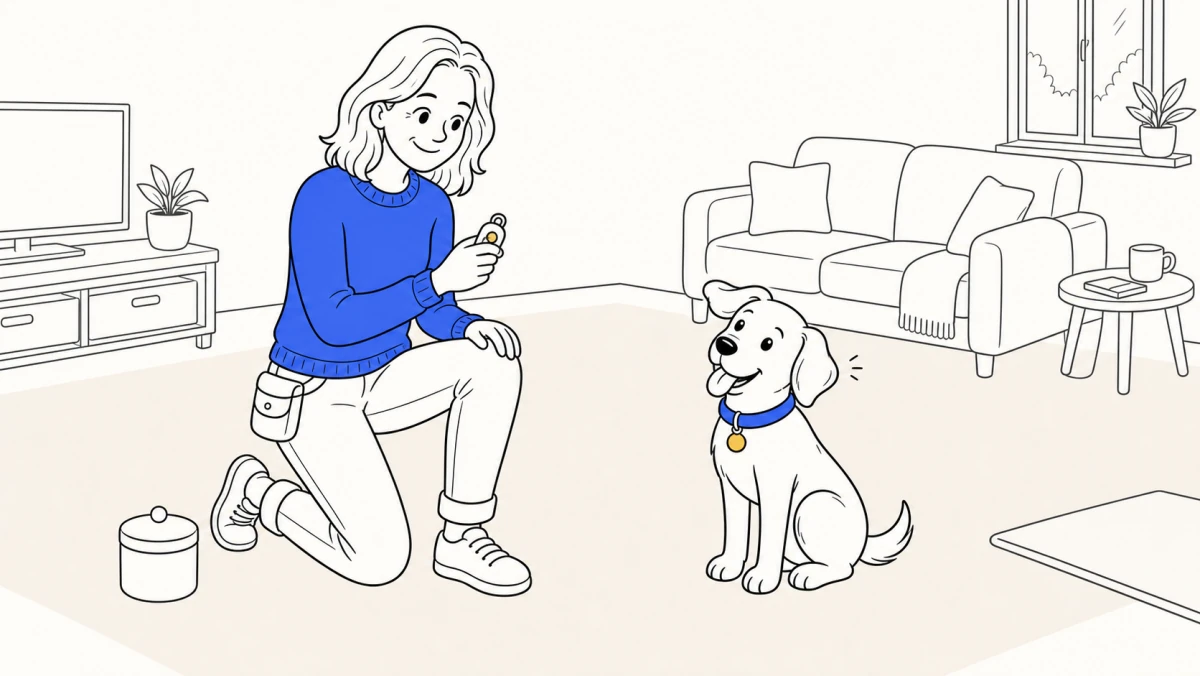
Charge a clicker by pairing click-then-treat a handful of times with no behavior required, then run a one-click charge test with your hands still — if your puppy perks up looking for food, you’re done. Karen Pryor’s own instruction is brief: two or three pairings, then test. If you’re holding a new clicker and already dreading that you should have done 200 reps first, you’re not behind: that number is a myth Karen Pryor herself called out.
Charging is a five-minute introduction, not a homework mountain — and the puppy on your floor will tell you when it’s landed.
What does charging a clicker mean?
Charging (sometimes called “loading”) is classical pairing: the click becomes a conditioned reinforcer that predicts food. Your puppy does not sit, stay, or “earn” anything yet. You are only teaching them that this sound means a treat is coming.
That promise is what makes the click useful later. In Browne’s 2015 University of Waikato research on delayed reinforcement, dogs learning a new behavior succeeded about 60% of the time when the reward came immediately, but only about 25% when it arrived one second late. A marker that bridges the gap still helped. Beginners’ hands are rarely as fast as a puppy; a charged marker buys back the timing you don’t have yet. For the fuller “why a marker at all” case, see what clicker training is and whether it works.
How do you charge a clicker, step by step?
Quiet room, soft treats, one consistent marker — then pair. No behavior required yet. The numbered steps below are the whole procedure.
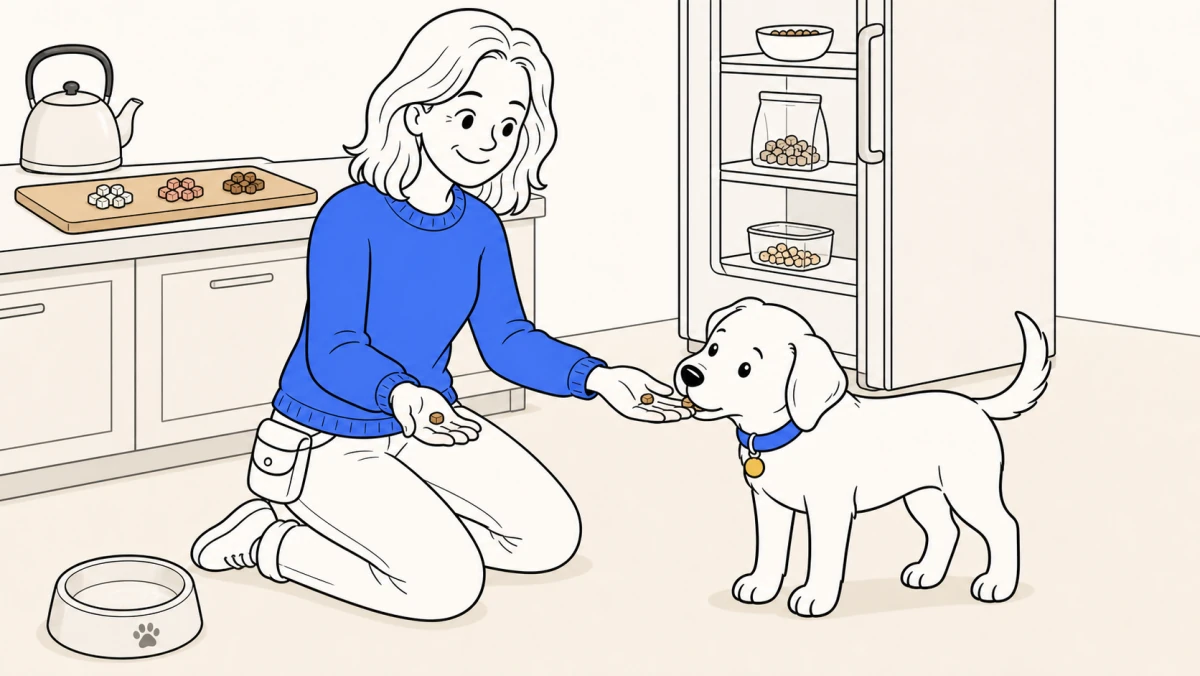
- Sit where your puppy can reach you easily. Soft treats only (no crunching pause between reps).
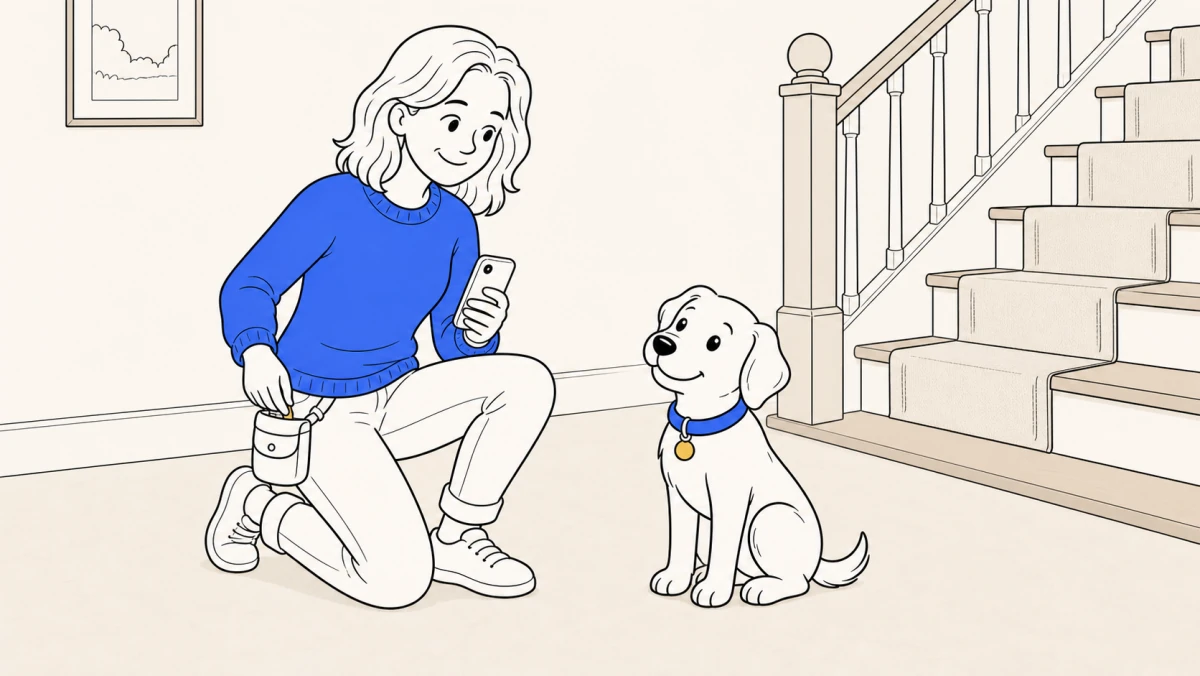
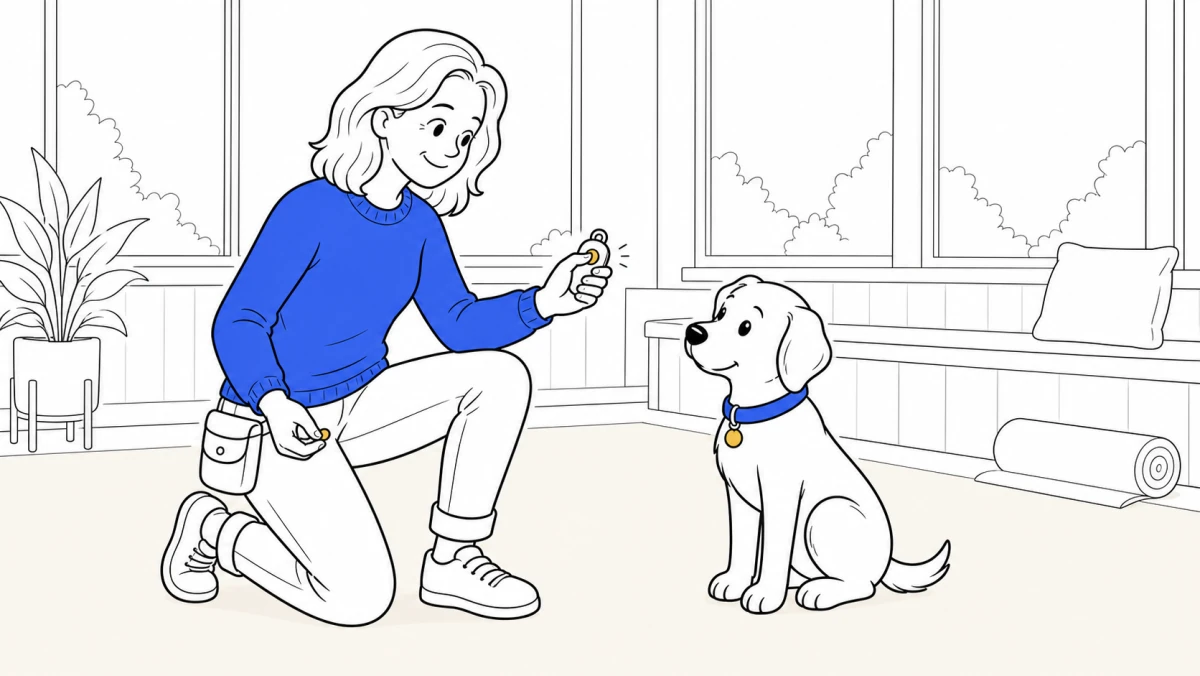
- Click once, then immediately deliver a treat. Your puppy does not have to do anything.
- Repeat a handful of times — Pryor’s own instruction is two or three — then move to the test below. Click, treat. Click, treat. Keep the gap tiny.
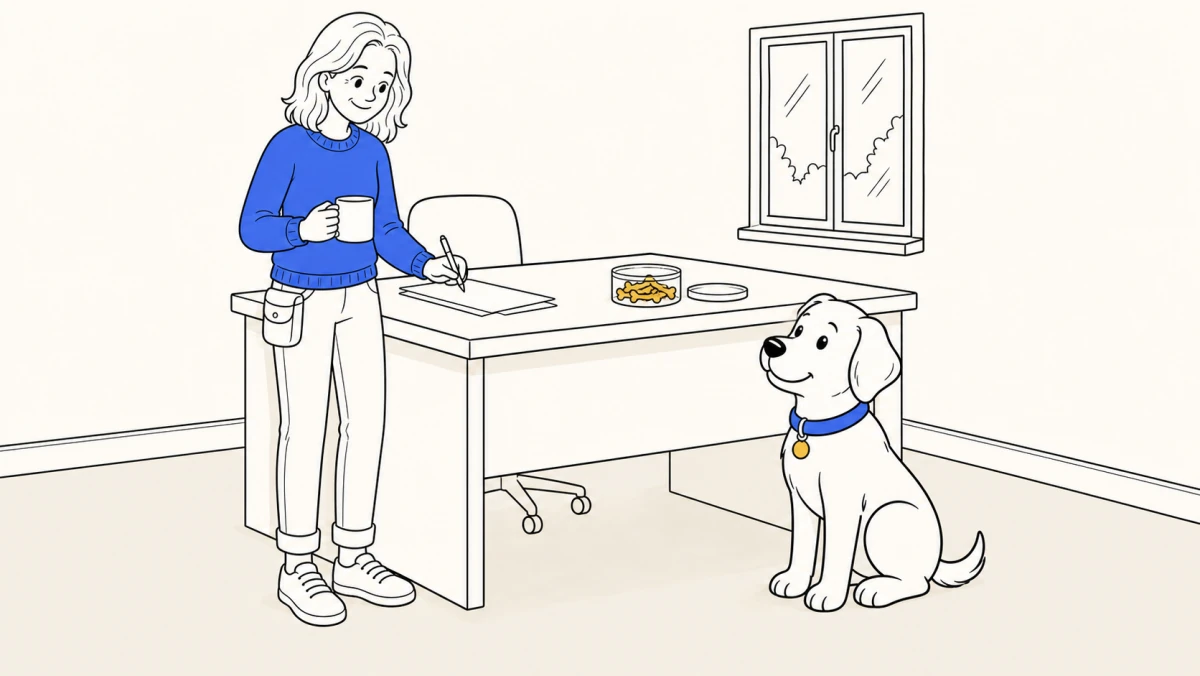
- Pause. Wait until your puppy is not staring at the treat pot. Click once and keep your hands still.
- Watch: if they perk up, orient, or look for the treat — charged. If not, do a few more pairs and test again.
Count treats out of the day’s food rather than stacking them on top. Soft and pea-sized beats crunchy — you want no chewing pause between pairs. A puppy who refuses food isn’t stubborn; they’re too excited, too full, or too tired. Make it quieter, or try again later.
How many clicks does it take to charge a clicker?
There’s no fixed number, and that’s the honest answer. Karen Pryor’s own instruction in “Charging the Clicker” is to pair click-then-treat “two or three times,” then run a charge test: one click, hands still. If your puppy perks up and looks for the treat, you’re done — many puppies get there in that first handful of pairs. Karen Pryor called the old “200 repetitions” figure “a useless leftover of a laboratory procedure” — read your dog, not a counter.
If the first test comes back blank, that isn’t failure — the sound just hasn’t predicted food yet in this room, with this puppy. Pair a few more times and test again. Applied studies in the literature have used anywhere from about 20 to 100 pairings, so if your puppy needs more than Pryor’s two or three, that’s well within normal range too. The behavior-read test is the real success signal; a pairing count — hers or anyone’s — never outranks the dog in front of you.
How do you know the clicker is charged?
The charge test is the only honest answer: one unexpected click, hands still, no treat visible yet. A charged puppy orients — ears, head turn, or a bright look toward you or the treat source. A blank stare means keep pairing.
Do not “help” the test by waving food or talking them through it. You’re checking whether the sound alone already means something. Once it does, stop charging as a standalone game and move into marking a real behavior — the classic next step is a nose-to-palm hand target on clicker training day one.
Do I need a real clicker, or can I say “yes”?
Either works. AVSAB’s humane-training guidance names “a clicker or verbal marker,” and Gilchrist et al. (2021) found no clear advantage for a clicker over a short spoken word or well-timed food. Pick one marker, charge it the same way, and stay consistent.
Gilchrist, Gunter, Anderson, and Wynne at Arizona State University compared clicker-plus-food, a spoken word (“chee”) plus food, and food alone across three experiments with naïve dogs — no method reliably beat the others. So a crisp “yes” is not a lesser fallback; it is the same method with a different sound. A plastic clicker still helps many beginners because the sound is identical every time and frees your mouth — but the active ingredient is the paid mark, not the gadget.
What if my puppy is scared of the clicker?
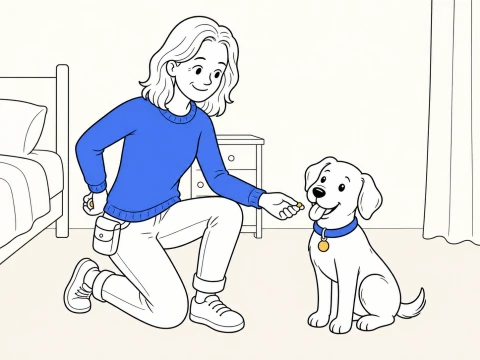
Muffle it in a pocket or behind your back, switch to a softer clicker, or charge a crisp verbal “yes” the same way. A flinch at a sharp sound is common and does not mean marker training is off the table — soften the sound or change the marker, and do not push through a freeze. Charge the gentler option with the same click-then-treat (or yes-then-treat) pairing until the charge test looks bright, not worried.
Do I have to give a treat after every click?
Yes, while your puppy is learning. Cimarelli et al. (2020) found that partially rewarding clicks did not speed learning and was linked to a more pessimistic mood state. If your thumb slips, pay the accidental click anyway — the click is a promise.
Karen Pryor treats unpaid clicks as the way a marker erodes. Habitually clicking without paying is the opposite risk of the 200-rep myth: not “too few pairs,” but “broken promise.” Keep the rule boring and absolute during acquisition. Advanced variable schedules are a later conversation — not day-zero charging.
What mistakes break the charge?
Most charging failures are timing or honesty problems, not a “dumb” puppy. Fix the pairing, then retest.
| What you see | Likely cause | Fix |
|---|---|---|
| Puppy ignores the click on the test | Not enough clean pairs yet | More click→treat, shorter gap, quieter room |
| Puppy flinches or leaves | Sound too sharp | Muffle, softer clicker, or verbal “yes” |
| You treat, then click | Order reversed | Click first, treat second — always |
| Accidental clicks go unpaid | Promise broken | Pay every click, even mistakes |
| Puppy only looks when they see food | Test contaminated | Hands still; no food flash before the click |
Pryor’s troubleshooting line for stuck beginners still applies once you leave charging: if progress stalls on a behavior, you are probably clicking too late. Charging itself fails more often from unpaid clicks or a reversed order than from “not enough reps.”
What do I do after the clicker is charged?
Stop the standalone click-treat game and start marking a real, easy behavior — usually a hand target — in the same short-session culture: about two minutes, stop on a win. Hand target is the classic first mark; the wider first-skills map lives in basic puppy commands, and the full training overview sits in how to train a puppy.
Charging is the universal prerequisite before those skills; it is not the whole first day. The full day-one arc (charge, then teach nose-to-palm) lives in how to start clicker training on the first day. Keep sessions short — how long puppy training sessions should be covers why two minutes beats a marathon — and treat the charged marker as a tool you now use, not a ritual you repeat forever.
Do I need to recharge the clicker later?
Not as a separate ritual if you keep paying every click. Occasional unpaid clicks erode the meaning. If the perk-up fades, run a few quiet click-treat pairs again before the next skill.
Think maintenance, not reboot. New rooms, new people, or a long gap since training can make the sound feel less predictive until you refresh a handful of easy paid marks. You do not need another “200 reps” marathon — just honest pairing until the charge test looks bright again.
When is a clicker flinch actually something else?
A one-time startle at a sharp sound, then recovery with a muffled clicker or a verbal “yes,” is ordinary sound sensitivity. Keep going with the softer marker.
What isn’t ordinary: a puppy who freezes, shuts down, or panics around training sounds; stiff body language; growling or guarding over food or toys; or a bite that breaks skin from a dog older than about six months. Those deserve a certified behavior professional’s eyes (IAABC-certified consultants at iaabc.org; a veterinary behaviorist is board-certified by the American College of Veterinary Behaviorists), not more charging reps — here’s what’s normal and when to get help.
Charging is one short, honest pairing game: click predicts food, every click stays a promise, and the dog tells you when it’s landed.
When the charge test looks bright, mark your first real behavior next — clicker training on day one walks the hand target in the same short-session shape. That first mark is the start of the full path from a charged clicker to a reliably trained puppy.
If you want short sessions that adapt when the perk-up is slow or the clicker needs softening — that’s the coach we’re building in ClickerPup.