
Almost certainly, yes. Mouthing, zoomies, over-tired meltdowns, ignoring you in new places, and the odd accident are normal puppy behavior, not warning signs. A few things do deserve outside help — a sudden cluster of health changes, real fear or aggression that keeps growing, or anyone pushing shock or prong tools. Here’s how to tell.
What puppy behaviors are actually normal?
If you’ve caught yourself thinking, half-worried, “is my puppy normal, or is something actually wrong with them?” — that’s the exact right question, and you’re not the first owner to lie awake over it. Living with a puppy can feel alarming when you don’t yet know what’s typical. Almost all of the stuff that scares first-time owners is completely, boringly normal:
- Mouthing and nipping. Puppies explore the world with their mouths, and they teethe until around six months. This is normal development, not aggression — even when your hands look like you lost a fight. It is not a sign of a “bad” or “dominant” dog. (How to stop puppy biting without punishment walks through the actual fix.)
- Zoomies. Those sudden, wild-eyed sprints around the room are a healthy release of energy. Let them happen somewhere safe.
- The over-tired “witching hour.” Many puppies hit a burst of bitey, frantic, over-aroused behavior at a fairly predictable point in the day. It usually means overtired, not aggressive. The fix is a nap and calm, not correction — here’s what’s going on and what to do.
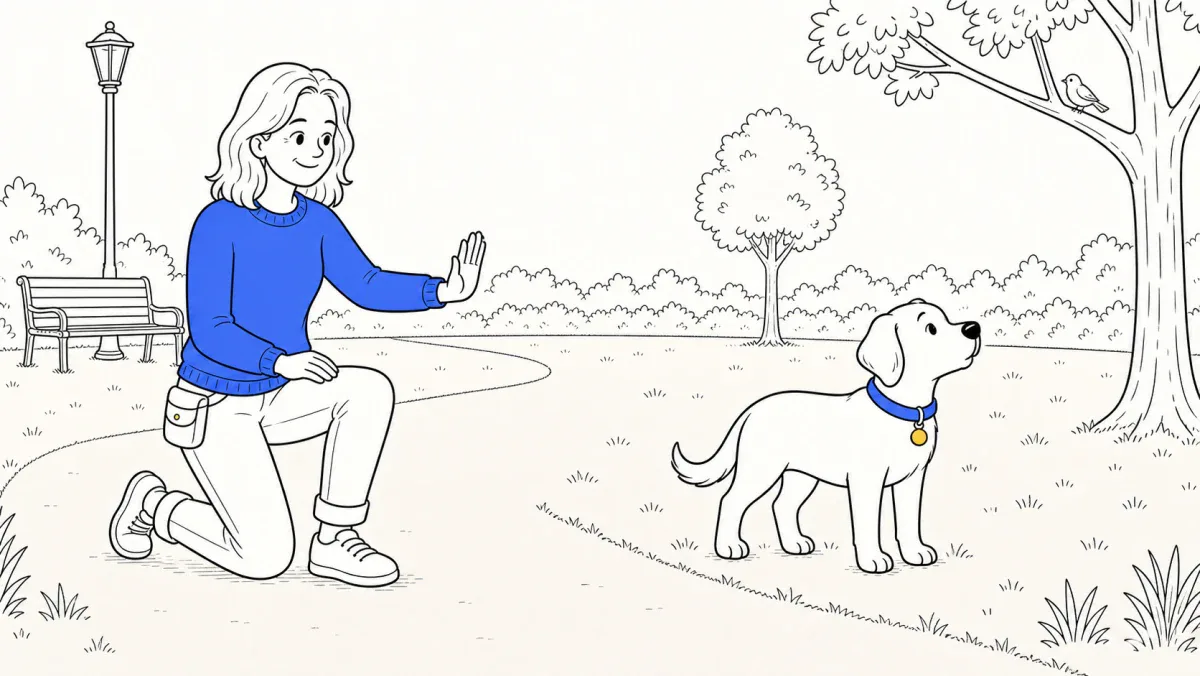
- Ignoring cues in new places. Your puppy who “knows” sit at home may look blank at the park. That’s a normal generalization gap, not defiance — new places are distracting, and skills don’t transfer automatically. Building the first five cues somewhere boring first is what makes them travel.
- The occasional accident. Puppies are small and still learning. A stray puddle is plumbing, not a personality flaw. (Potty training is a schedule problem far more often than a training one.)
If your puppy does these things, you are not failing and neither are they. This is what a normal puppy looks like. If you’re at the very start and want the whole picture in order, the complete guide to training a puppy lays out what comes when — and the first-week checklist covers the days before training really begins.
When does my puppy’s behavior need outside help?
A small number of things genuinely do call for outside help. Here they are, grouped by who to call.
When should I call the vet first?
Some behavior changes are really health changes wearing a costume. Call your vet — before you reach for training — when a change in behavior clusters with physical signs, such as:
- House-training suddenly falling apart in a puppy who had it, especially alongside
- Appetite loss (refusing food they normally love),
- Unusual tiredness or low energy, or
- Signs of pain or discomfort.
Any one of these on its own is often mild and nothing to panic about — a single off day, a nap-heavy afternoon. Together, they’re a “get checked” signal, promptly. A housetrained animal suddenly soiling indoors is a classic example that veterinary guidelines flag as worth ruling out medically first (AAHA, 2015). You don’t need to diagnose anything — that’s your vet’s job. Just get them looked at, and know that training can wait. Nothing is lost by pausing.
What if just one of those signs is severe?
Don’t wait for a second sign to line up if the first one is severe on its own. A puppy who won’t eat at all, seems limp or unresponsive, or is clearly in pain deserves a call right away, not a watch-and-wait — clustering makes the case stronger, but it isn’t the bar for calling.
When should I call a certified behavior professional?
Some things are beyond what any app, article, or self-taught owner should handle alone. Reach out to a certified behavior professional if you see:
- A bite that breaks skin, from a puppy older than about six months. This is a same-week call on its own — one incident, not a pattern you need to watch build over weeks, is reason enough to reach out.
- Growling or snapping paired with a stiff, tense body — especially if it’s getting worse, not better, over weeks.
- Resource guarding that escalates — stiffening, growling, or snapping over food, toys, or spaces, ramping up over time.
- Fear that doesn’t fade. Startle and recovery is normal; persistent, multi-situation fear that keeps growing is not.
- Panic when left alone — sustained distress, not just a bit of settling fuss, and above all if your puppy hurts themselves trying to escape. Pair the behaviorist call with a quick vet check too — self-injury and severe distress are worth ruling out physically as well as behaviorally.
For these, look for an IAABC-certified behavior consultant. The directory at iaabc.org is a good place to start. One important note: never punish a growl. A growl is your puppy telling you they’re uncomfortable — silence the warning and you don’t fix the fear, you just remove the heads-up.
What’s the difference between normal fussing and real panic?
A puppy who whines a little when left, then settles fairly soon, is doing something ordinary — and comforting them is completely fine; it won’t “teach them to cry.” What’s different is sustained, frantic panic: screaming that doesn’t wind down, or a puppy who scrapes and bites at a door or crate hard enough to hurt themselves. That intensity, not the noise itself, is the line worth taking seriously.
Should I ever use a shock or prong collar on my puppy?
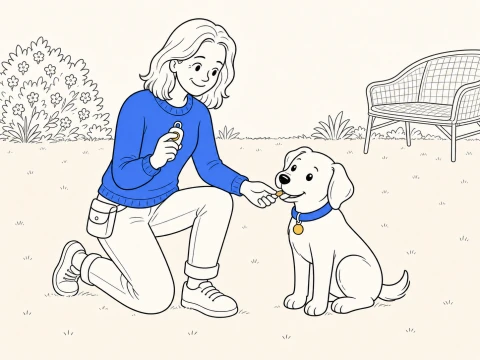
No. If a trainer, a neighbor, or a video tells you to “correct” your puppy with a shock collar, prong collar, choke chain, or a firm alpha-style telling-off — decline, and walk the other way. This is true even when it’s framed as a last resort.
Stick with force-free, reward-based training. AVSAB’s position is that only reward-based methods should be used for all dog training, and that there is no evidence aversive methods are more effective in any context (AVSAB, 2021). Aversive tools are linked with more stress and worse welfare in dogs: in a controlled study of 92 companion dogs, those trained with aversive methods showed over 13 times more lip-licking and about 8 times more yawning than reward-trained dogs — both are recognized canine stress signals — and a real rise in cortisol afterward, while the reward-trained dogs showed almost none (Vieira de Castro et al., 2020). A puppy is a baby. They don’t need to be corrected into behaving; they need to be shown what to do and paid for doing it.
Quick normal-vs-get-help table
| What you’re seeing | Usually normal when… | Worth a call when… |
|---|---|---|
| Mouthing / nipping | Playful, teething, calms with redirection | Stiff body, growling, snapping that escalates, or a bite that breaks skin (dog older than ~6 months) |
| Resource guarding (food, toys, space) | Occasional stiffening that eases once you step back | Stiffening, growling, or snapping that ramps up over time (behaviorist) |
| Accidents | Occasional, in a young puppy | Returning suddenly with appetite/energy/pain changes — or any one of those alone if severe (vet) |
| Fear of something new | Startles, then recovers and explores | Persistent, spreading, not fading over weeks (behaviorist) |
| Being left alone | Some fussing, settles fairly soon | Prolonged panic, self-injury (behaviorist, and a vet chat) |
The one thing to remember
Asking for help early is good ownership, not failure. It doesn’t mean you did something wrong or that your puppy is broken. It means you noticed something and you cared enough to act — which is exactly what a good owner does. Most of what you’ll worry about is normal. For the small slice that isn’t, the right person is a call away.
And for that normal, everyday majority — the mouthing, the zoomies, the generalization gaps — that’s exactly the stuff a short, well-timed training session helps with, which is what we’re building ClickerPup to plan for you.