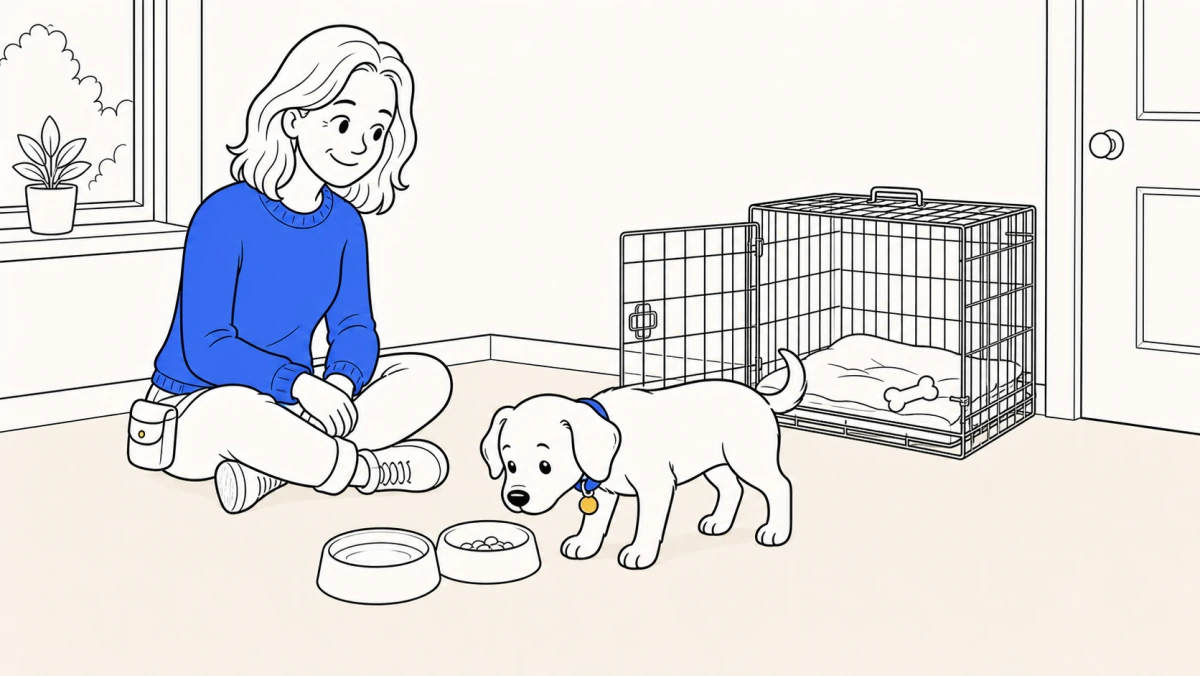
Your puppy’s first week comes down to four things, not fifty: safe supplies ready before pickup, a calm first 24–48 hours, a tight potty-and-sleep routine, and gentle, positive exposure to the world — started early, not crammed in. Formal training can wait a few days if it needs to. Here’s what actually matters, in order, with links to the full guide wherever one topic needs more than a paragraph.
If you searched this the night before pickup, or at 2am on day one wondering what you’ve forgotten — you haven’t forgotten the important thing. Most of what fills up a “new puppy checklist” online is a shopping list. Supplies matter, but they’re the easy part. The part that actually determines how this week goes is calmer and less buyable: routine, patience, and knowing which chaos is normal.
What do I need ready before my puppy comes home?
Keep the list short — you can always buy more once you know your puppy’s actual preferences:
- Food (ideally the same brand your breeder or shelter was already feeding — a diet change and a home change are each stressful alone; no reason to stack both on your puppy at once)
- Food and water bowls
- A crate sized for your puppy now, not their adult size — puppies have a natural instinct not to soil where they sleep, so a crate that’s only big enough to stand, turn, and lie down (no bigger) is what makes that instinct work for potty training; oversized, it just becomes a room they can mess in one corner and sleep in the other (AKC)
- Bedding, a few chew-safe toys, a collar, ID tag, a leash, and poop bags
- An enzymatic cleaner for the accidents that are coming regardless of how well you do this
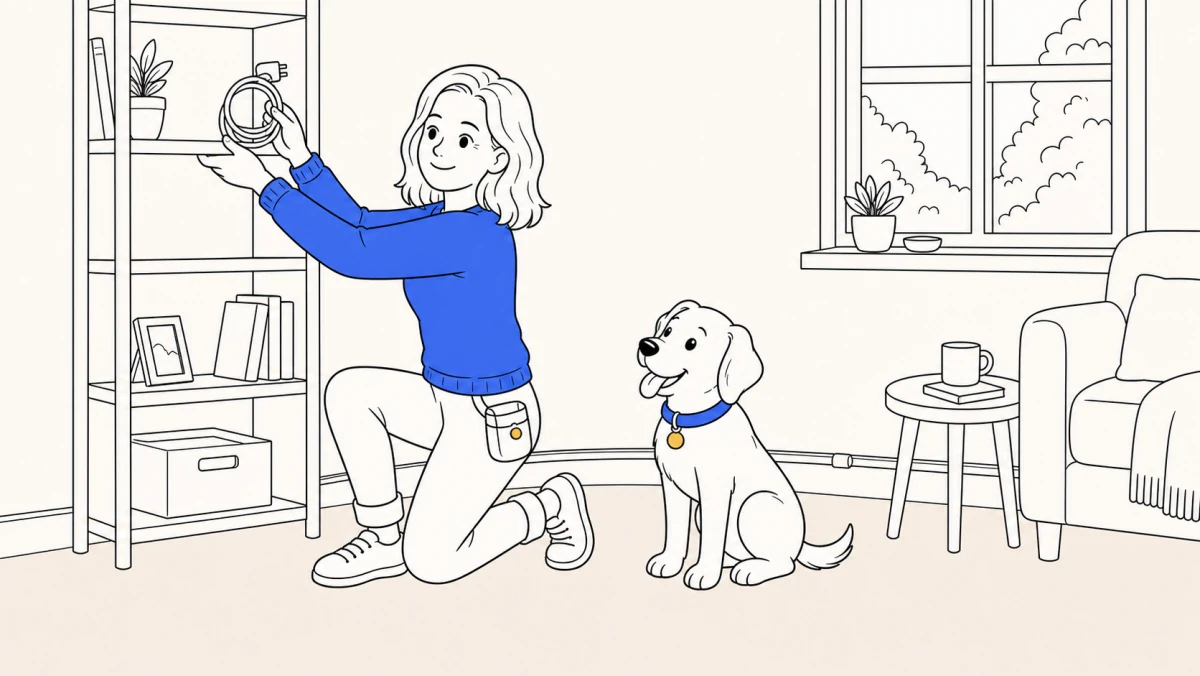
- One puppy-proofed room to start in — cords up, trash out of reach, doors that actually latch; here’s how to puppy-proof your home before day one
That’s it for shopping. A cart full of “essentials” you saw on a gear list isn’t what makes the week go well.
What should the first 24–48 hours actually look like?
Quiet. That’s the whole answer. Skip the welcome party — no parade of friends and family on day one, no big trip out to show off the new puppy. Let your puppy explore one puppy-proofed room at their own pace, offer water and a bit of food, and let them decompress from what was, from their side, a pretty disorienting day. A subdued, sleepy, or even slightly shut-down puppy on day one is normal, not a bad sign.
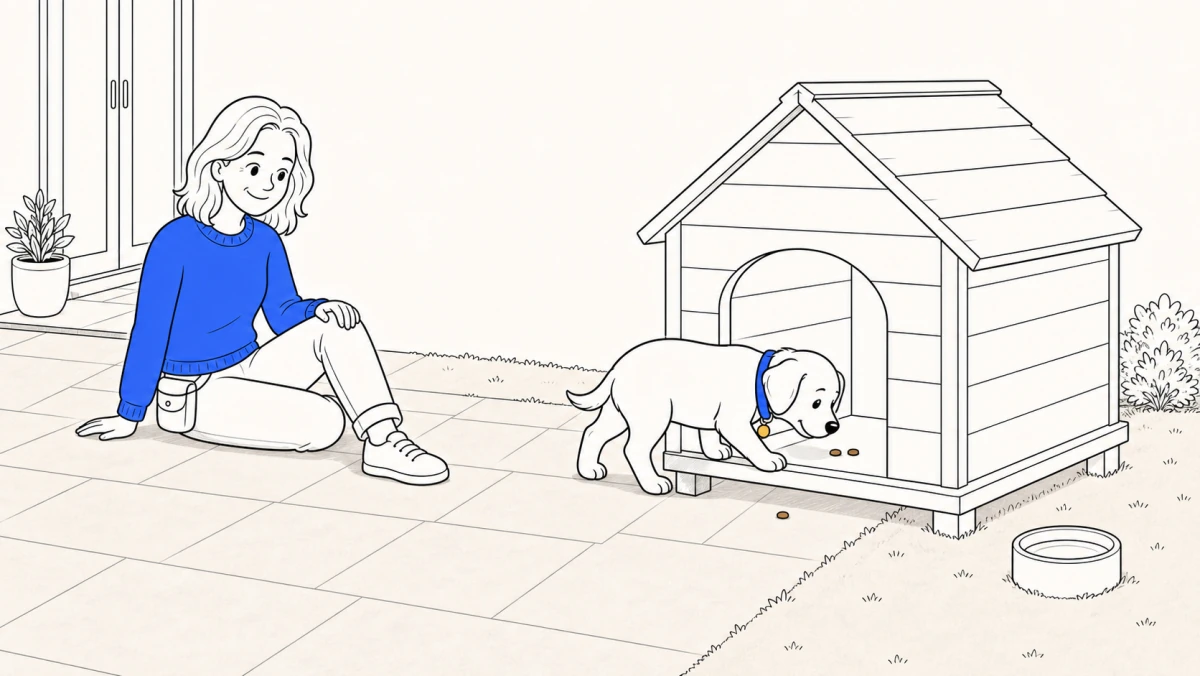
Set the crate up as a calm resting spot now, not a punishment introduced later — a blanket, a safe chew, the door open at first. Puppies build associations fast, and a calm first introduction tends to be the one that sticks for months.
How do I start a potty routine in week one?
Take your puppy out often — right after waking, eating, drinking, and playing, plus every couple of hours in between — and reward the instant they finish outside (Humane World for Animals). Never punish an accident; it only teaches a puppy to hide from you, not to hold it. That’s the short version for week one specifically; the full schedule, the “how often” math, and what to do about nighttime accidents live in how do you potty train a puppy — this week is about starting the routine, not mastering it.
How do crate and sleep work the first few nights?
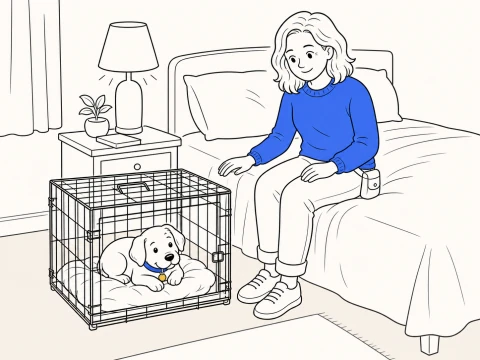
Expect at least one rough night. It’s common enough that r/puppy101 — one of the largest puppy-owner communities online — has an official “Puppy Blues” post flair just for the exhaustion and doubt that shows up around now (r/puppy101, “The dreaded witching hour”). That’s not a sign you got the wrong puppy or are doing it wrong; it’s a very normal reaction to a very disrupted week of sleep.
Keep the crate near you at first — earshot distance, not another room — so a whimper doesn’t have to become a cry before anyone notices. A consistent, boring bedtime routine (last potty trip, then straight to the crate, no play) helps more than anything you can buy. The full playbook for getting your puppy to settle and sleep through the night goes deeper than week one needs. If crying is just protest, sitting it out is fine; if it comes with straining, vomiting, or your puppy seeming genuinely unwell rather than just unsettled, that’s a vet question.
How much handling and socialization should happen in week one?
More than most new owners expect, and gentler than most new owners expect. The American Veterinary Society of Animal Behavior’s position is that socialization, including puppy classes, should start before a puppy’s vaccine series is finished — as early as 7–8 weeks old — because behavioral problems, not infectious disease, are the leading cause of death in dogs under three. AVSAB names one set of vaccines at least 7 days prior plus a first deworming as the only prerequisite for starting that early (AVSAB, 2008).
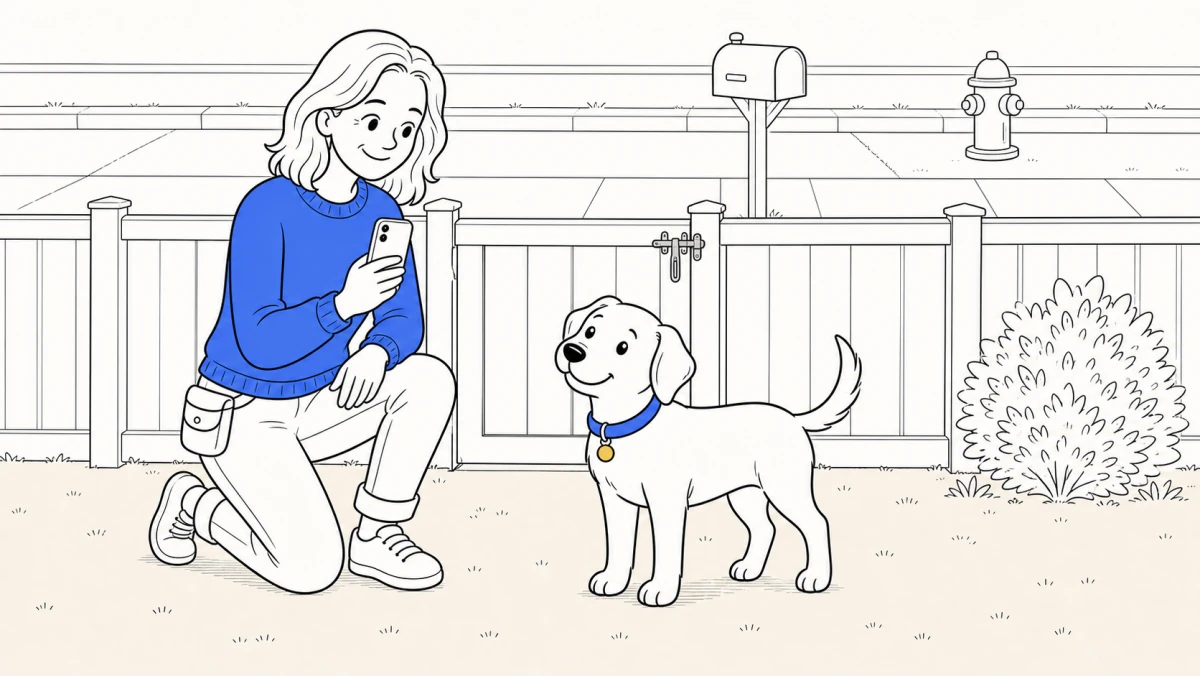
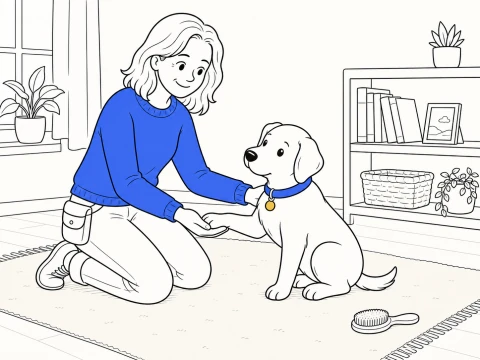
In week one that means calm, low-key exposure, not outings. Sophia Yin’s well-known socialization checklist groups this by category rather than by day: gentle handling (ears, paws, mouth, a light hold), a few different-looking people at a distance your puppy is comfortable with, and everyday sounds and surfaces at home — watching your puppy’s response as you go, not just checking boxes. A puppy who’s curious is learning; a puppy who’s frozen or trying to leave has had enough for now. For the deeper research on the socialization window itself — including why the “12-week cutoff” gets quoted more precisely than the evidence supports — see the puppy socialization window: what does the research actually say?
You didn’t need an app to get through week one — a calm routine and some patience did that. Where a system like ClickerPup helps is next: tracking what your puppy’s actually ready for instead of handing you the same generic checklist regardless of how your particular day one to seven went.
Should I start clicker training in week one?
Optional, but there’s a real reason not to wait too long. A 2024 peer-reviewed study from the Royal Veterinary College’s Pandemic Puppies project found that owners who attended online puppy classes before their puppy turned 16 weeks old were significantly less likely to later use aversive training methods or tools (Brand et al., 2024). That’s not proof that clicker training itself changes outcomes — it’s evidence that starting reward-based learning early, while it’s still new, correlates with staying reward-based later. Given that, one short, low-pressure session in week one is worth it if you have the bandwidth; it’s not worth it if you don’t.
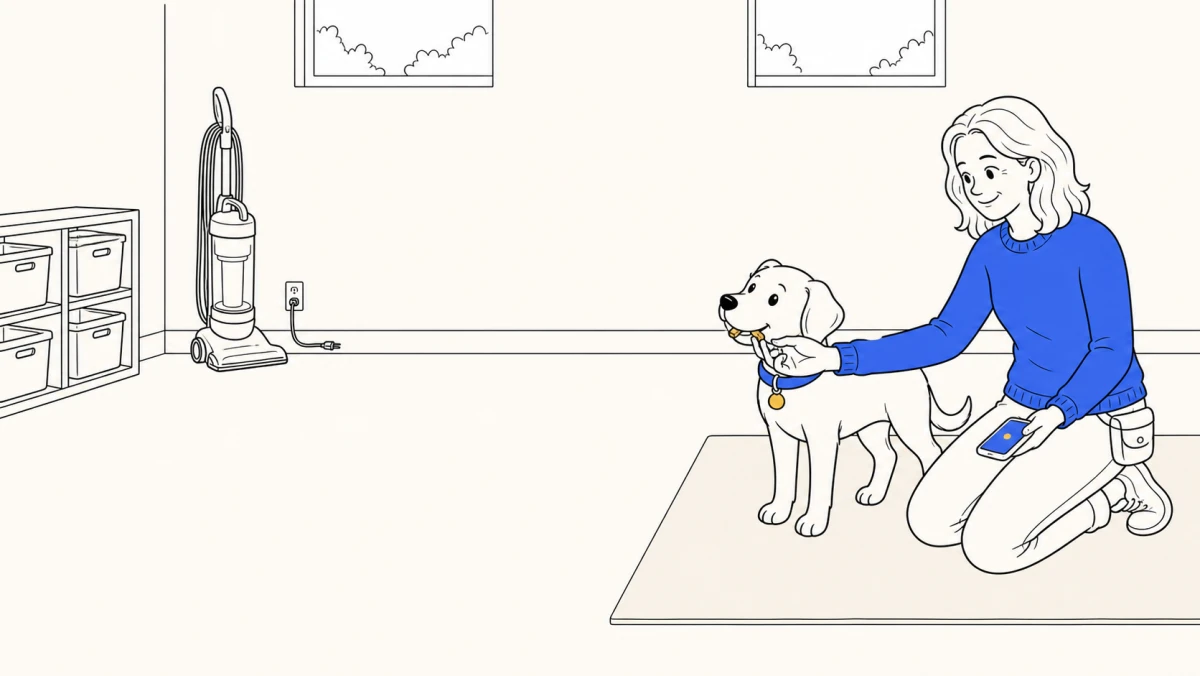
If you do start, keep it to one short session: charge the marker (click or a verbal “yes,” AVSAB names either as legitimate), then stop. The full first-day method — how many repetitions, what to do if your puppy mouths your hand instead of touching it, and the honest research on whether the clicker itself matters — is in how do I start clicker training my puppy on the first day?
When is it more than normal first-week chaos?
Mouthing, accidents, clinginess, a rough night or two, and general first-week disorientation are all normal — not signs you’re failing or that something’s wrong with your puppy. A few things genuinely do call for outside help sooner rather than later: a stiff, frozen body paired with growling or snapping that keeps escalating, a bite from a dog older than about six months that breaks skin — old enough to have adult teeth and real bite force behind it, not a puppy’s still-developing mouth — or physical signs — vomiting, real lethargy, not eating at all — that suggest medical rather than behavioral. Those deserve a same-week call to a vet or a certified behavior professional, not a watch-and-wait. AVSAB’s position is clear that only reward-based methods should be used regardless, with no evidence aversive methods work better in any context (AVSAB, 2021) — decline anyone who suggests a shock or prong collar for a puppy this age.
For the fuller breakdown of what’s normal versus what needs a call, see is my puppy normal, or should I get help?
The bottom line
Supplies are the easy 20% of a good first week. The other 80% is calm, routine, and gentle exposure — started early, not rushed. Get the potty routine going, keep socialization gentle and positive, let the crate become a safe place instead of a punishment, and treat one rough night as normal rather than a warning sign. If seeing the whole week laid out helps, here’s a full first-week training schedule. If you want a first clicker touch too, it can wait until you both have the bandwidth for it — this week was never about doing everything at once. Get the basics right, and everything else has room to follow.