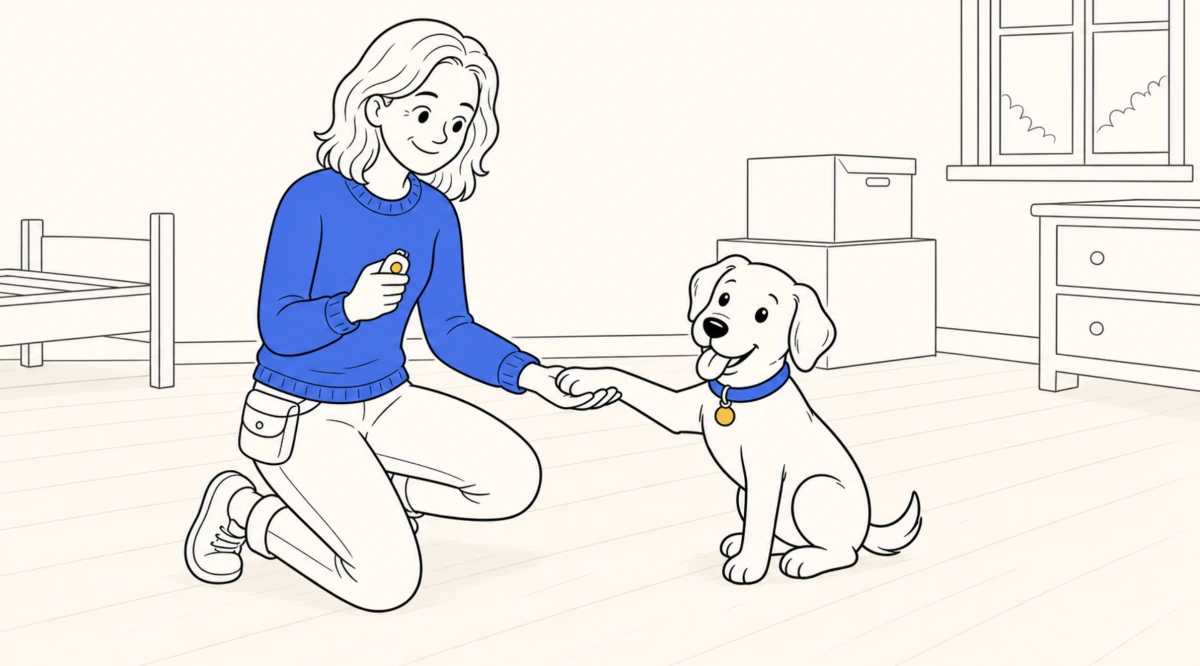
Teach shake by capturing a paw try: hold a treat in a loosely closed fist at chest height, click the first soft lift or touch, treat from your other hand, then swap to a flat palm and add “shake.” Never grab the paw — it’s offered, not taken.
If sit has been a slog and you want something guests will actually ask for by name, shake is the friendliest trick in the book. Same click-and-treat loop as everything else — no class, no forcing a handshake, just wait for the paw and pay it.
Does my puppy need to know sit before shake?
No — shake has no hard prerequisite. Sitting makes it easier for most puppies to balance while one paw lifts, but you can teach shake from a stand if that’s what they offer. Start wherever they’re steady enough to lift a paw without tipping over.
If they already have a calm sit, use it — it frees up a front foot and keeps the body still while they experiment. If sit is still shaky, don’t wait on it; teach shake as its own win. ClickerPup treats shake as startable with no other skill first, the same early-capable slot as spin in the fun tricks hub.
How do you teach a dog to shake?
Hold a treat in a loosely closed fist at about chest height, wait for a paw to lift or touch, click that try, and treat from your other hand — then swap the fist for a flat empty palm, add the cue “shake” just before they do it, and fade the food in the teaching hand. The non-obvious move most guides skip: click the try (a weight-shift or paw lift) before you demand a polite rest on the palm. That split is Karen Pryor’s first shaping law in Don’t Shoot the Dog! — raise one criterion at a time, in steps small enough that your puppy still has a realistic shot.
You’re on the living-room floor with a handful of treats grabbed from the kitchen bag — that’s the whole setup. No class, no special gear beyond a clicker or a cheerful “yes.”
What are the first steps to teach shake?
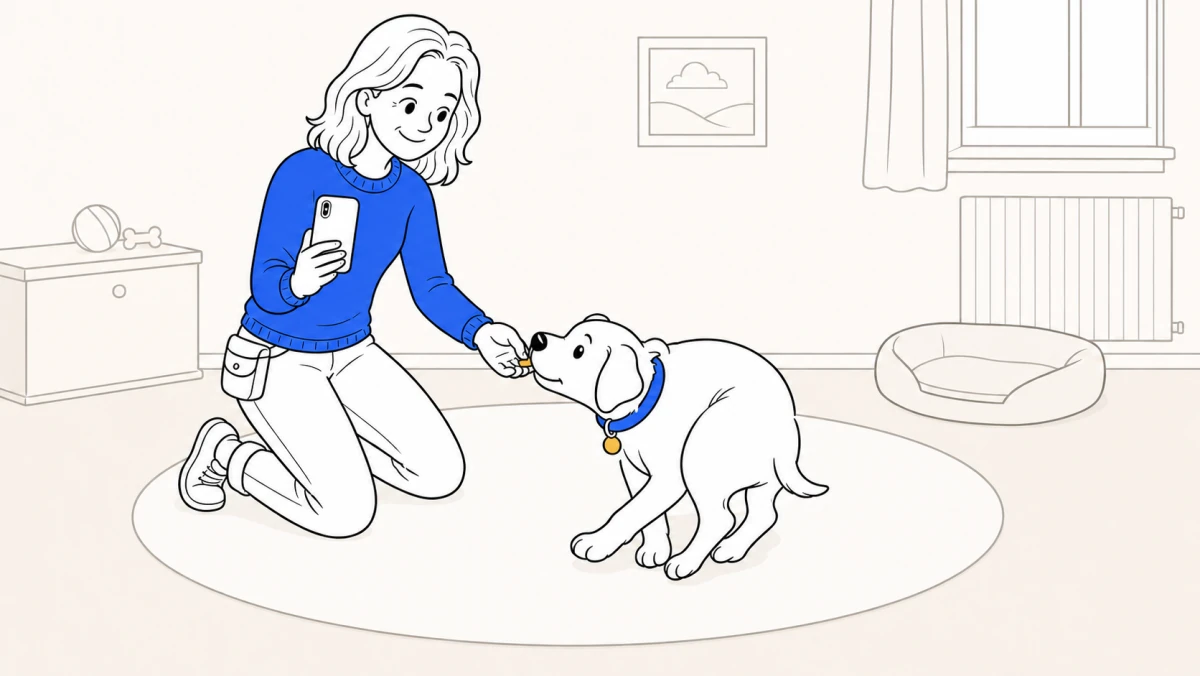
- Hold a high-value treat in a loosely closed fist, low — around your puppy’s chest height. Stay quiet. They’ll sniff and nose it; when licking doesn’t open the fist, most puppies try a paw.
- Click the instant the paw lifts toward your hand (or the instant it touches, once lifts are easy), then treat from your other hand. While you’re still splitting, that early lift counts — don’t wait for a perfect handshake.
- Repeat until paw-to-fist is quick — about four clean contacts out of five in a short run.
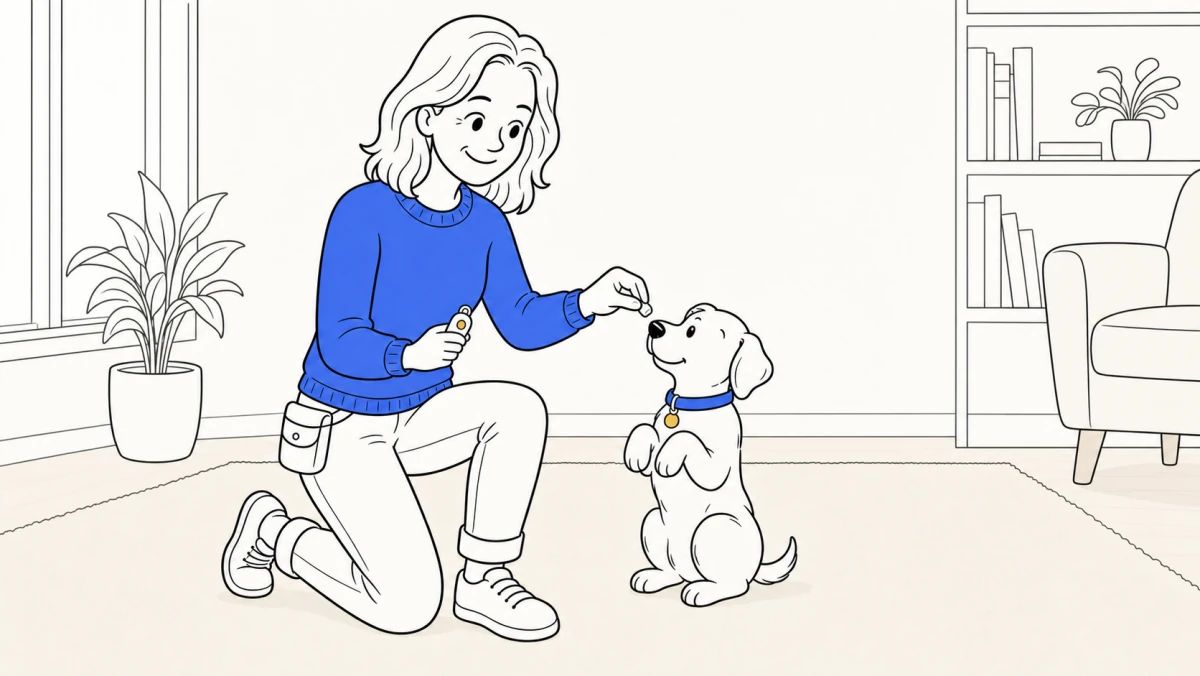
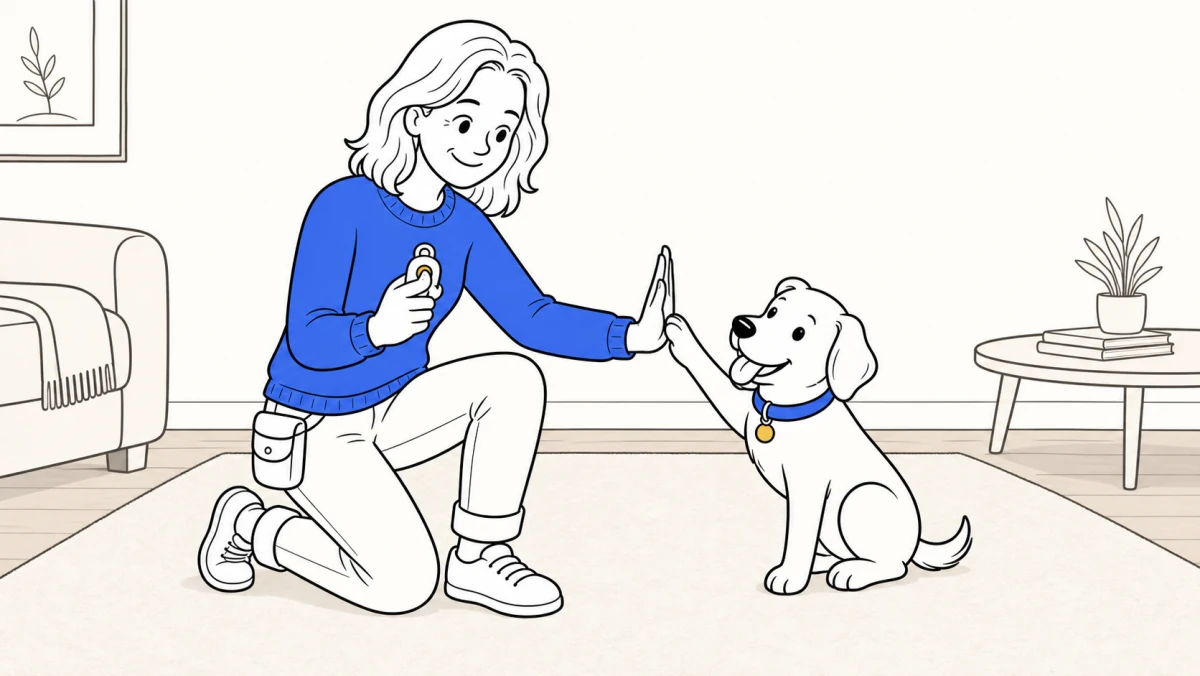
- Swap the fist for a flat empty palm at the same height. Click paw contact on the palm; pay from the other hand. Build a short beat of rest on the hand before you click, so the trick is a soft place-and-hold, not a scratch-and-scramble.
Hands never grab the paw. If they stall, go back to clicking a lift or soft contact — do not finish the handshake for them. This is reward-based work end to end: AVSAB’s 2021 position recommends reward-based methods only for dog training; a cheerful verbal marker (“yes”) is a legitimate equal to a clicker if you prefer that sound.
What if my dog mouths my hand or scratches instead of shaking?
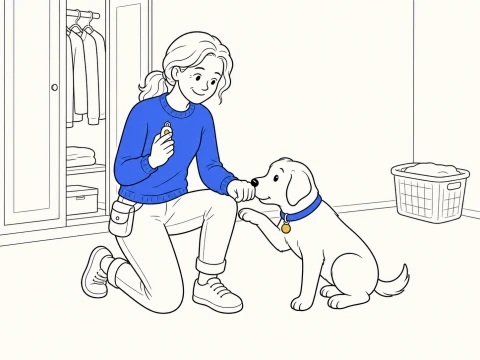
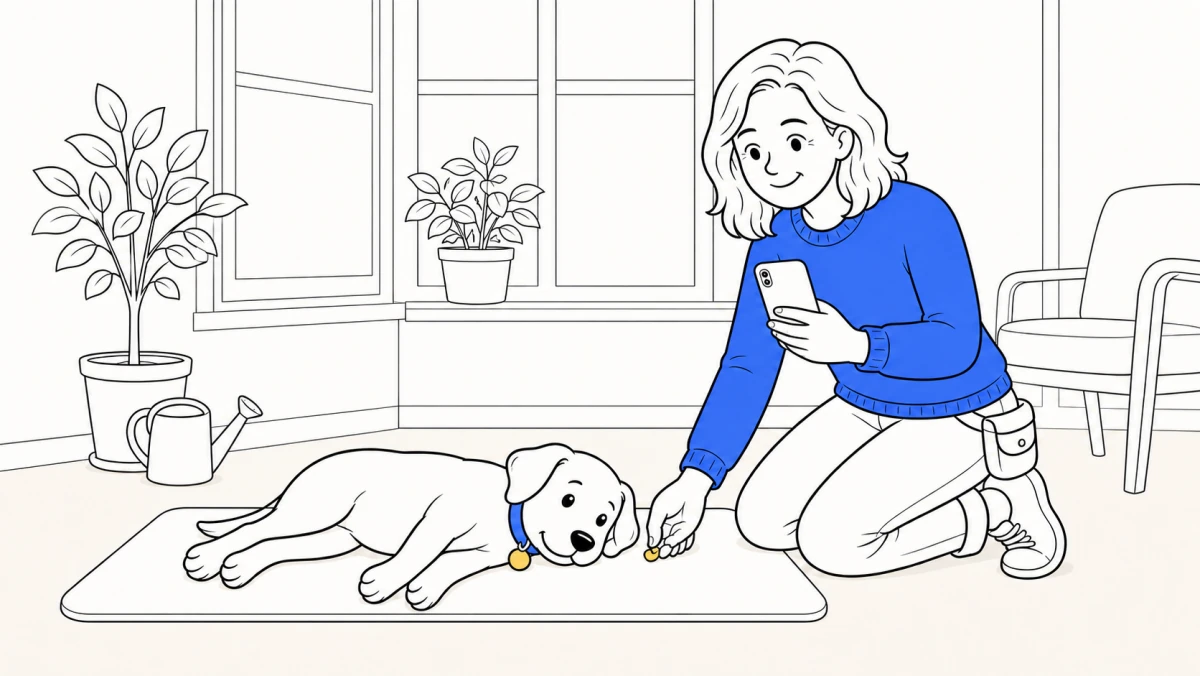
Hold the fist lower and stiller and wait them out — click even a weight-shift off a front foot, then build. If they scrabble or scratch, click the first soft contact and pay fast; a low hand keeps the paw gentle.
Mouthing the fist is not stubbornness — it’s the first experiment most puppies try when a closed hand smells like food. Stay quiet, keep the fist still, and pay the first foot-shift or soft paw. Scrabbling usually means the bar jumped too fast to “rest the paw politely”; drop back to clicking any gentle touch and rebuild the beat of rest later. Only offering one paw forever is fine — pick their favorite and stick with it. The AKC notes that teaching the other paw is a separate skill if you want both; most households never need it.
When do you add the cue word for shake?
Add “shake” (or “paw”) once paw-to-palm is reliable — about four clean paw contacts out of five, across two short sessions — saying the word just before you offer your hand, not after the paw is already up. Cue too early and you accidentally pair the word with sniffing or licking. Cue after the paw lands and you’re marking history, not teaching a signal.
That cue-before-behavior timing is the same sequence the AKC shake guide uses. Then shrink any leftover fist-prompt into an open-hand offer alone — AKC’s lure-fading guidance is to begin fading once the cue is consistent, not on a fixed rep count.
Generalize last: a living-room palm is not the same ask as a kitchen palm, and a shake for you is not yet a shake for another adult in the house. Change one thing at a time — new spot, then another person who uses the same open-hand offer and pays the same way.
How long should a shake training session be?
About two minutes and five to eight reps — keep it a game and end while they’re still offering the paw cheerfully, not after they’ve lost interest. The same short-session logic that covers sit and settle applies here; see how long puppy training sessions should be for the age-by-age defaults. A handful of soft paw contacts is a complete session. Nice work is ending early, not squeezing in one more rep when the paw has already gone flat.
Is shake the same as high-five?
No — high-five is shake’s cousin: same shaping, but you click a raised paw at about nose height instead of a soft rest on a low open palm. Teach shake first if you want the classic handshake; once paw-to-palm is easy, raise the target hand a little and click the higher lift for a high-five. High-five is yours to freestyle with the identical method — a DIY extra on the fun tricks hub, not a separate app-coached skill.
When should you stop and get help?
Shake is a light, optional trick — stop if your puppy yelps, flinches, or pulls the paw back like contact hurts, and talk to your vet before you push handling around the feet. If fear, stiff body language, growling, or panic shows up around hands near the paws, that’s outside trick territory; use our when-to-get-help guide and, for behavior work, an IAABC-certified behavior consultant. Never grab the paw to “show them” the handshake — a held paw teaches pulling away, and it skips the choice that makes the trick worth teaching.
What should you do next?
Practice in a new room until you get about four clean paw contacts out of five there, then let another adult in the house offer the same open palm — change one thing at a time, and keep paying every clean try. If you want a second party piece after that, spin is the other early-capable option on the fun tricks hub. Keep it light, click the try, and remember the one rule: the paw is offered, never taken.
If you’d rather have those short sessions planned for the puppy on your floor — including shake alongside spin, roll over, and beg, with the same “reliable only after they’ve proven it twice” bar — claim an early spot on the waitlist. The clicker is free forever, with a plain reminder before anything ever charges.