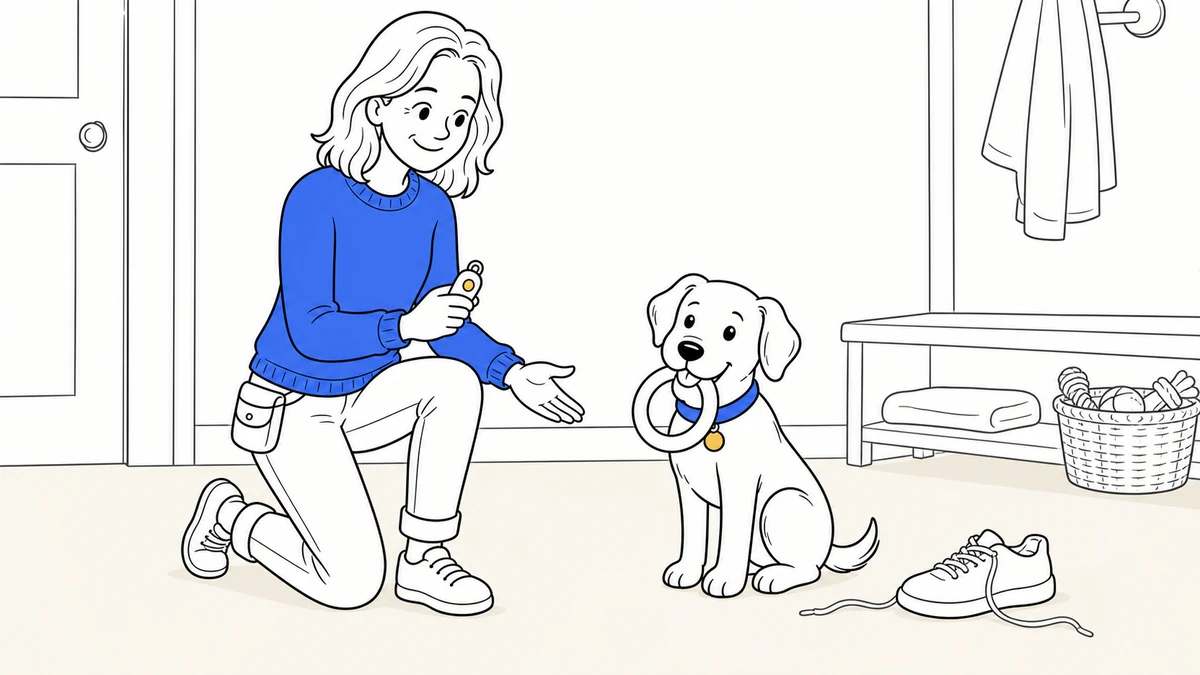
You stop a puppy from biting by making teeth boring and better choices rewarding. The instant teeth land on skin, calmly go still or step away for a few seconds, then redirect to a chew or a known cue and reward the switch. Add protected naps, legal chews within reach, and one set of house rules. No yelling, no muzzle-holding — punishment isn’t needed here, and it can backfire.
If you’re reading this with scratched-up hands, wondering whether your puppy is broken — or whether you are — you’re in the most crowded club in dog ownership. “Do I even like my puppy?” and “I’m so mad at him and I feel awful about it” are things first-time owners type at the end of a rough day far more than anyone admits out loud. So read the next line first: that feeling is one of the most normal things in new-puppy life. Nothing is wrong with your dog, and nothing is wrong with you. Here’s why it happens, exactly what to do, and the one situation where you should get help.
Is my puppy biting normal, or is my puppy aggressive?
At eight to sixteen weeks, biting is almost always normal development — not aggression. This is the question that sends most owners searching, so here’s the honest answer first: puppies explore the entire world with their mouths, and true aggression at this age is genuinely rare. The ASPCA’s guidance on puppy mouthing, nipping, and biting treats it as normal exploratory behavior — how puppies play and investigate — not a warning sign. Force-free trainers and experienced-owner communities are near-unanimous on the same point: ordinary mouthing, even the hard, relentless, jeans-shredding kind, is a developmental stage.
What real aggression looks like is different in kind, and worth knowing so you can stop worrying about the wrong thing. The red flags are a stiff, frozen body, a hard stare, guarding food or toys with a low growl, or bites that break skin from a dog older than about six months. Those deserve a professional. A wriggly, overexcited puppy who bites while play-growling and bouncing is showing you the opposite of those signs — that’s a land shark, not a threat.
Why won’t my puppy stop biting me?
Because their mouth is how they investigate everything, and teething keeps it busy. Puppies don’t have hands; they meet the world teeth-first, and the teething process runs to around six months, which makes mouths busier still. Add a young brain that hasn’t grown its “brakes” yet, and you get a puppy who bites not out of malice but out of ordinary, high-energy curiosity.
That reframe matters, because the plan for “normal development” looks nothing like the plan people imagine for “bad behavior.” There is nothing to punish. There’s just a puppy who needs better options for their teeth and better naps for their brain — both of which you can arrange today.
How do I stop my puppy biting in the moment?
Do three things, in order, every single time teeth touch skin:
- Calmly disengage. Go still, or stand up and step away for a few seconds. No yelp performance, no shove, no scolding — just make the fun stop for a moment. Calm is the whole trick, and it’s the part everyone in the house can do identically.
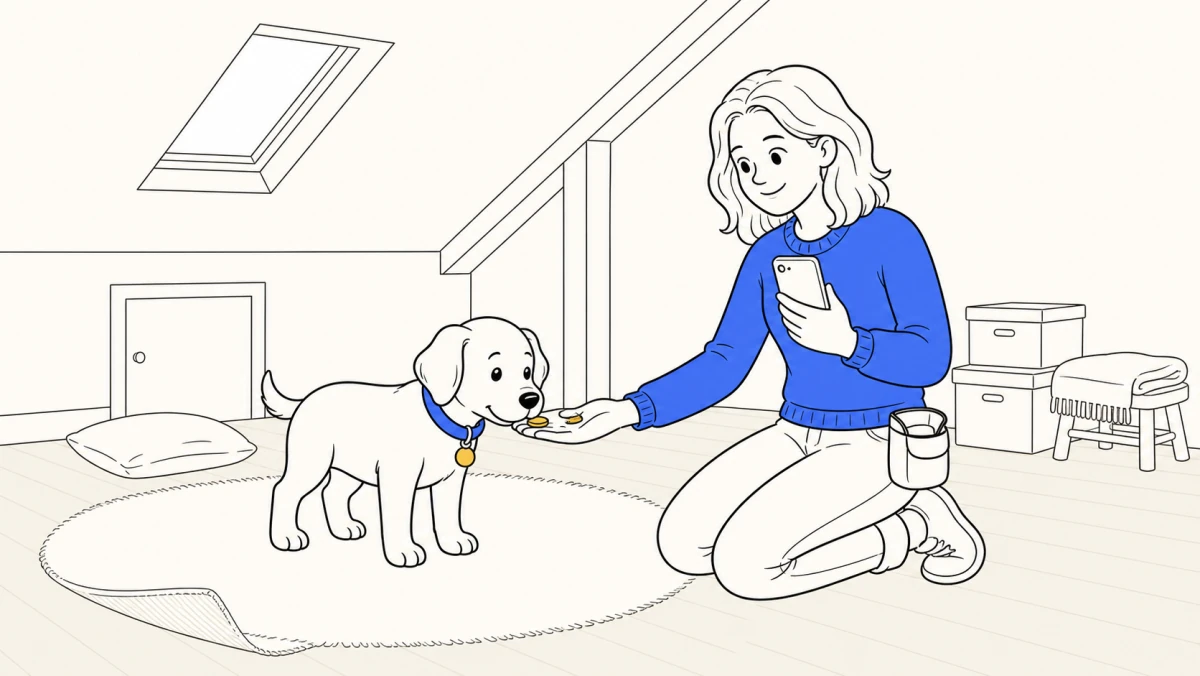
- Redirect. Offer an appropriate chew, or ask for something your puppy already knows — a hand target (“touch”) or a sit. Teeth get a legal outlet; the puppy gets a job.
- Reward the switch. The instant teeth move to the chew or the nose hits your palm, mark it and reward. In tiny repetitions, your puppy learns that choosing the chew pays and choosing skin ends the game.
| The moment | Do this | Skip this |
|---|---|---|
| Teeth land on skin | Go still or step away a few seconds | Yelling, pushing off, holding the muzzle shut |
| Puppy takes the chew instead | Mark and reward right away | Ignoring the good choice |
| Puppy is frantic and can’t stop | Quiet spot, nap | More training, more correction |
That last row is load-bearing, and it’s the piece most guides skip.
Why is my puppy biting worse in the evening?
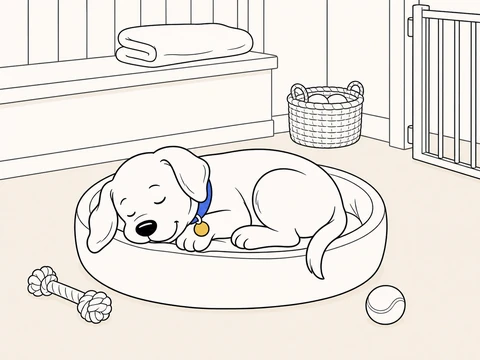
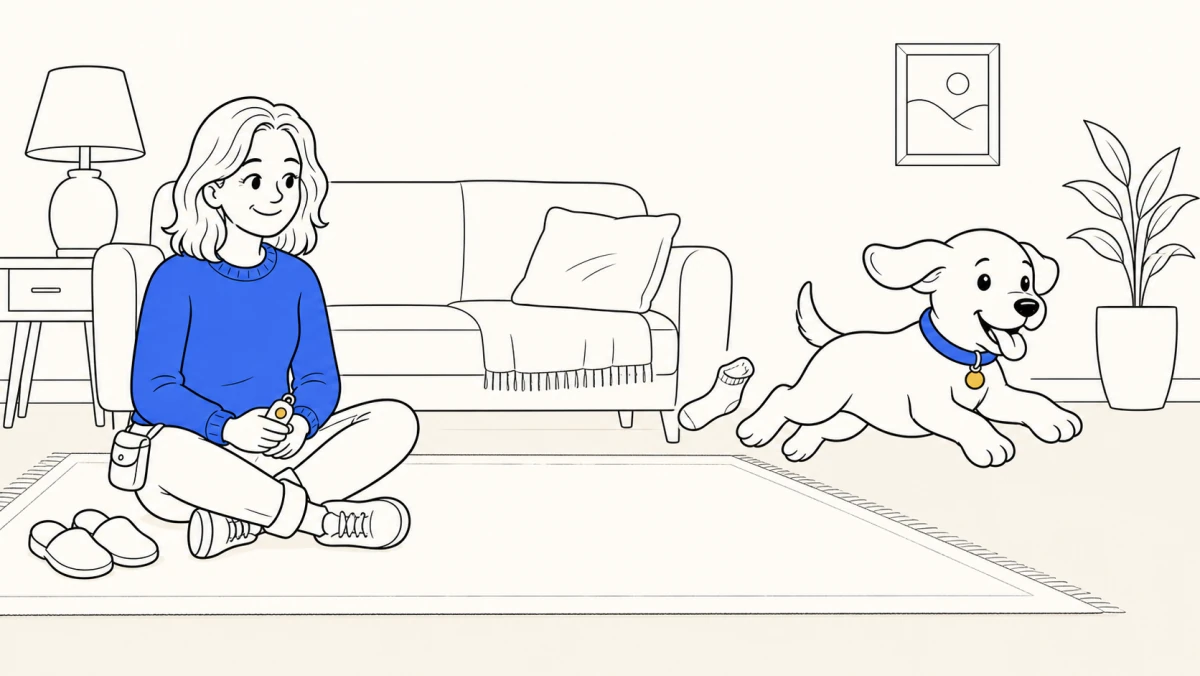
Because an overtired puppy bites more, harder, and with less ability to stop — and that peaks in the evening. Owners often describe a puppy who “turns into a land shark after walks or before bed.” That’s the witching hour: arousal from being overtired and overstimulated, not a discipline problem. An overtired biter needs a nap, not a lesson. Protect daytime sleep and run a calm wind-down before the usual boil-over point rather than trying to train through it. (Here’s the full picture of the evening witching hour.)
How do I prevent puppy biting before it starts?
Most biting wins happen before the biting starts. Three habits do the heavy lifting:
- Protect naps. Sleep debt is the quiet engine behind the worst spells. An 8–12-week puppy needs a lot of sleep; guard it and you defuse the boil-over before it builds.
- Keep legal chews within reach in every room. A redirect only works if the redirect is closer than your ankles.
- Get the whole household on one page. If one person plays calm-disengage-redirect and another wrestles with their hands, the puppy learns hands are sometimes toys — and “sometimes” is the most motivating schedule there is. Everyone plays by the same rules.
Getting this consistent, two minutes at a time, is most of the battle — and it’s exactly what a good coach plans for you so you’re not improvising when it’s all at full boil. More on that at the end.
What games stop a puppy from biting?
Redirection handles the moment; a little training builds the impulse control that shrinks the problem over the weeks. Keep every rep short and do them during calm moments, never mid-frenzy:
- Hand target. Teach your puppy to touch their nose to your open palm. Rehearsed when calm, a presented palm starts cueing nose, not teeth — hands near a puppy become a job instead of a toy. It’s also the perfect first-day clicker skill.
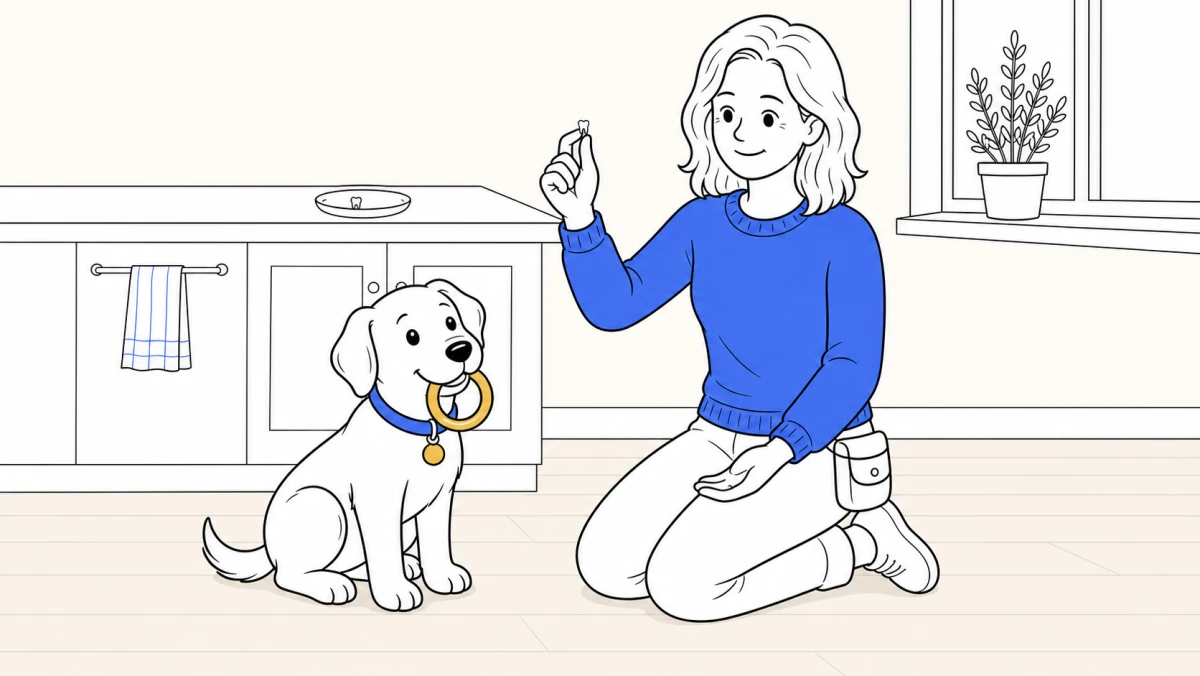
- Trade. Your puppy has a thing; you show something clearly better; the instant they release, mark and reward — then usually give the thing back or swap in a legal chew. Giving things up pays, and pays again. Never chase or pry the mouth open; chasing makes keep-away their favorite game.
- Leave it. Hold a plain treat in a closed fist. The moment your puppy stops nosing at it and backs off, mark — and reward from your other hand. Self-control starts paying.
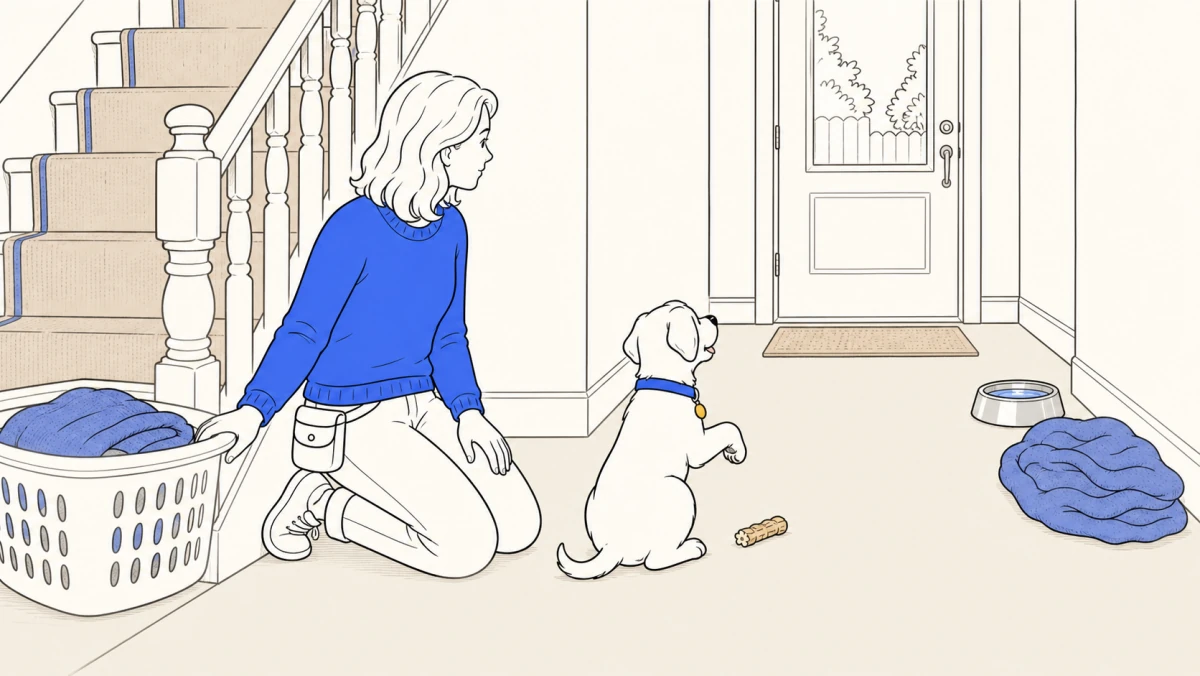
- Settle. A mat where calm gets quietly rewarded. It’s the off-switch for the high-arousal moments where most biting lives.
Should I punish my puppy for biting?
No — and this is one place the evidence is clear. Reviews of dog-training methods have found no good evidence that aversive techniques outperform reward-based training, while controlled and observational studies link them to stress behaviors, higher stress-hormone responses, and more pessimistic mood states. In one controlled study of 92 companion dogs, those trained with aversive methods showed more stress-related behaviors and a more “pessimistic” outlook on a cognitive-bias test than reward-trained dogs (Vieira de Castro et al., 2020); a wider review of the literature reached the same conclusion (Ziv, 2017). AVSAB’s position statement on humane dog training recommends reward-based methods only. And on biting specifically, ASPCA guidance notes physical correction can even cause real aggression — the exact thing you were afraid of. Holding the muzzle shut or “alpha rolling” a puppy belongs in a museum.
One more piece of honesty, because it’s rare in puppy content: you’ll often read that bite-inhibition training now prevents serious bites in adulthood. The IAABC Foundation Journal has said that claim has no evidence to support it — so we won’t make it. What this plan actually does is smaller and more useful: it makes a normal teething puppy livable while the season passes. That’s the problem you actually have.
When do puppies stop biting?
Mouthing eases as teething finishes — usually somewhere around five to seven months — and it fades faster with consistent redirection. Owners who’ve come out the other side describe going “from land shark to sweetheart,” and they’ll also tell you it was gradual, not an overnight switch. No honest plan promises to end it overnight. What you can do is shorten the daily misery now and know, for certain, that this ends.
When is puppy biting a real problem?
Ordinary mouthing — even hard, scratchy, relentless mouthing — is normal, and so are zoomies and witching-hour wildness. A few things are different in kind and deserve a professional: growling or snapping with a stiff, frozen body; guarding food or toys; bites that break skin from a dog older than about six months; fear of everyday things that doesn’t fade; panic when left alone that ends in self-injury; or a sudden behavior change alongside appetite or energy changes — that one goes to the vet first, because pain often shows up as behavior. Here’s a fuller guide to what’s normal and when to get help. For behavior support, look for IAABC-certified consultants (iaabc.org) — their standards require members to refrain from using shock in training or behavior modification.
From land shark to the dog you pictured
Here’s the short version: calm disengage, redirect, reward the switch. Naps, chews, one set of house rules, and a few impulse-control games on the side. No punishment — not because you’re soft, but because it doesn’t work better and carries real costs. Your puppy is normal, this is temporary, and you now have a plan.
Biting is rarely the only thing on the list at this age, and the same logic — remove what pays the behavior, then pay the alternative generously — is what settles the rest of it. The two that usually arrive alongside biting are why puppies bark and how to stop it and jumping up at people. Different behavior, same plan.
The hard part isn’t knowing the plan — it’s running it consistently, two minutes at a time, when you’re tired and the puppy is at full boil. That’s the whole reason we’re building ClickerPup: an honest, force-free coach that plans one short session at a time and adapts to how the last one actually went.
Two things make it different from the app you probably already tried. It checks whether your dog actually got a skill before moving on — not just whether they did it once. And the clicker is free forever, with a plain reminder before anything ever charges — no same-video-for-three-days, no quiet bill you didn’t agree to.
Claim your early spot and we’ll bring you in as we open up — with the land-shark weeks near the top of the plan.