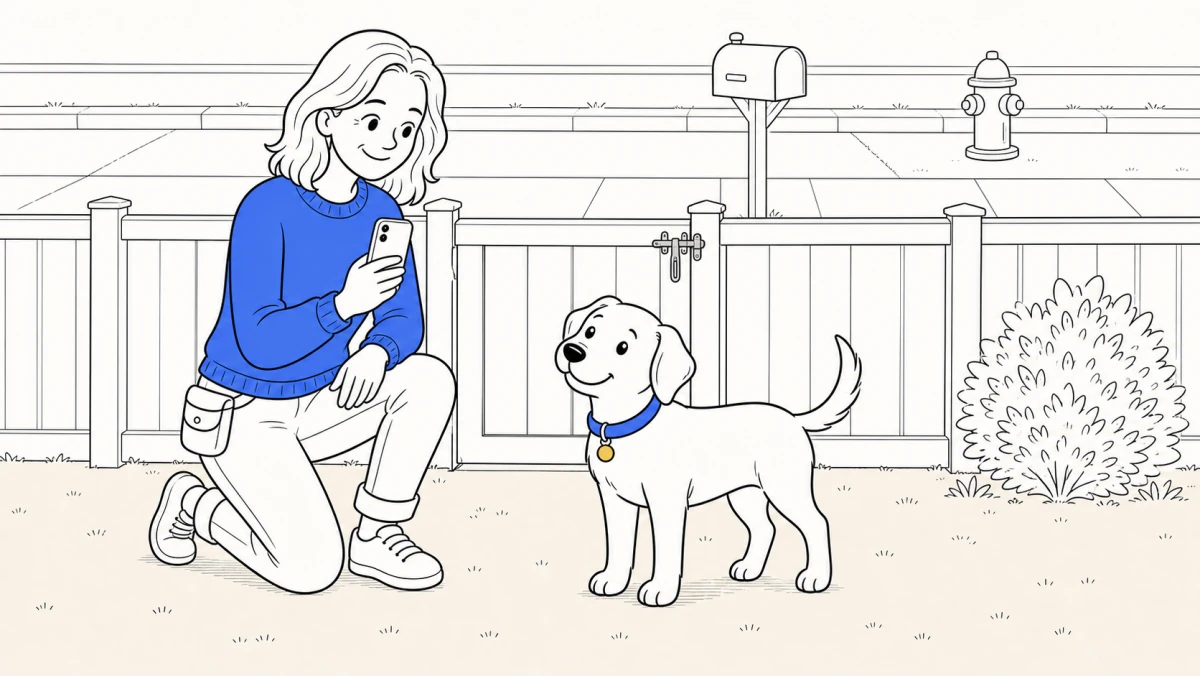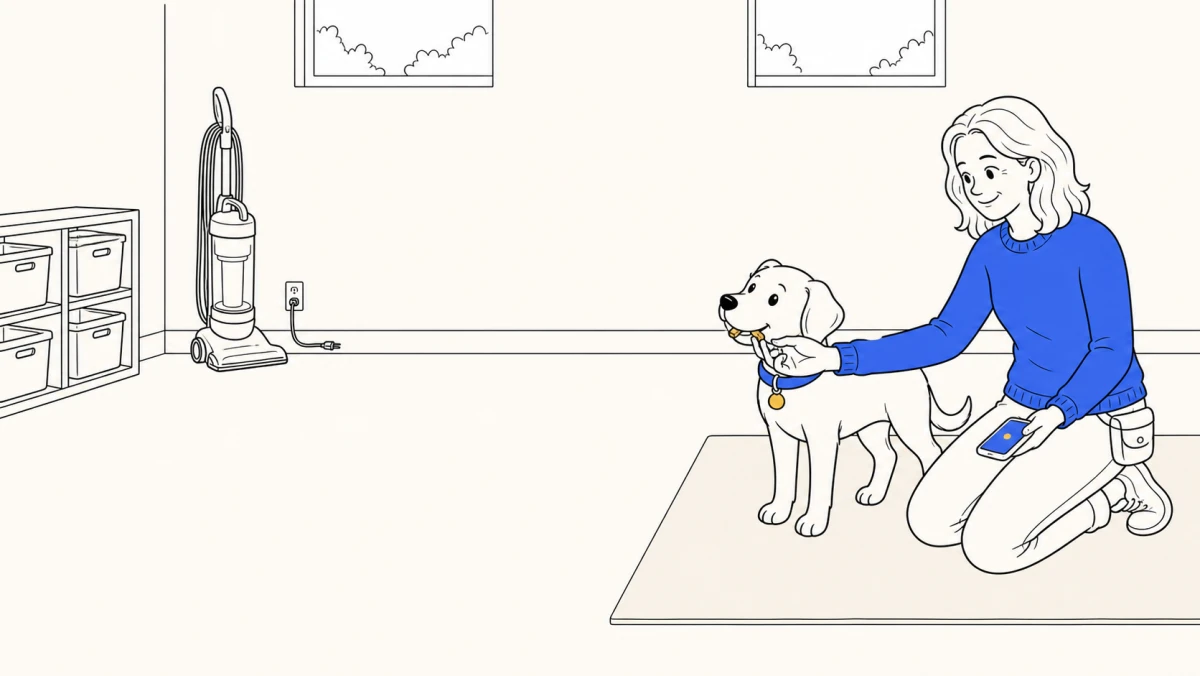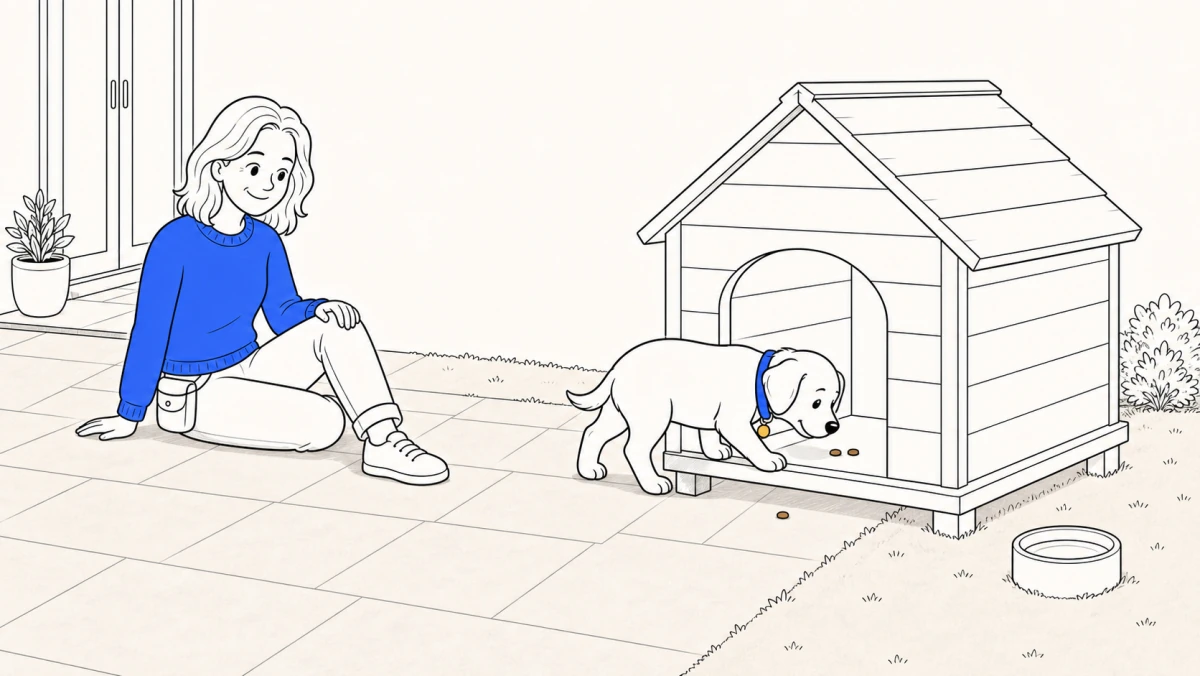
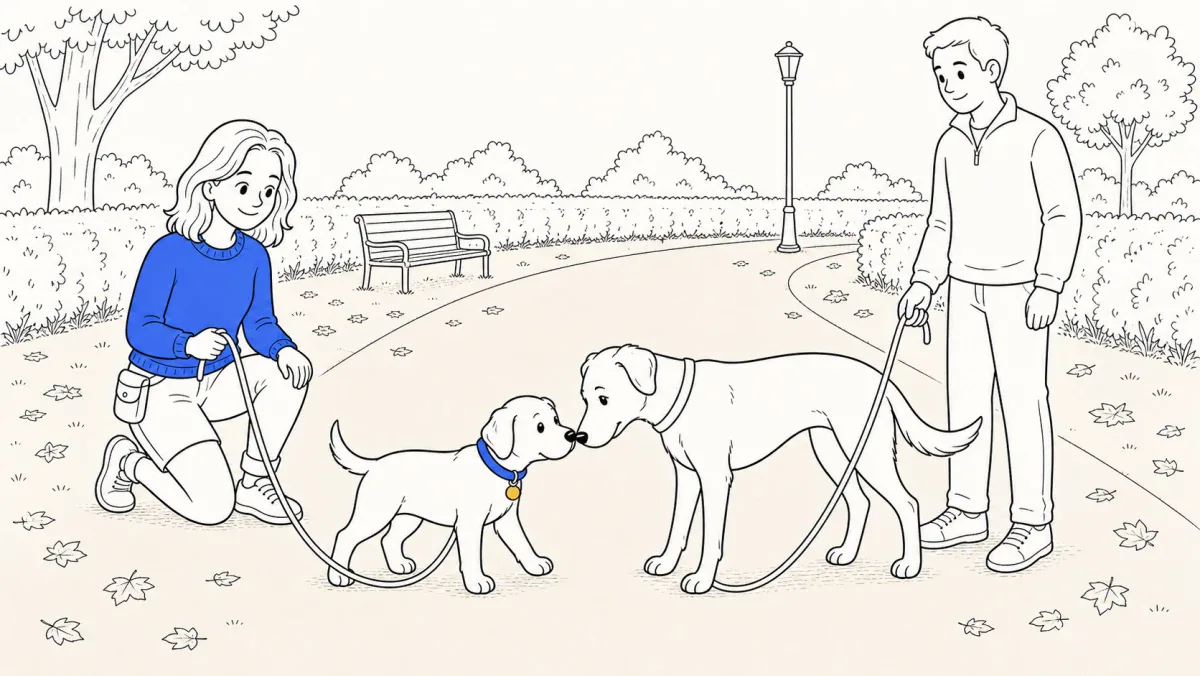
If your puppy just turned twelve weeks and you’re refreshing forum threads with a knot in your stomach, wondering if you already blew it — you didn’t. The classic “critical window” runs from about three to twelve or fourteen weeks — but that exact range comes from one small 1960s lab colony and is quoted far more precisely than the evidence supports. What holds up: gentle, positive exposure early matters a lot. What doesn’t: panicking over one missed date.
Where does the “3 to 12 week” number come from?
It traces back to Scott and Fuller’s research in the 1950s and 60s — a study of a small, closed colony of just five breeds at a single research lab (Scott & Fuller, 1965). Almost every socialization article repeats the tidy “3 to 12 weeks” number; fewer mention that it was careful work for its time, but not a broad, modern sample of family dogs. Their own range was closer to “about 3 to 12 weeks,” stated with approximation, not a hard edge.
Why do people also say 14 weeks?
The “14 weeks” upper bound you often see is a later addition from other papers, grafted on afterward — not something the original Scott and Fuller study established, a pattern widely noted in the secondary literature. The lab also used isolation experiments as part of how the critical-period concept was originally developed (Bolman, 2022). So the neat “3 to 14 weeks” is really two different findings stitched together and then quoted with more confidence than the data can carry.
Does every puppy have the same socialization window?
No. A larger, home-reared study found that the age at which fear responses first appear varied by breed — roughly 39 to 55 days across different breeds (Morrow et al., 2015). Puppies are not identical clocks, and later reviews confirm it: some breeds seem to reach the end of their sensitive period later than others (2022 systematic review of canine socialization).
In plain terms: your puppy’s window may open and close a little differently from the puppy next door. A fixed calendar date can’t capture that.
What does the evidence clearly support?
Quite a lot, once you get past the fuzzy dates. The American Veterinary Society of Animal Behavior (AVSAB) states that puppies should start socialization, including puppy classes, before their vaccine series is finished — as early as 7 to 8 weeks — because behavioral problems, not infectious disease, are the leading cause of death in dogs under three years old (AVSAB, 2008). That is AVSAB’s position, and it is a strong one: early, gentle, positive exposure is worth prioritizing.
None of the imprecision above means socialization doesn’t matter — it matters a great deal. The honest caveats are about precision, not importance.
The takeaway is not “hit every box by week 12.” It’s “start early, keep it positive, and keep going.”
What do popular socialization claims get wrong?
| You’ll often hear | What the evidence actually supports |
|---|---|
| “The window slams shut at 12 (or 14) weeks.” | It’s a soft ramp with fuzzy edges, based on one small old colony. |
| “Every puppy is the same.” | Onset of fear varies by breed and individual (about 39–55 days). |
| “If you missed the date, it’s too late.” | Reviews call continued exposure important for future behavior and note it can partly compensate for a poor start — not a lost cause. |
| “More exposures are always better.” | Quality beats quantity — calm, below-threshold experiences win. |
Did I miss the window?
If your puppy is thirteen weeks old and you feel behind — breathe. The window is a soft ramp, not a trapdoor. A 2022 narrative systematic review of canine socialization directly addresses this: it states that continuing socialization after the primary period remains important for future behavior, and that enrichment later in life can partly compensate for a poor start (2022 systematic review of canine socialization). That’s a more measured claim than “later is too late is a myth” — the same review is also honest that there’s limited evidence on how far that compensation goes into adulthood — but it clearly supports the plain point: gentle, positive exposure keeps helping well past sixteen weeks, and plenty of dogs who got a slow start turn out just fine.
Start from where your puppy is today. That is always the right day to begin.
How do you socialize well, not just a lot?
The goal is not to expose your puppy to as many things as possible. It’s to build a bank of calm, good experiences. Aim for quality over quantity, and always stay below your puppy’s fear threshold — a puppy who is watching curiously is learning; a puppy who is frozen or trying to flee is not.
A gentle sampler to aim for over the early weeks:
- Different-looking people, at a distance your puppy is comfortable with.
- Gentle handling of paws, ears, and mouth, paired with something nice.
- Varied surfaces and everyday sounds.
- Calm car rides and happy, low-key vet visits.
How do you keep socialization safe before full vaccination?
Keep the safety rails on, and let your vet have the final word:
- Choose clean, low-traffic ground, or carry your puppy in busier spots, until they’re more fully vaccinated.
- Avoid dog parks, dogs of unknown vaccination status, and any sick animals.
- If you join a class, most ask for one set of vaccines at least 7 days before and a first deworming.
How do you handle a puppy’s fear-period wobbles?
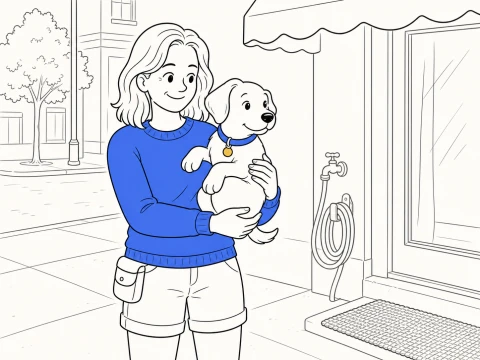
Go gently: expose, never flood. Puppies go through spells where the world feels scarier than usual — a passing phase where they might spook at things they were fine with days before. During those stretches, the goal is the same, just softer. Let your puppy watch a new thing from a distance they can handle and choose to move closer in their own time. A puppy who is dragged up to something frightening isn’t being socialized; they’re being scared, and that can teach the opposite of what you want.
How do you know when a wobble needs professional help?
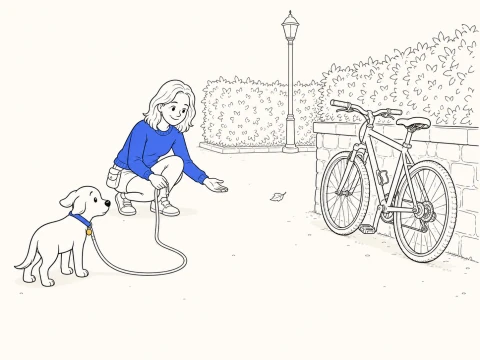
You know your puppy better than any calendar does. If they look loose, curious, and willing to take a treat, you’re in the right zone. If they freeze, tuck their tail, or try to back away, you’ve gone a step too far — no harm done, just ease off and make it easier. Confidence is built one comfortable experience at a time, not by ticking boxes at speed.
If that fear doesn’t fade over weeks, or your puppy freezes and panics rather than warming up, that’s worth a call to your vet or a certified behavior professional rather than more exposure on your own — here’s what’s normal and when to get it.
The bottom line
The socialization window is real, but it’s softer and fuzzier than the internet makes it sound. Don’t let a missed date convince you the damage is done. Early, kind, below-threshold exposure — a little at a time — is what shapes a confident dog, and it keeps working long after the “deadline” everyone quotes.
If turning “a little at a time” into an actual plan — one that reads how your last session went and adjusts before the next one — sounds useful, that’s exactly the gap we’re building ClickerPup to fill.