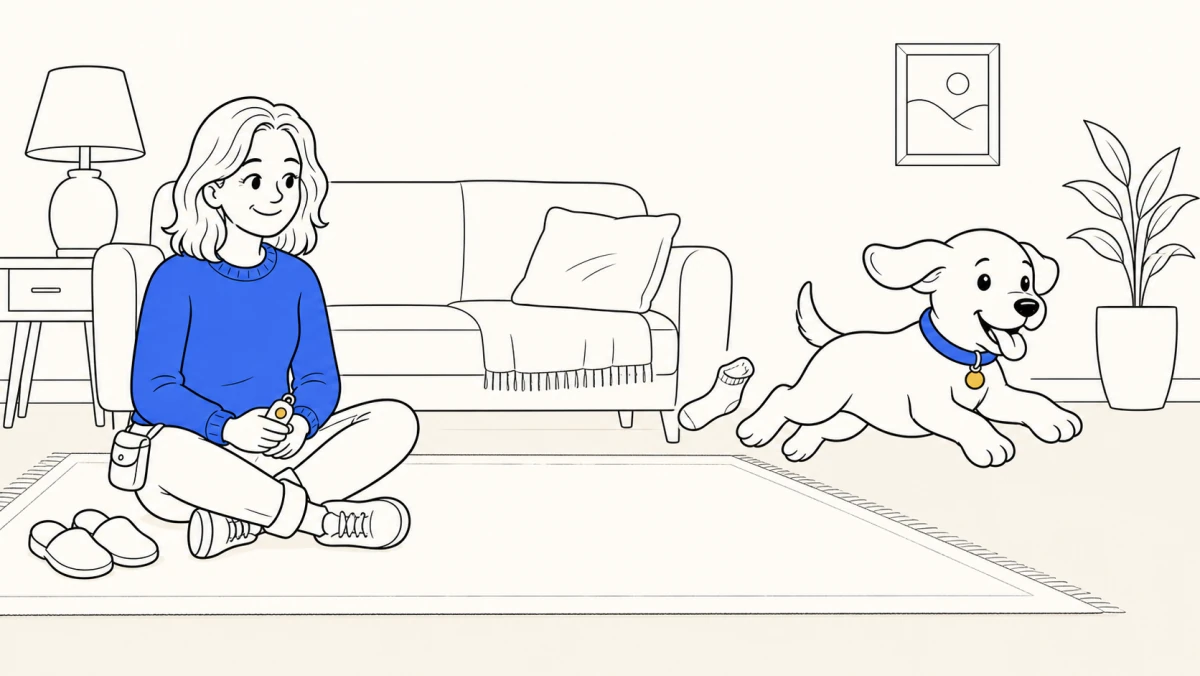
That evening burst of zoomies, frantic biting, and wild eyes has a name: the witching hour. It isn’t aggression, and it isn’t a training failure — it’s an overtired, overstimulated puppy who can’t wind down on their own. The fix is management: protected naps, a calm wind-down routine, and a trained “settle” — not corrections.
What is the puppy witching hour?
Somewhere around dinnertime, a sweet, floppy puppy turns into a small tornado. Laps around the couch. Teeth on pant legs. Teeth on hands. Teeth on the one cushion you actually liked.
New owners describe this so often that puppy communities gave it a name — the witching hour (one long-running thread calls it “demon time”). It’s one of the most common “is something wrong with my puppy?” questions first-time owners ask, and the fear underneath it is usually the same: is this aggression?
The consistent answer from force-free trainers and experienced owners is no. It’s arousal. A young puppy who has had a full day of new sights, sounds, and people — and not nearly enough sleep — hits the evening with a nervous system that’s out of gas and out of brakes at the same time. What comes out looks wild, but it’s a normal, expected stage of puppyhood. You didn’t cause it, and you’re not failing.
That reframe matters because it changes the job. You don’t correct a boil-over. You manage it — mostly with sleep, and a calmer runway into the part of the day where it usually happens.
Why does the witching hour happen in the evening?
Overtired puppies don’t act sleepy the way tired humans do. They get frantic: more biting, more sprinting, less ability to stop. Evenings stack the deck — a whole day of stimulation behind them, everyone home at once, more noise, more attention, more play. The community consensus (and the framing used by force-free trainers) is that this is a physiological management problem — an overtired, overstimulated puppy — solved by naps and calm-down routines, not by discipline.
So the two levers that actually move the needle are boring on purpose:
- Protect daytime naps. Most evening chaos is sleep debt wearing a dog costume. If your puppy has been awake and “on” for most of the day, the witching hour is already booked.
- Wind down before the boil-over, not during it. If the chaos reliably starts around the same point in the day, start a calm routine before that point — a mat, slow low treats, a chew. Getting ahead of the spike is far easier than arguing with it.
What helps with puppy evening zoomies?
| Move | Helpful? | Why |
|---|---|---|
| Protecting daytime naps | Yes — the big one | Most witching-hour chaos is an overtired puppy |
| A wind-down before the usual boil-over point | Yes | Brings arousal down before it spikes |
| A legal chew within reach | Yes | Gives a teething mouth a job that isn’t your hands |
| More fetch to “burn it off” | Usually no | Adds stimulation to a puppy who’s already over the top |
| Yelling or corrections | No | Punishment-based methods are linked to stress and more problem behaviors, not fewer |
On that last row: this isn’t just a vibe. AVSAB’s position statement on humane dog training recommends reward-based methods only, and a 2020 controlled study of 92 companion dogs (Vieira de Castro and colleagues) found dogs trained with aversive methods showed far more stress signals during training — over 13 times more lip-licking, about 8 times more yawning, and a real rise in cortisol afterward, while dogs trained with reward-based methods showed almost none. A puppy mid-boil-over doesn’t need pressure added. They need the volume turned down.
How do you teach a puppy to settle?
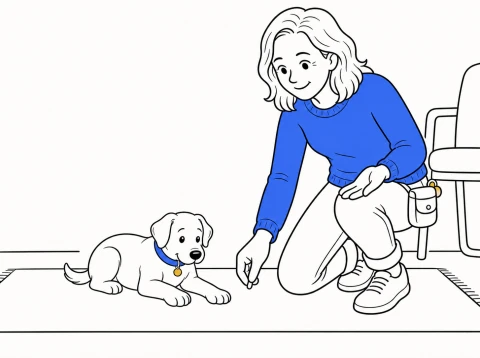
“Settle” is a trained skill where your puppy learns that calm is a place they can go. It’s the single most useful answer to the witching hour, and you teach it in short sessions at calm moments — you’re rewarding a mood, so it’s not a session to rush.
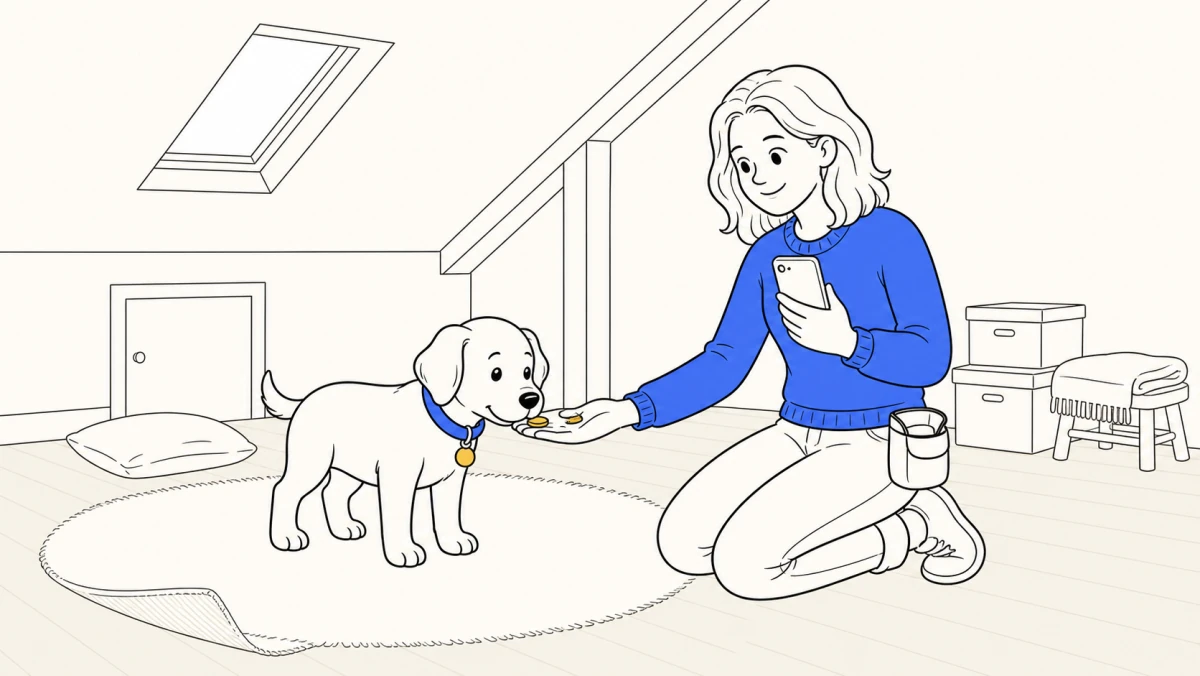
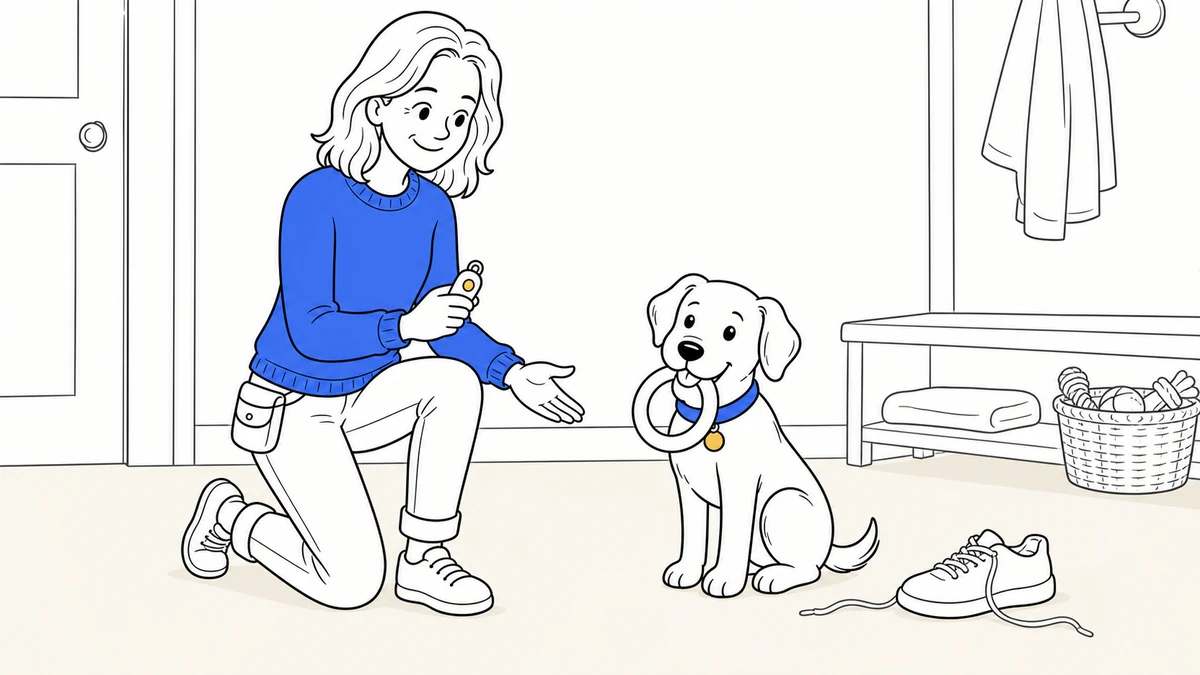
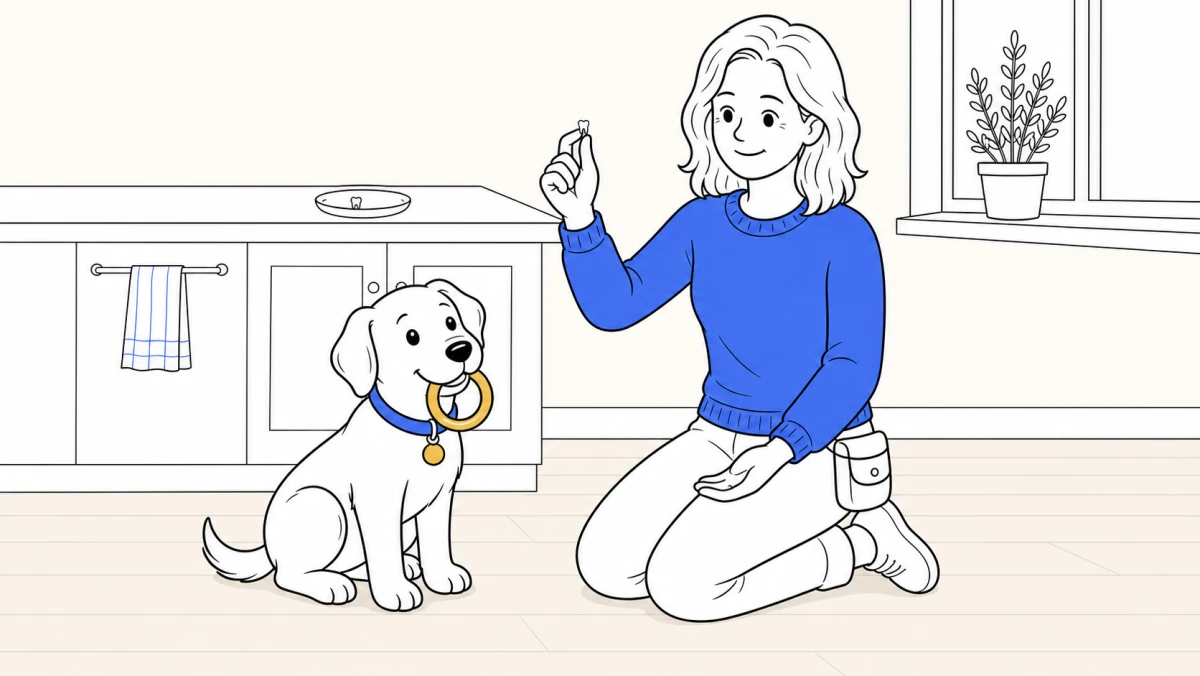
- Put a mat or folded blanket on the floor. Any interest in it — a sniff, a paw — gets a marker (a click or a “yes”) and a treat, delivered on the mat.
- Keep rewarding progressively calmer choices: standing on it, then sitting, then lying down, then a soft, relaxed body. The reward moves toward calm.
- Deliver treats slowly and low, between the front paws. Fast, high treats create excitement — the opposite of the job.
- Skip the cue word at first. Capture the calm; name it later.
- Keep it to two or three quiet minutes, and end while your puppy is still relaxed.
Once the mat means calm, deploy it: bring it out before the usual boil-over point, feed slow and low, and pair it with a chew.
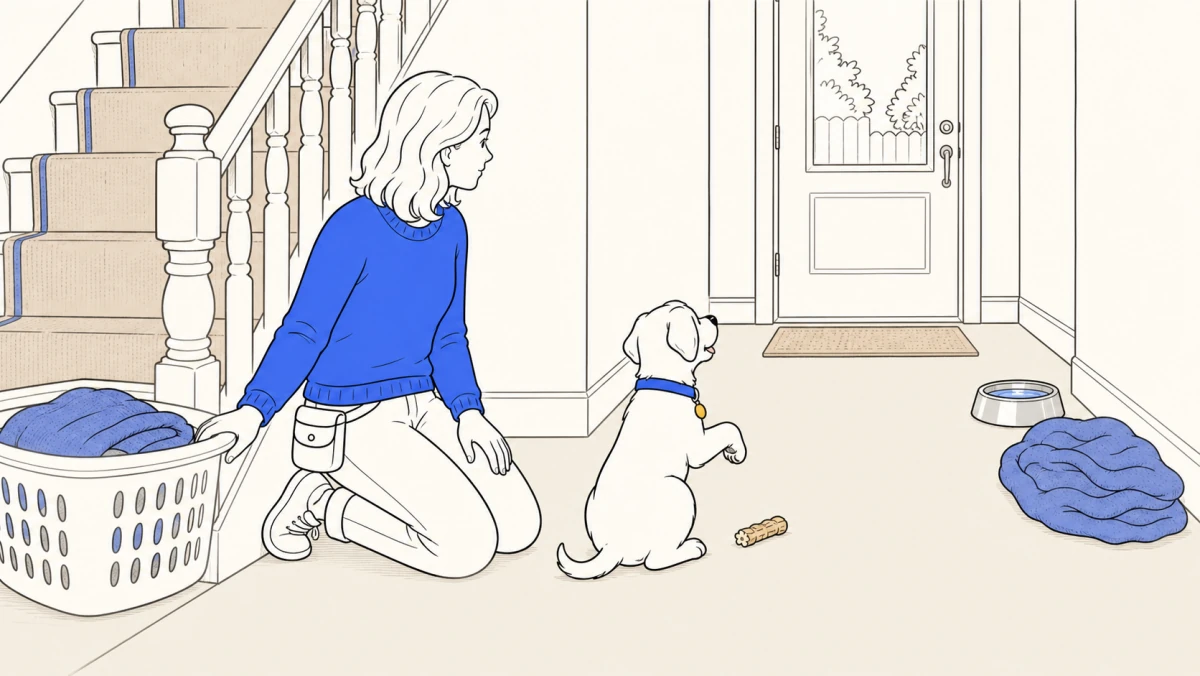
One escape hatch, and it’s important: if your puppy is already past the point of settling, that’s not a training moment. That’s a nap. An overtired puppy needs sleep, not a drill — put them somewhere quiet and let the reset happen.
Why does my puppy bite more during the witching hour?
It’s the same arousal spilling into the mouth, not aggression escalating — witching-hour zoomies often come with a side of piranha. The in-the-moment rule is the same as for all puppy biting: when teeth land, calmly disengage — go still, or step away for a few seconds — then redirect to a chew and reward the switch. No yelling, no holding the mouth shut. (There’s a full plan in how to stop puppy biting without punishment.)
When is witching-hour zoomies or biting not normal?
Mouthing, zoomies, and witching-hour wildness are normal puppy development. A few things are not, and deserve a professional’s eyes: growling or snapping with a stiff, frozen body, or guarding food and toys; bites that break skin from a dog older than about six months; fear of everyday things that doesn’t fade; panic when left alone that ends in self-injury; or a sudden behavior change that comes with appetite or energy changes — that last one is a vet visit first, because pain and illness show up as behavior. Here’s a fuller guide to what’s normal and when to get help. For behavior concerns, look for a certified professional — IAABC-certified behavior consultants (iaabc.org) work to standards that rule out shock.
This is a season, not a verdict
The witching hour shows up in thousands of near-identical owner threads for a reason: it’s what puppies do. It fades as your puppy matures and as naps and wind-downs become routine — teething itself runs to around six months, and the frantic evenings shrink well before the puppy does. You don’t need to out-discipline it. You need a mat, a chew, and a decent nap schedule. That’s not lowering the bar. That’s the actual fix. If turning that settle protocol into a short, right-sized session — one that adapts to how your puppy’s evening actually went — sounds useful, that’s exactly the gap we’re building ClickerPup to fill.