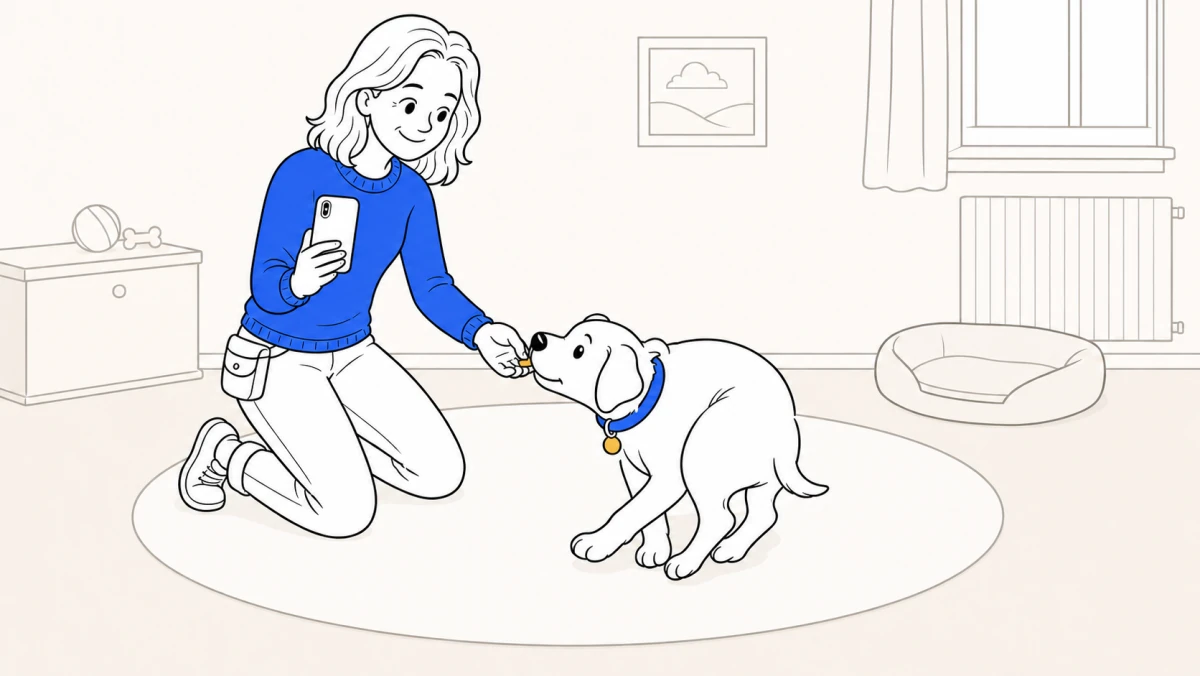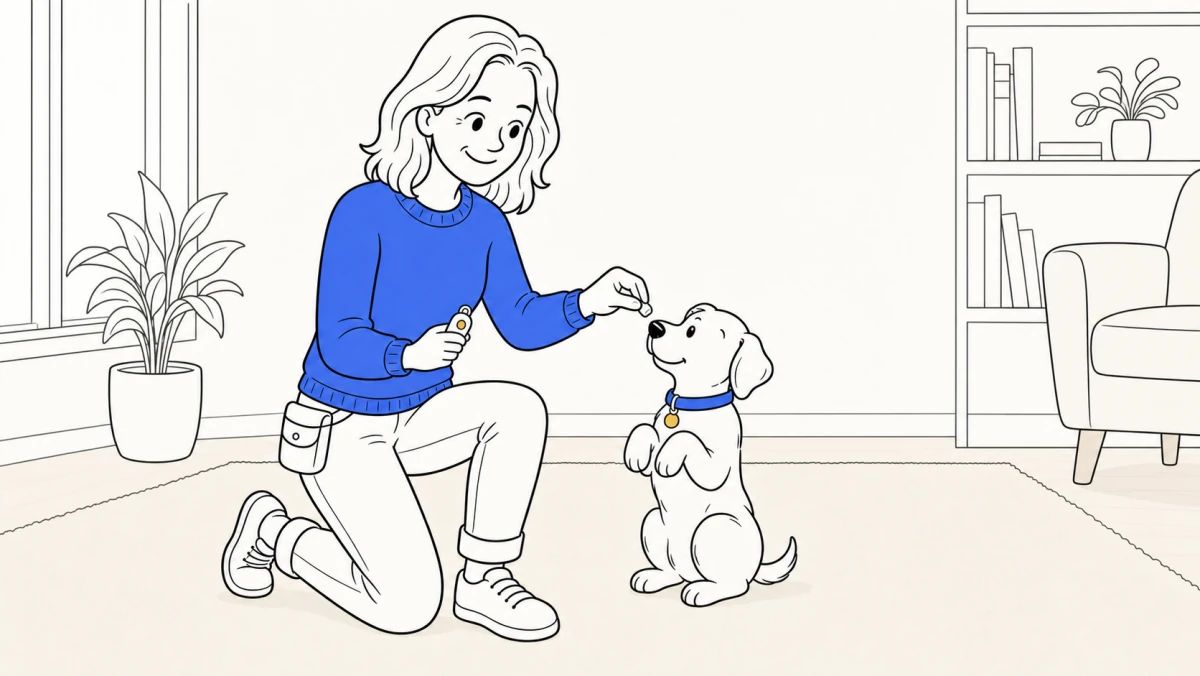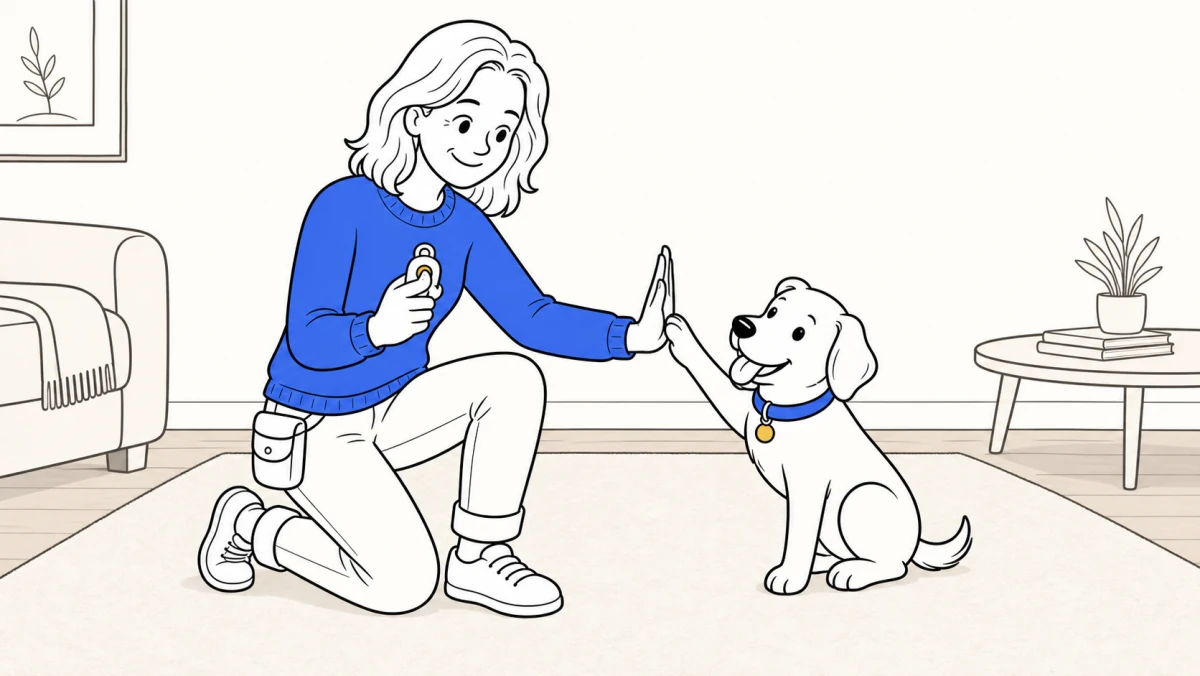
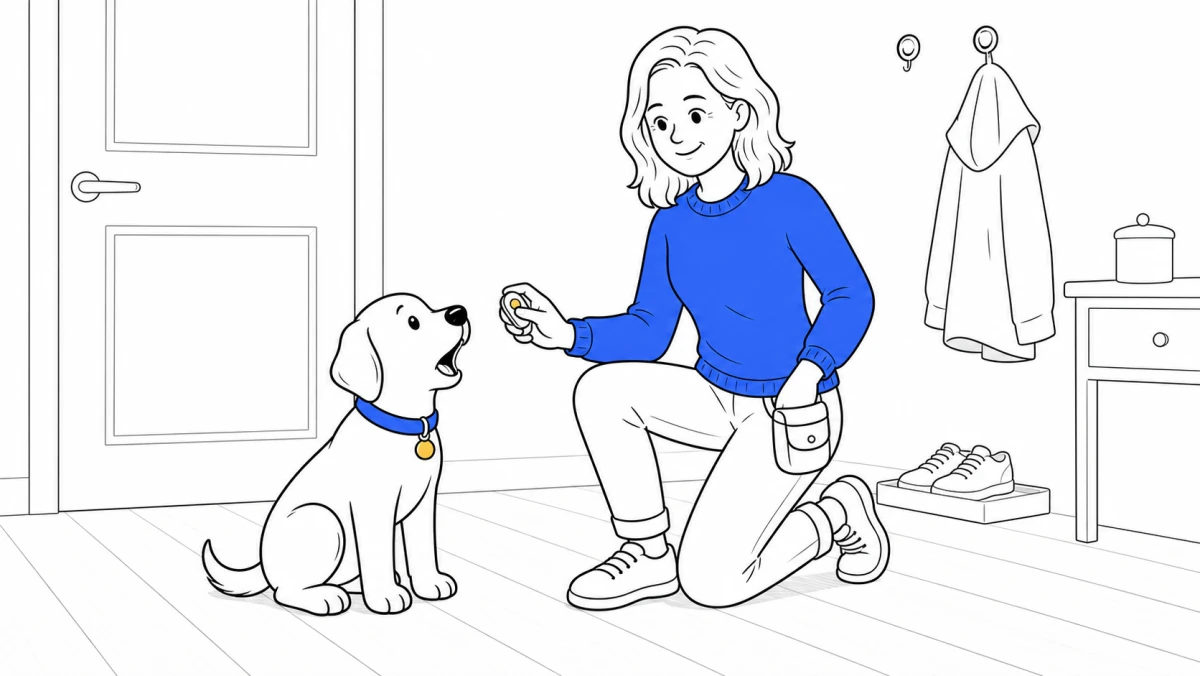
Trigger one natural bark, click the first woof (not the fifth), treat, then add the word “speak” just before whatever prompted the bark — and fade that trigger until the cue alone gets a single bark. Pair it with a quiet cue so you are teaching bark-on-purpose, not a barking frenzy. Keep sessions to a couple of minutes, and only pay barking you asked for.
If you landed here after a chaotic week of problem barking, pause: this page is the trick — bark once when asked — not the fix for demand, alert, or panic barking. Those need a cause-first plan, not a cue. And if “sit” already drained the determination into quiet guilt this week, a single on-cue bark is allowed to be the easier win. Speak is still worth teaching once the house is quieter: the American Kennel Club notes it is easier to teach “quiet” once barking is already on a cue, and it is a real hit with guests when you can ask for one bark and stop.
How do you teach a dog to speak on command?
Trigger one natural bark, click the first woof, treat, then add the cue “speak” just before the trigger and fade the trigger until the word alone gets a single bark. Battersea and Best Friends spell out that capture-then-name sequence; the AKC speak guide shares the same core — mark the first bark fast, pay it, keep it to one woof — and later adds the common hand signal. The whole path is reward-based, matching AVSAB’s 2021 position that only reward-based training methods should be used.
- Have pea-sized soft treats ready before you start. You need to mark the bark in the same half-second it happens.
- Use a calm trigger that already gets one bark — flashing a favorite toy, picking up their leash, or a short burst of play excitement. Avoid stacking triggers until your puppy is frantic. Do not use the doorbell or a knock at the door. Those are the barks most owners want fewer of, and paying them here rehearses the exact habit you would then have to undo — our own ladder puts the last step in a new room without a real trigger for the same reason. AKC reaches for a leash or a favorite toy; Best Friends waves a treat just out of reach. Neither uses the door.
- The instant the first bark happens, click (or say a crisp “yes”), then treat. Mark only that first woof — the AKC is explicit that you do not want “speak” to mean a barking frenzy.
- Repeat trigger → first bark → click → treat for about five to eight easy reps in a short session.
- Once the first bark is reliable on the trigger, say “speak” just before you trigger. Click and treat the bark. After several clean cue-then-trigger reps, pause a few seconds between the word and the trigger so your puppy starts barking on the cue alone.
- Fade the trigger: cue, wait, click the bark, treat. Add an optional hand signal (open hand closing fingers toward the thumb, palm toward the dog — the AKC’s common signal) once the verbal cue is solid.
Karen Pryor’s shaping rules still apply: raise one criterion at a time. Get a single on-cue bark before you ask for two, a whisper, or a bark from another room.
What’s the exact moment to click when teaching speak?
Click the first woof — not the third, and not after a bark chain has already started. Timing is the whole game. In Browne’s 2015 University of Waikato research on delayed reinforcement, dogs succeeded about 60% of the time when the reward came immediately, but only about 25% when it arrived one second late. A marker bridges that gap so your treat hand does not have to be as fast as a bark. If you miss and click late, you are often marking the quiet after the bark — which teaches the wrong thing. Reset, and catch the next first woof.
What if my dog almost never barks?
Use a gentle, low-arousal trigger — a favorite toy, picking up their leash, or mild play excitement — and click any vocalization first (a whine or a yip counts), then wait for a clearer bark across short sessions. If they stay silent and stressed, skip the trick.
This is the quiet-dog stuck case: a puppy who barely vocalizes, and an owner trying to invent volume. Best Friends’ speak-and-quiet guide starts by rewarding any sound when a dog will not offer a full bark, then raising the bar. Give them a minute of mild frustration with a visible treat they cannot quite reach — enough to invite a noise, not enough to tip into panic. If body language goes stiff, tucked, or frantic, stop. Speak is optional entertainment; a reluctant, silent dog is allowed to keep other tricks. Shake and spin live in our fun tricks hub with the same clicker method and zero need for volume.
Should I teach speak and quiet together?
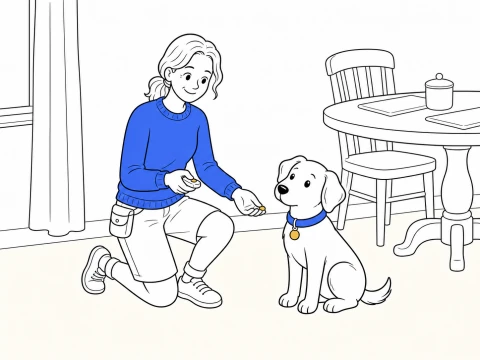
Yes — once “speak” is reliable, teach “quiet” by marking the pause after a bark and paying silence, then mix speak → quiet in the same short session so bark-on-cue does not become bark-forever.
Battersea’s speak guide builds quiet right after speak for this reason: once barking pays on cue, some dogs offer more of it, especially when they can smell treats. Best Friends puts quiet first, and says so without qualification: “before you teach a dog to speak, there’s another cue to practice: teaching your dog to be quiet or stop barking.” Mark a quiet moment between barks, pay it, then lengthen the silence before you name the cue. The two guides genuinely differ on order — that is a real disagreement between them, not a rule that only applies to dogs who already bark too much — and either works if you are consistent. You are teaching an on/off switch, not a mute button for life. For everyday demand and alert barking that is not on cue, use the cause-first plan in how to stop puppy barking instead of drilling “quiet” mid-chaos.
How do you teach quiet after speak?
Mark the pause after a cued bark, pay silence, then name “quiet” once the pause is reliable.
- Cue “speak,” click one bark, treat.
- Wait for the mouth to close — even one second of silence.
- Mark that quiet (click or “yes”), treat, then gradually ask for a few more seconds of silence before you pay.
- Add the word “quiet” once the pause is happening reliably, saying it as silence starts, then moving the cue earlier.
Getting one clean bark and a clean pause when you are already tired is most of the battle — short, adaptive sessions are exactly what a good coach plans for. More on that at the end.
Will teaching speak make my dog bark more?
Only if you pay barking you did not ask for. Reward speak only when you cue it; turn away from off-cue demand barks so the trick stays on purpose.
The AKC’s consistency tip is the whole safety rail: when training, only reward barking when you are asking for it. Best Friends matches that — ignore unsolicited barking by turning away or walking away so “speak” does not become a treat doorbell. If you laugh, scold, or hand over a snack mid-bark when you did not cue it, you just paid the wrong version of the trick.
| Situation | Pay it? | What to do |
|---|---|---|
| You said “speak,” one bark | Yes | Click first bark, treat |
| Off-cue bark for attention | No | Turn away; mark the first quiet |
| Alert bark at the window | No (this session) | Manage the view; separate plan |
| Bark chain after “speak” | No | Wait; mark quiet; tighten to one bark next rep |
How long should a speak training session be?
About one to two minutes and five to eight single-bark reps — end while it is still a game, before neighbors (or you) regret the volume. The same short-session defaults that cover sit and settle apply here; see how long puppy training sessions should be. The AKC also flags apartment and close-neighbor practice: short sessions, not a barkathon. Nice work is stopping early on a clean single bark, not squeezing in “one more” when arousal is climbing.
When is barking a training problem — not a trick?
Ordinary speak practice is voluntary noise on cue. Fear barking that does not fade, panic when left alone, a stiff frozen body with growling or snapping, or a sudden barking change alongside appetite or energy shifts is a different category — stop DIY speak drills and use our when-to-get-help guide. Look for an IAABC-certified behavior consultant or a veterinary behaviorist, not a louder cue. Speak will not fix separation distress, and coaching through panic is outside what this page (or an honest app) should do.
What should you do next?
Run one short session: capture one bark, fade the trigger, then add one quiet rep — that is the whole playbook in miniature. Speak is a parlor trick with a useful twin: once barking is on cue, quiet gets easier, and you can ask for one bark instead of enduring five minutes of freestyle. Capture one woof, name it, fade the trigger, pay only cued barks, and install quiet so the switch has an off position.
Is speak one of ClickerPup’s in-app tricks?
Not yet. ClickerPup’s tricks module currently runs spin, shake, roll over, and beg. Speak uses the same clicker method — this page is the DIY version while that feature is still ahead. If you want those short sessions planned for the puppy on your floor anyway — including the tricks we do coach, sized honestly and only called “reliable” once your dog has proven them twice — claim an early spot. The clicker is free forever, with a plain reminder before anything ever charges.
Claim your early spot and we will bring you in as we open up.