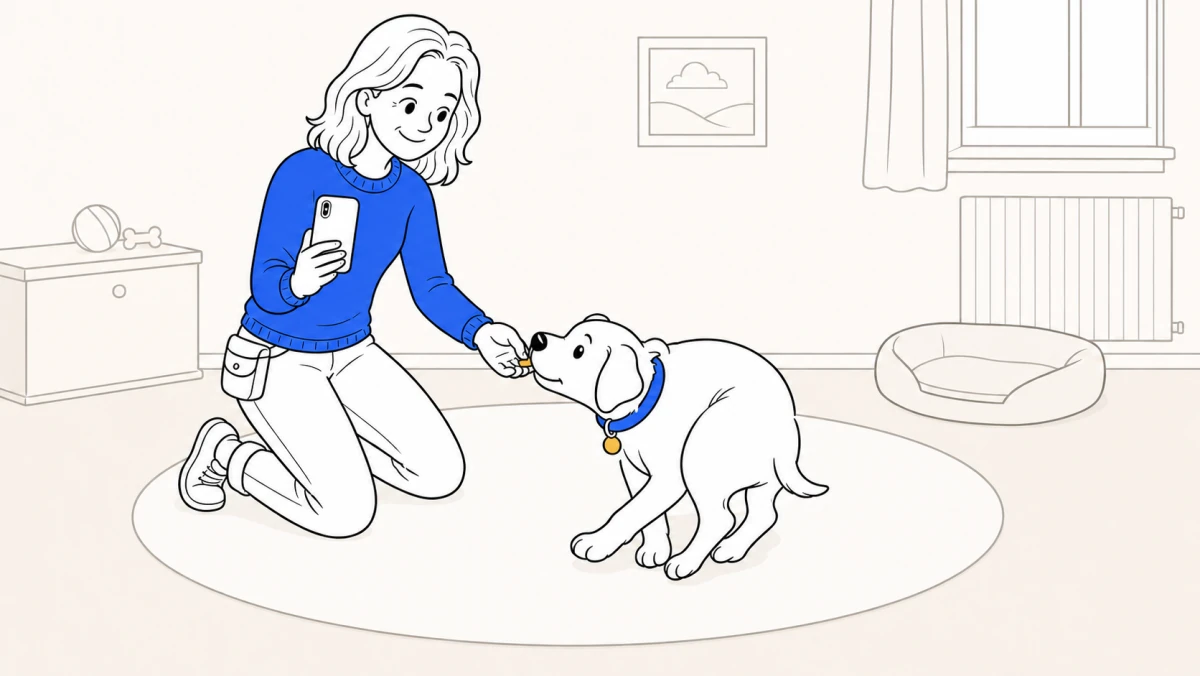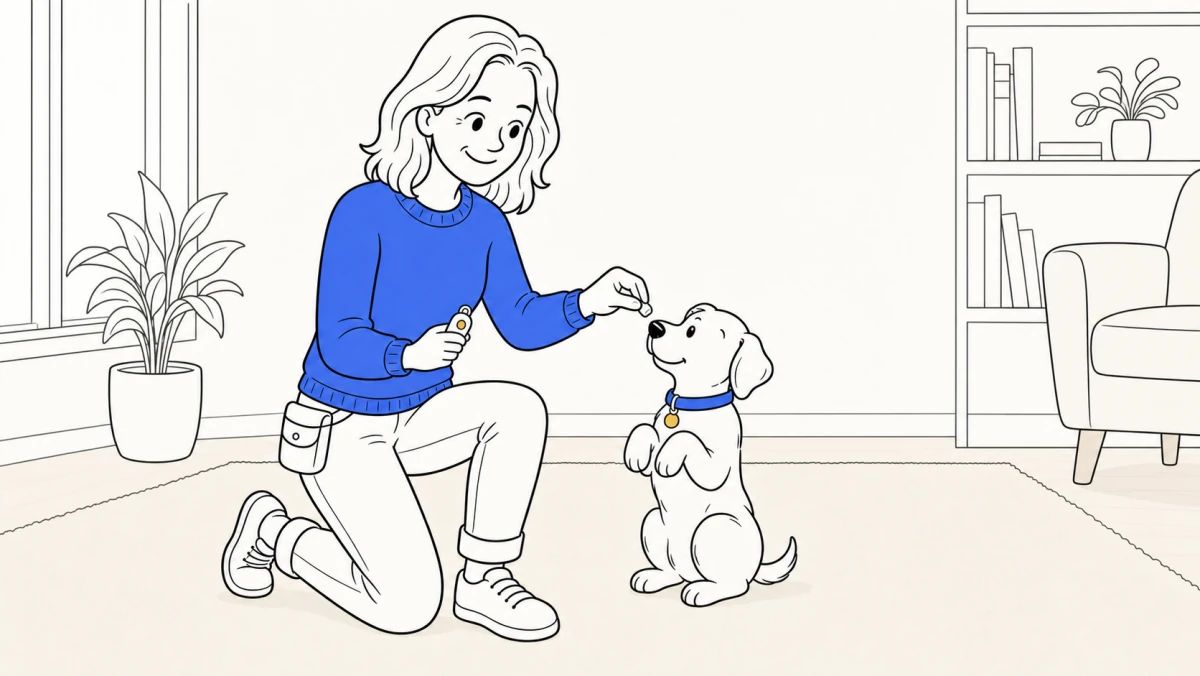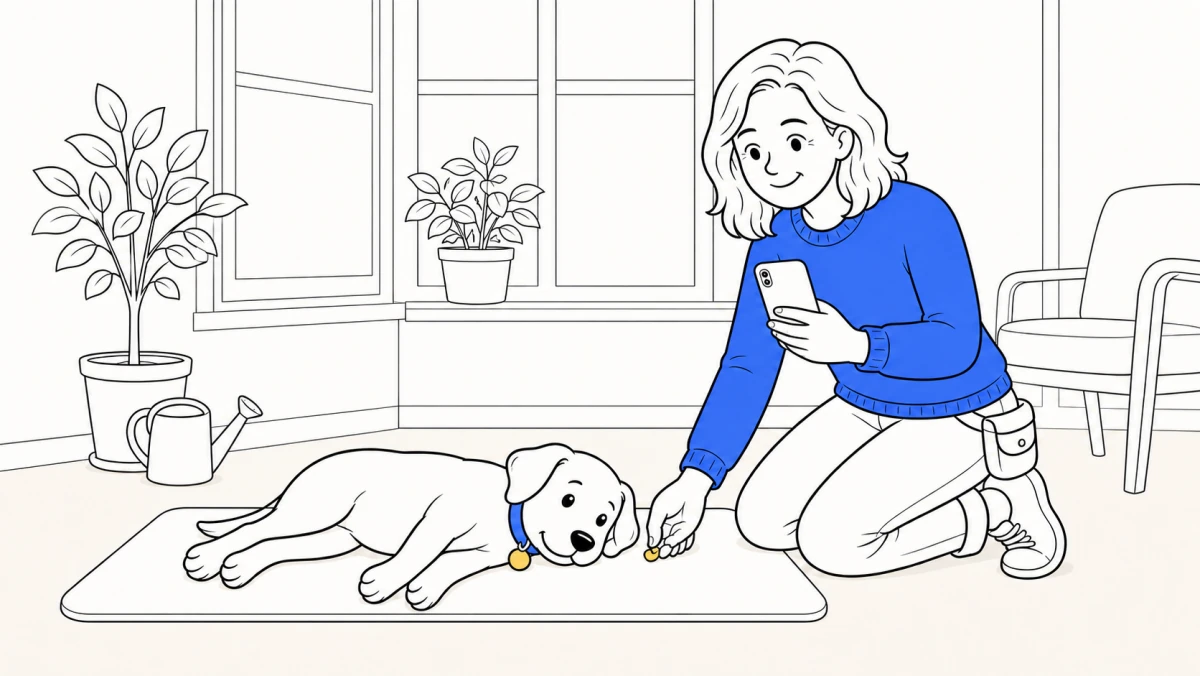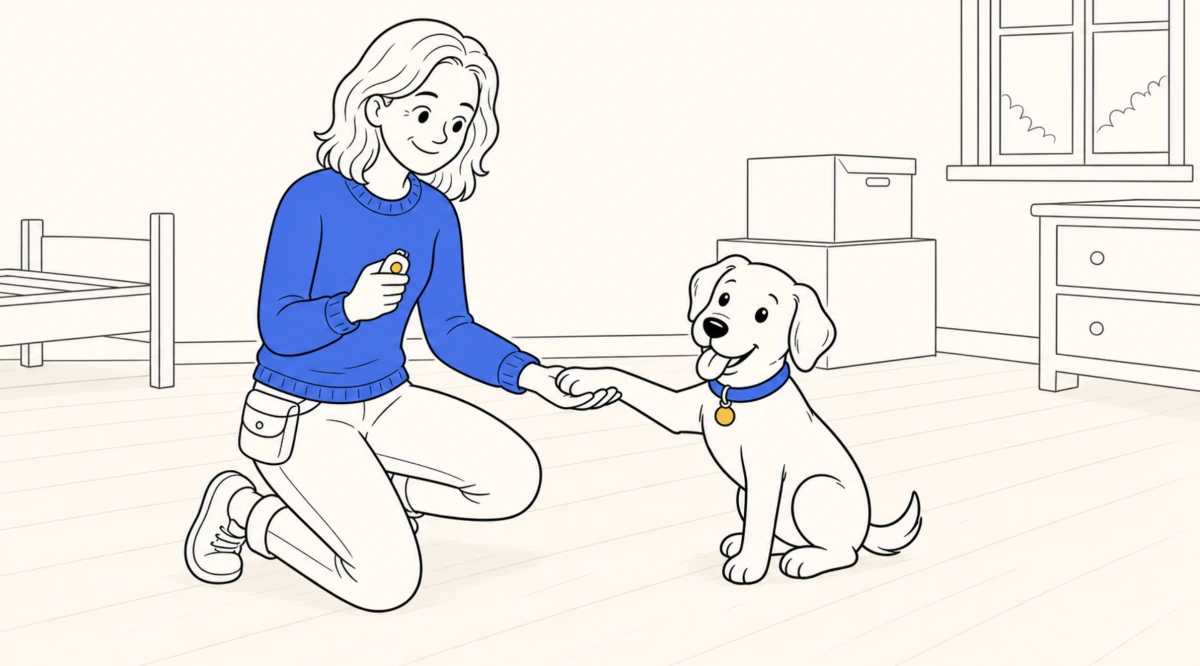
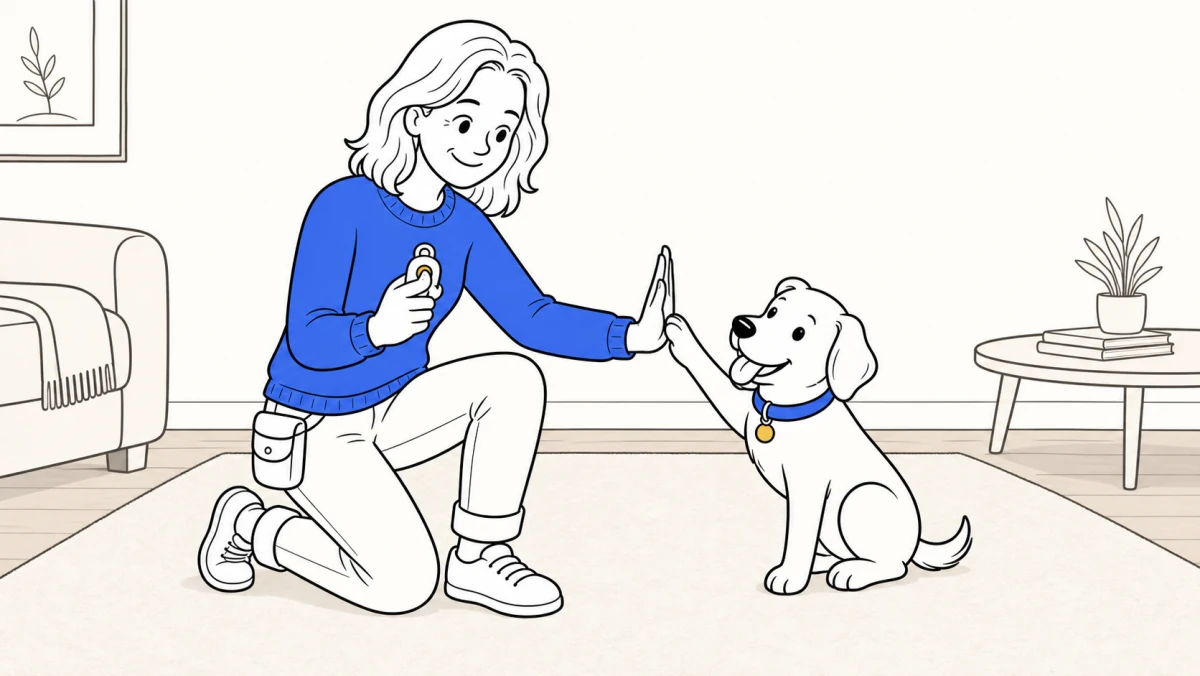
High-five is shake with a raised target: hold your hand low like you’re asking for shake, click the moment a paw touches, then raise your open hand a little more each clean rep until your puppy is reaching up to meet it near nose height. Add the cue last, and never raise the target higher than they can comfortably reach.
If shake already gets a laugh from guests and “sit” has felt like a slog this week, high-five is the easy win to reach for — it’s not a new skill so much as the same one held a little higher. Same low-key setup as everything else: a handful of treats from the kitchen bag, a clicker or a cheerful “yes,” and a couple of minutes on the living-room floor.
Does my puppy need to know shake before high-five?
Not as a hard requirement — you can capture a fresh paw-lift the same way you would for shake — but it’s faster if shake is already solid, since your puppy already understands that touching an offered hand pays.
HC Summers Feed & Supply’s trick guide takes a shorter route: teach shake, then simply raise the same hand a little further each rep. That’s a fine shortcut if you have it, but the underlying skill is identical either way — a paw finds an offered hand, gets clicked, and the target height is the only thing that changes. If your puppy doesn’t have a reliable shake yet, start there instead — see how to teach your puppy to shake — or teach the fist-touch fresh using the steps below, just aimed low to begin with.
How do you teach a dog to high-five?
Hold a treat in a loosely closed fist at about paw height, click the moment a paw touches, then raise your open hand a little more each session until your puppy is reaching up to meet a hand held near nose height.
Dogs Trust — the UK’s largest dog welfare charity — lays out that exact arc in its own high-five guide: mark the fist touch, fade to an empty hand, then climb the height in small stages before the cue goes in last. Nothing here needs a class or special gear, just the same living-room setup as sit or shake.
What are the first steps to teach high-five?
- Hold a treat in a loosely closed fist at about the height your puppy’s paw naturally rests — roughly where you’d ask for shake. Let them sniff and nose it; the instant a paw touches, click and treat from your other hand.
- Repeat until paw-to-fist contact is quick and easy — about four clean touches out of five.
- Swap the closed fist for a flat, empty palm at the same low height. Click contact, treat, same as before.
- Raise your palm a small amount — an inch or two — and wait. Click any lift toward the new height, even a partial reach, then treat.
- Repeat, raising a little more each clean rep, until your open hand rests near nose height and the paw meets it there reliably.
- Add “high-five” just before you present your raised hand, once contact at that height is reliable — about four out of five across two short sessions.
There’s no fixed rep count for exactly when to drop the fist or add the cue — the AKC’s lure-fading guidance is to begin fading once the behavior is consistent, not on a schedule. This whole sequence is reward-based end to end, matching AVSAB’s 2021 position that only reward-based methods should be used in dog training — a cheerful verbal marker works just as well as a clicker if that’s the sound you prefer.
How do you raise the target without your puppy jumping up?
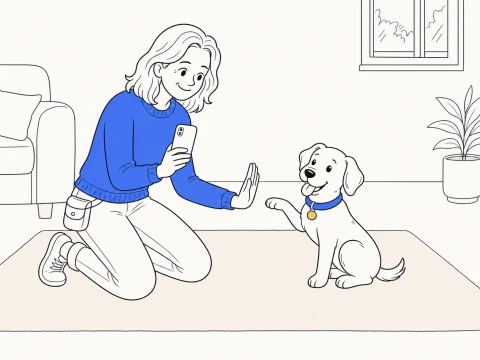
Raise your hand in small steps — an inch or two at a time — and stop climbing the moment your puppy has to leave the ground or stretch uncomfortably to reach it.
A target that jumps too high, too fast, is the real risk in this trick — not because high-five somehow “causes” jumping up, but because the click only ever means one specific thing: paw touches the hand you’re offering, right now, at this height. Karen Pryor’s shaping rules in Don’t Shoot the Dog! are explicit that criteria move in steps small enough your puppy still has a realistic shot at getting it right; skip straight from a low palm to an arm held high and you’re not raising the bar, you’re changing the game.
That’s usually when a puppy starts scrabbling, standing on their hind legs, or pawing at the air instead of your hand. Keep the click tied only to a clean touch on the hand you’re actually holding out, and drop the target back down if two reps in a row miss.
What if my puppy paws at the air, or bats my hand instead of touching it cleanly?
That’s usually the target climbing faster than your puppy’s confidence — drop the height back to wherever the last clean touch happened, reward a couple of easy reps there, then raise it more slowly than before.
This isn’t stubbornness or a puppy who “doesn’t get it” — it’s the same information as shake’s mouthing or scrabbling stage: the ask got harder before the behavior was solid. Go back a step, rebuild a short run of clean touches, and climb slower next time. Hands never grab or guide the paw — a high-five that’s held or forced isn’t a high-five, it’s wrestling with extra steps.
Is high-five the same trick as shake?
They’re close cousins built from the same paw-lift, but shake asks for a paw resting on a low, open palm and high-five asks for a paw meeting a raised hand near nose height — same shaping, different target.
Owners often ask for both in the same breath — a quick look at r/Dogtraining shows the exact question paired: “what’s the best way to teach my dog to shake or high five.” That’s a fair instinct. They really are the same mechanism at two different heights, which is exactly why it’s worth having a solid shake first, even though it isn’t a strict requirement.
How long should a high-five training session be?
About two minutes and five to eight reps — the same short-session default that covers every other trick on this site.
See how long puppy training sessions should be for the full age-by-age breakdown. End while your puppy is still offering the paw cheerfully, not after they’ve lost interest — a handful of clean touches is a whole session, not a warm-up.
Is high-five one of ClickerPup’s in-app tricks?
Not yet. ClickerPup’s tricks module currently runs spin, shake, roll over, and beg. High-five uses the exact same clicker method — this page is the DIY version while that feature is still ahead.
When should you stop and get help?
High-five is a light, low-stakes trick — stop if your puppy yelps, flinches, or pulls the paw back like contact hurts, and mention it to your vet before you keep practicing anything that involves the feet. If stiffness, growling, fear, or reluctance around your hands shows up outside this specific game, that’s past trick territory — use our when-to-get-help guide and, for behavior work, an IAABC-certified behavior consultant. And the one rule that never changes: the paw is offered, never taken.
What should you do next?
Get one clean high-five at nose height, from a sit, in the room you always train in — that’s the whole trick. Once that’s reliable, try it standing up, or ask for it in a new room; change one thing at a time. If shake and high-five between them have you wanting a fuller trick roster, spin, roll over, and beg are next on the fun tricks hub.
If you’d rather have short sessions like this one already planned for the puppy on your floor — including the tricks we actually coach, only marked “reliable” once your dog has proven it twice, not just once for the camera — claim an early spot. The clicker is free forever, with a plain reminder before anything ever charges.
Claim your early spot and we’ll bring you in as we open up.