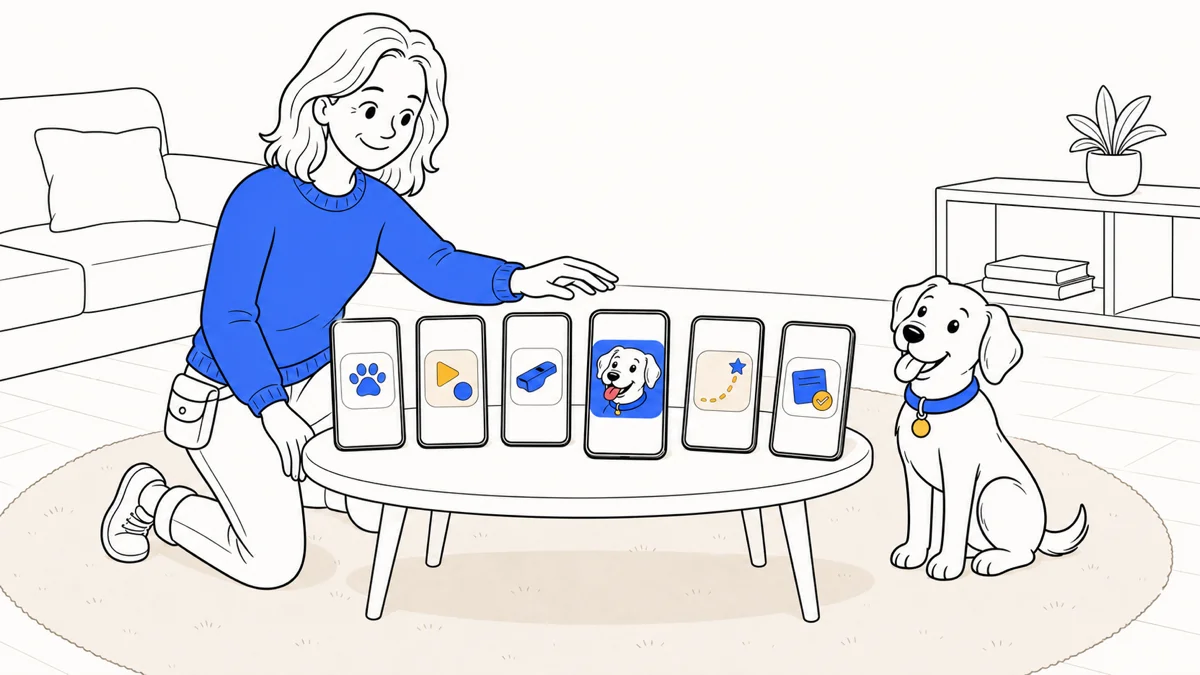
There’s no single best puppy training app — the right one depends on what you need. For a genuinely free, structured program, Pupford is the standout. For step-by-step plans with access to real certified trainers, Zigzag. For clicker-based skill training, Dogo. Woofz and PawChamp round out the popular options. Nearly all are subscriptions, so the honest question isn’t just “which is best” — it’s which fits your dog, uses a force-free method, and won’t surprise you at renewal.
If you’re comparing apps with a new puppy asleep on your feet, here’s what actually separates them — not the marketing, but the training method, how much sits behind a paywall, whether you reach a real trainer, and how clean the billing is. Prices below are what each app advertised in the US App Store or Google Play as of July 2026; every one of these apps A/B-tests and discounts heavily, so treat them as ballpark and check the current price in-app before you commit.
Are puppy training apps worth it?
For a normal puppy learning normal skills — sit, recall, loose-leash walking, settling, basic manners — yes. A good app gives you structure, short daily lessons, and the consistency that puppy training actually runs on, which is more than most first-time owners manage from scattered YouTube videos and conflicting forum threads. Where they’re not worth it is serious behavior problems — real aggression, deep fear, or separation panic — which need a qualified in-person professional, not an app. Match the tool to the job and the right app earns its keep; expect one to fix a behavioral emergency and it won’t.
How we compared these apps
We judged each app on the five things that decide whether it actually helps a first-time owner — not star ratings, which are easy to game. Use these as your own checklist even if you pick an app that isn’t here:
- Training method. Is it force-free? The American Veterinary Society of Animal Behavior’s 2021 position statement recommends reward-based methods only, so positive-reinforcement is the bar. All five apps here are positive-leaning.
- Content depth and personalization. A generic checklist that ignores your actual dog is the most common complaint about training apps. Does it tailor to age, breed, and progress?
- Real trainer access vs. AI-only. Some apps connect you to certified humans; others are video libraries with a chatbot. Both can work — but they’re not the same product, and they’re not the same price.
- Free tier vs. free trial. A genuinely free tier (real content, forever) is very different from a 3–7 day trial that auto-converts to a paid plan.
- Price and billing transparency. The sticker price matters less than whether the trial, renewal, and cancellation are clear before you pay. This is where the category has its worst reputation — so we’ve given it its own section below.
Here’s the shortlist at a glance:
| App | Best for | Free tier? | Advertised price (US, Jul 2026) |
|---|---|---|---|
| Pupford | Genuinely free structured training | Yes — full 30-day course, free forever | Free core; optional Academy ~$9.99–$13.49/mo or lifetime ~$199.99–$249.99 |
| Zigzag | Step-by-step plans + real trainers | Yes — 3 lessons/day + library | ~$9.99/mo or ~$49.99/yr; 7-day trial |
| Dogo | Clicker-based skills + trainer feedback | Trial only | ~$29.99/mo, ~$49.99/quarter, or lifetime ~$299.99; 7-day trial |
| Woofz | Quick daily lessons + basics | Trial only (3-day) | ~$12.99/mo up to ~$59.99/yr (varies widely) |
| PawChamp | All-in-one gamified daily plan | Free download, paid features | From ~$9.99/week or ~$99.99/yr |
| ClickerPup | (our app — pre-launch, see below) | Clicker free forever (planned) | Not launched — waitlist |
Pupford — best free puppy training app
Pupford is the one app here with a genuinely free core, and it’s a good one. The centerpiece is the 30-Day Perfect Pup course, built with well-known trainer Zak George — a day-by-day video program that’s “100% free forever,” with no credit card required, covering the essentials from basic obedience to house training and leash walking. You can follow it day by day or jump straight to a specific behavior you’re struggling with.
Where it’s strong: the free content is substantial and force-free, not a teaser. For a budget-conscious first-time owner, you could run the whole 30-day course and pay nothing.
What costs money: deeper material lives in the paid Pupford Academy (advertised at 75+ behaviors and specialist courses), around $9.99–$13.49/month, roughly $39.99–$52.99 for six months, or a lifetime option near $199.99–$249.99, with individual courses about $19.99–$24.99. The free course is broad rather than personalized to your specific dog, so the paid tier is where tailoring and depth come in.
Zigzag — best for real trainer access
Zigzag is built around a stage-based program tailored to your puppy’s age and breed, with a video-lesson library it advertises at 250+ lessons, an in-app AI chat assistant (“Ziggy”), and — its real differentiator — 24/7 access to qualified trainers and behaviorists. Of the paid apps here, its trainer credentials are the most clearly stated.
Where it’s strong: genuine access to certified humans, plus a usable free tier (three lessons a day, the full library, and the AI chat) that lets you try the real product, not just a countdown trial.
What to watch: premium is advertised around $9.99/month or $49.99/year in the US App Store, after a 7-day trial. Some reviewers on Google Play have said the price wasn’t obvious until they were partway through signup; Zigzag responds that its plan screen shows monthly and annual prices at the point you start a trial. As always, check the price screen before you tap through.
Dogo — best for clicker training
Dogo pairs a questionnaire-tailored program with a large library of tricks and skills (its listing advertises 100+), video instructions, and a built-in clicker and whistle — the tools for marker-based training baked right in. On higher tiers you can also send training videos to a real trainer for feedback.
Where it’s strong: it’s the most established clicker-capable app, and the structured skill library plus optional trainer feedback is a genuinely useful combination for teaching obedience and tricks.
What to watch: it’s subscription-only after a 7-day trial, and pricing varies a lot — advertised around $29.99/month or $49.99/quarter, with a lifetime option near $299.99, and introductory discounts that jump to full price on renewal. Budget for the renewal rate, not the intro rate.
Woofz — best for quick, simple lessons
Woofz focuses on short, approachable daily lessons and basic obedience — a gentler on-ramp if a dense stage-based program feels like too much. It’s positive-leaning and easy to follow.
Where it’s strong: simplicity. Bite-size lessons and reminders suit owners who want light-touch guidance rather than a full curriculum.
What to watch: the free window is a short 3-day trial — shorter than most apps here — and pricing spans a wide range (roughly $12.99/month up to $59.99/year, depending on the offer you’re shown), so it’s easy to slip from trial to paid quickly. Some reviewers also flag trial and cancellation confusion, which is the same billing caution that applies across this whole category. The fix is the same for any of these apps: cancel through your device settings, not just by deleting the app (more on that next).
PawChamp — the popular pick, with billing caveats
PawChamp is one of the most heavily marketed apps in this space and often ranks at the top of search results for “best puppy training app,” and the product itself is a competent all-in-one gamified system: a quiz builds a personalized plan, then you get expert-led video lessons, 24/7 chat support, daily streaks, and challenges. It’s free to download, with features unlocked by subscription from about $9.99/week or $99.99/year.
Where it’s strong: structure and momentum. The gamified daily plan and chat support keep some owners consistent, which is half the battle.
What to watch — read this before you subscribe: PawChamp’s billing model draws repeated complaints, and here the concern is documented, not just anecdotal. Its own subscription policy states plainly: “Deleting the app or failing to use the service does not cancel your subscription.” On Google Play and review sites, multiple users report being charged after a trial they didn’t realize had converted, and difficulty canceling; PawChamp responds that its subscription terms and prices are displayed on the payment page before purchase and directs users to contact support. The weekly plan in particular looks cheap per week but annualizes high. None of this means the app doesn’t work — it means you should read the payment screen carefully and set a cancellation reminder.
How to avoid surprise charges with any puppy training app
This is the single most useful thing to know before you download anything, and it applies to every app on this list — ours included. The category’s billing complaints almost always trace to the same few mechanics, and all of them are avoidable:
- Deleting the app does not cancel a subscription. As PawChamp’s own policy states outright, you have to turn off auto-renewal in your Apple ID or Google Play account settings. Removing the icon just hides the app while billing continues.
- Cancel at least 24 hours before a free trial ends. Most trials here are 3–7 days and auto-convert to a paid plan the moment they lapse. Set a phone reminder for the day before.
- Watch the intro discount. A “50% off first period” or a cheap first week routinely renews at the full, higher rate. Note the renewal price, not the sticker price.
- Do the annual math on weekly plans. A plan billed weekly can quietly cost more per year than an annual plan — multiply it out before you pick.
If you follow just those four, the apps’ worst reputational problem stops being your problem. For serious behavior issues — real aggression, deep fear, or separation panic — no app is the answer regardless of price; that’s when you want a qualified professional in person. Here’s a guide to what’s normal puppy behavior and when to get help.
ClickerPup — our own take (coming soon)
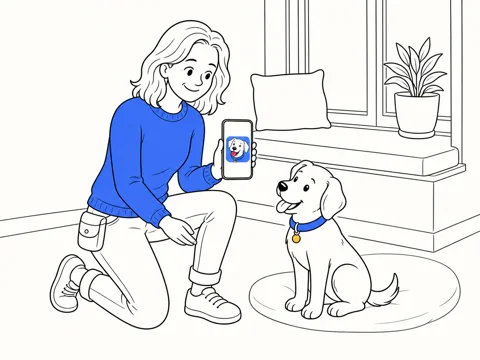
Full disclosure: ClickerPup is our app, and it isn’t out yet — so we’ve deliberately kept it out of the ranking above rather than crown ourselves in our own comparison. Here’s what we’re building and why, so you can judge it against the field honestly when it launches.
ClickerPup is a force-free, clicker-first coach for the first weeks with a new puppy — the same positive-reinforcement, marker-based method behind clicker training’s first day, planned one short two-minute session at a time. If you want the full picture, here’s exactly how ClickerPup’s method works. Two commitments shape it, and since the app is pre-launch, these are promises we intend to keep, not results we can prove yet:
- The clicker will be free forever, with a plain reminder before anything ever charges — no trial that quietly converts, no bill you didn’t agree to.
- It’s built to check whether your dog actually learned a skill before moving on — rather than serving the same lesson on a timer regardless of how it went.
That’s it — no claim to be “best,” because it isn’t launched. If an honest, no-surprises coach that adapts to your actual dog is what you’ve been looking for, claim your early spot and we’ll bring you in as we open up.
The honest bottom line
If you want free, start with Pupford’s 30-day course. If you want real trainer access, Zigzag. If you want clicker-based skill training, Dogo. Woofz suits light-touch learners, and PawChamp is capable if you read its billing terms first. Whatever you choose, judge it on method, fit, and billing clarity — not the star rating — and remember that consistency, two minutes at a time, matters more than which logo is on the app.