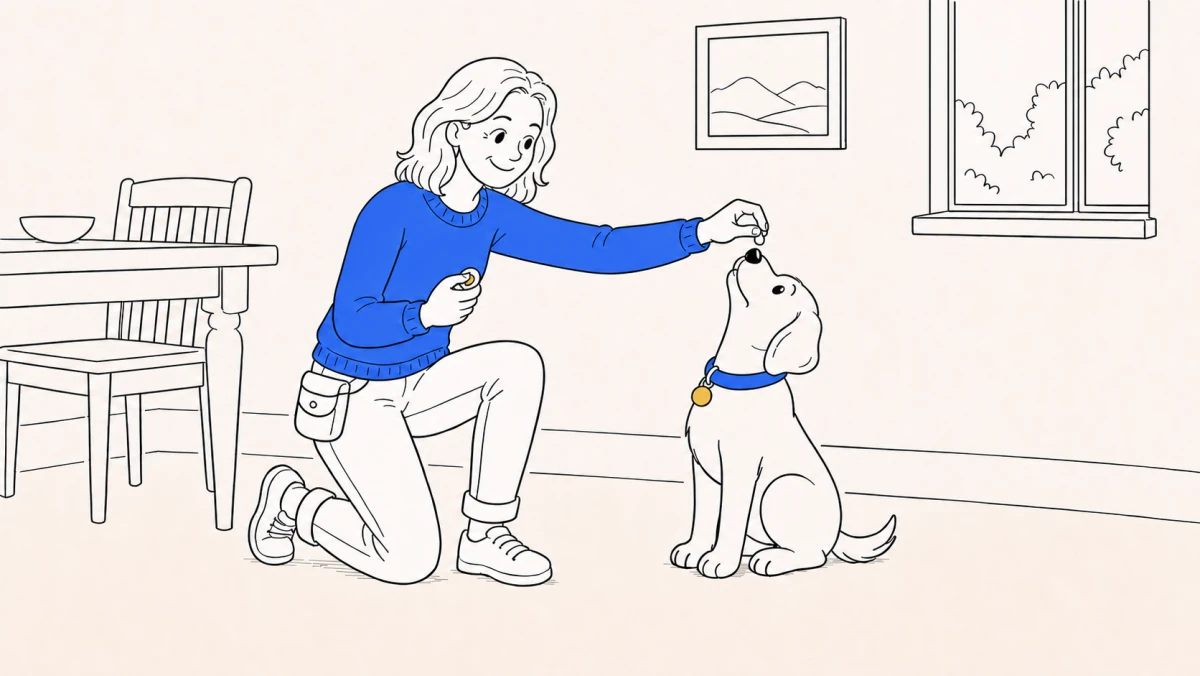
Lure your puppy’s nose up with a treat until the bottom lowers, click the instant it touches the floor, treat in that sit, then fade the lure to an empty hand and the word “sit.” Most puppies learn it in a few two-minute sessions — never push the rear down.
If you’ve already tried sit three times and watched the determination drain into quiet guilt — puppy jumps, backs up, or pops straight back up — you’re not failing. You’re usually one fix away: lure height, click timing, or a lure that never got faded. Here’s the exact method, the failure modes, and the honest answer to “can I teach sit without treats?”
How do you teach a puppy to sit, step by step?
Lure the nose up until the bottom drops, mark that instant, treat in position, then fade the lure — the AKC’s lure-and-reward sit sequence, with a clicker (or crisp “yes”) for timing.
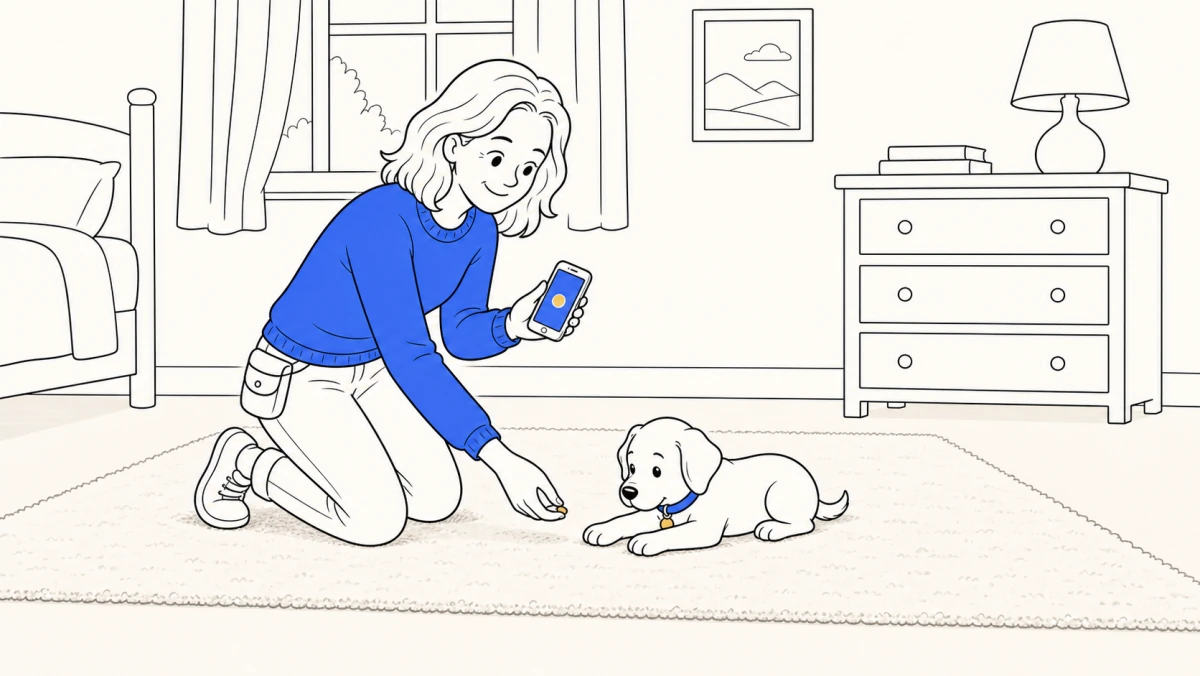
- Hold a pea-sized soft treat at your puppy’s nose.
- Raise it slowly over their head — low and slow. As the nose follows, the bottom folds to the floor.
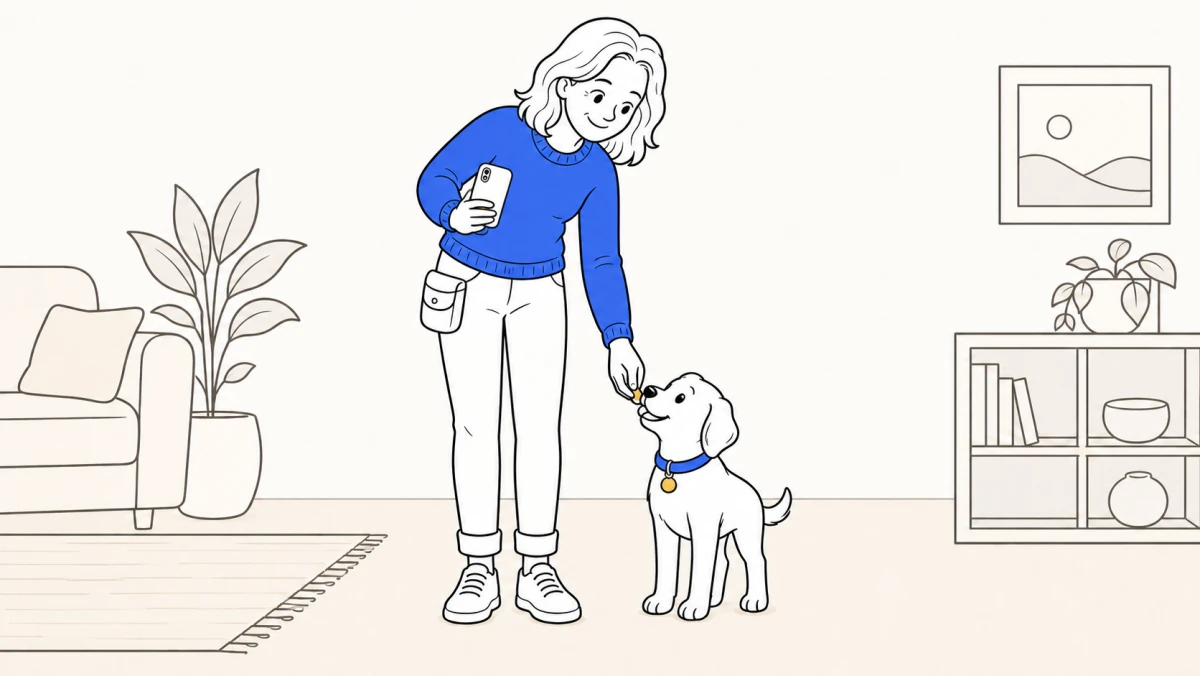
- The instant the bottom touches — click (or say “yes”) — then treat at mouth height, still in the sit.
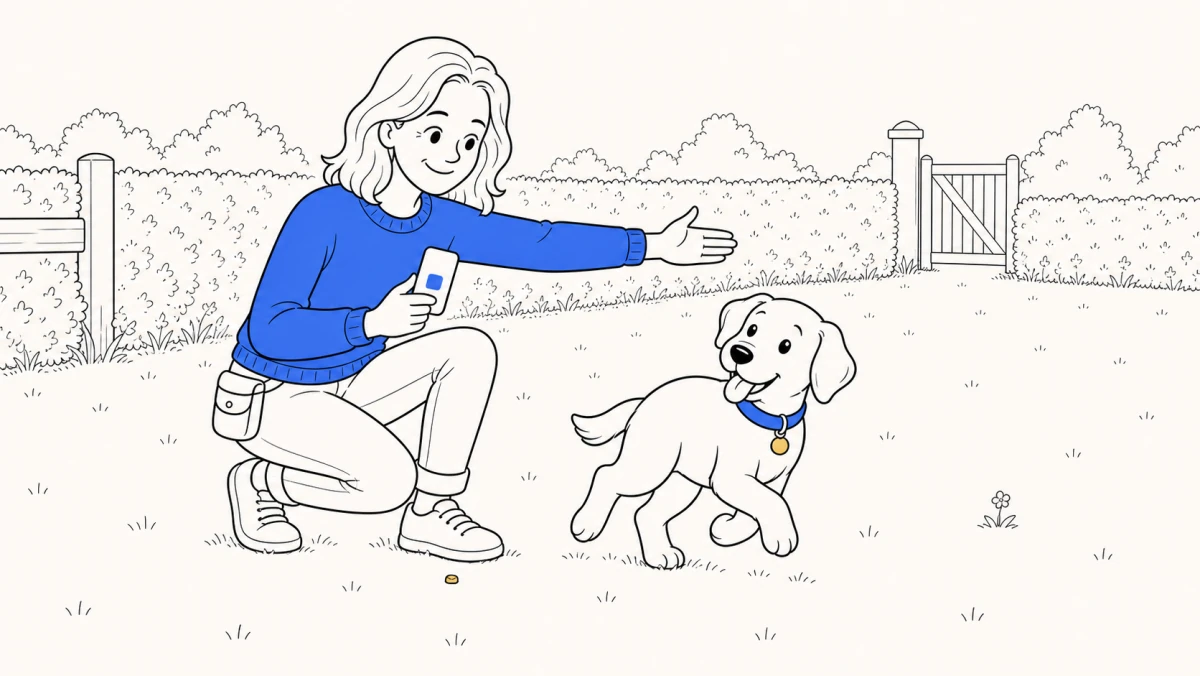
- Reset: step back or toss a treat so they stand, then repeat for five to eight easy sits.
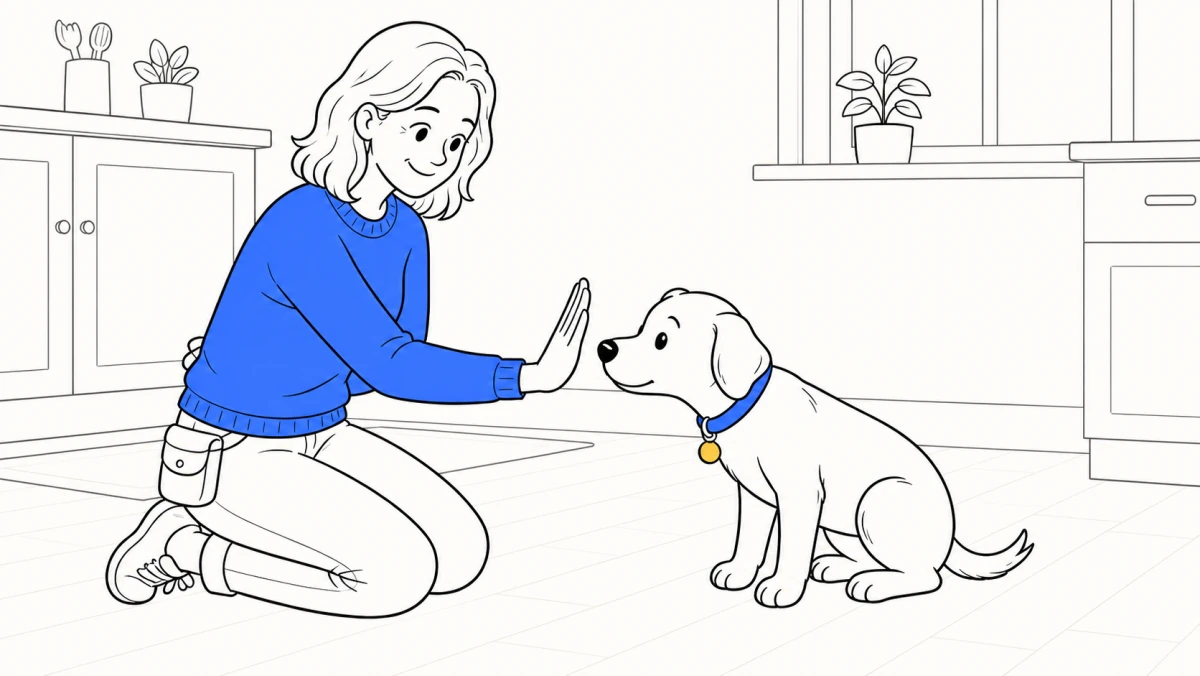
- Once they follow the treat reliably, use an empty hand and pay from the other. Say “sit” just before the signal, then shrink it.
Do I need to push my puppy’s rear down to teach sit?
No. Never push. Lure the nose up so the bottom lowers on its own, click that moment, and treat in the sitting position. Forcing the rear is off-limits in reward-based training and often backfires.
This matches AVSAB’s position that “only reward-based training methods” should be used — food and a marker, not collar pressure or a shove on the hips. The AKC is blunt on the same point: avoid pressing the hind end down. If your puppy won’t fold from a stand, shape sit from a down instead — raise a treat gradually until the chest lifts into a sit, clicking each small step.
What’s the exact moment to click when teaching sit?
Click the instant the bottom touches the floor — not while they’re still lowering, and not after they pop back up. That half-second is the whole point of a marker.
Timing is not a nicety. In Browne’s 2015 University of Waikato research on delayed reinforcement, dogs succeeded about 60% of the time when the reward came immediately, but only about 25% when it arrived one second late. A marker that bridges that gap still helped learning land. Your hands will never be as fast as your puppy; the click buys back the precision you don’t have yet. Treat in the sitting position too — the AKC’s sit guide warns that waiting until they’re standing again (or accidentally luring them back up while you dig for a treat) teaches them to pop out of the sit the moment the rear hits the floor.
Why won’t my puppy sit?
The lure is usually held too high. Keep the treat low and slow, right over the nose, so the head tips up and the bottom folds down. Never push the rear down — forcing confuses the puppy and can feel intimidating. Beyond that, sit failures are almost always treat delivery or an unfaded lure — not stubbornness.
| What you see | Likely cause | Fix |
|---|---|---|
| Jumps up or backs away | Lure held too high or moved too fast | Keep the treat right over the nose; slow the motion |
| Sits, then instantly stands | Treat delivered high or after they stand | Pay at the mouth, in the sit |
| Only sits when they see food | Lure never faded | Empty-hand motion, then shrink it (AKC fade steps below) |
| Freezes or flinches when you touch the hips | Someone pushed the rear down | Stop pushing; lure only |
Can you teach a puppy to sit without treats?
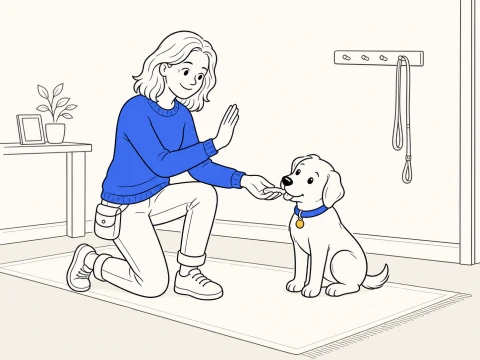
Not at first, and you shouldn’t try. Treats teach the behavior; the clicker (or a crisp “yes”) marks the exact instant so the treat can arrive a beat later. Once sit is reliable, fade the food lure so you aren’t waving a treat every time — that is the difference between a lure and a bribe.
The AKC’s lure-fading guidance is direct: lures shouldn’t be considered bribes, and you start fading “as soon as your dog is performing the cue consistently with the lure” — not on a fixed rep count. Empty hand first, then a smaller signal, then the word alone. You still reward afterward; you just stop leading with food. “It’s OK to take your time fading the lure out at a pace they’re comfortable with.” Charge a clicker first if needed — clicker training on day one covers the five-minute charge test.
What age can you teach a puppy to sit?
As early as 8 weeks — the week most puppies come home. Sit uses a food lure and a marker, not collar pressure, so a young puppy can start right away. Keep sessions to about two minutes.
Trainer Lori Chamberland, writing on Karen Pryor’s clicker-training site, puts sit among the three first-week priorities for a new puppy (alongside a hand target and crate comfort). You do not need to wait for formal classes or a collar. If your puppy is still learning their name or a nose-to-hand target, those help everything else — and they live in the same basic puppy commands hub this skill sits under.
How do you turn sit into a real-life manners button?
Practice sits inside the moments your puppy already wants something — before the leash goes on, before a meal, before a door opens — and pay with the thing they wanted. That is how sit becomes the offerable calm default, not a living-room-only trick.
Generalization is separate from acquisition. A puppy who sits beautifully in the kitchen can look blank in the hallway; that is normal, not a step backward. Drop your expectations one notch in each new spot, change only the location, and re-earn a few easy wins there. Once sit is solid, duration (a beat of stay) is an upgrade on this cue — not a brand-new first skill — which is why stay comes later on the first-five commands list. Solid sit is also the base you build sit pretty from — the same seated start, raised up onto the haunches.
How long should a sit training session be?
About two minutes and five to eight sits, then stop while your puppy is still winning. Short sessions that end on a clean success beat one long drill that fizzles into frustration.
Aim for roughly four sits out of five from the lure before you start fading, then four out of five on the spoken cue across two easy sessions before you make the room harder. If you want the research behind short-and-spaced practice, how long puppy training sessions should be covers the timing evidence in one place. For what the marker is doing under the hood, see what clicker training is and whether it works.
When is sit trouble actually something else?
Mouthing at the lure or your fingers during sit practice is usually normal teething under about six months — redirect, keep the palm flat, and only click nose or bottom-down, not teeth. What isn’t normal: a stiff, frozen body, growling, guarding food or toys, or a bite that breaks skin from a dog older than about six months. Those need a certified behavior consultant (IAABC at iaabc.org), not another lure tweak — here’s what’s normal and when to get help.
Sit is one short skill with a clear click-point, four fixable failure modes, and a planned exit from the food lure so it never becomes a forever bribe. If a coach that plans today’s two-minute sit session — and adjusts when the lure goes too high or the timing slips — sounds useful, that’s the gap we’re building ClickerPup to fill.